

In Oklahoma, Council of Public Affairs President Jonathan Small went to the mat for Gov. Kevin Stitt (R), backing Stitt’s demand for higher—much  higher—exclusivity fees. To his credit, Stitt has put sports betting on the table as an incentive. Small implies that 6%, which Sooner State tribes pay, is far too little and that Connecticut‘s 25% (which only applies to slots) would be fairer. He also cites Florida, but that state isn’t getting any gaming-tax revenue from the Seminole Tribe at present, so I don’t know if that particular dog will hunt. For their part, the tribes say they’re still waiting for a concrete proposal from Stitt, who has been exquisitely vague about what he wants from them. “What is that written proposal? What do they have to offer of interest?” asked Choctaw Chief Gary Batton, who likened Stitt to a used-car salesman, the unkindest cut possible.
Neither side seems to be able to get off the dime as regards the question of whether the tribal compacts expire on January 1 (as compact language seems to indicate). Perhaps a court of law should be consulted. Stitt’s office says it’s been ready to talk with the Five Tribes for  quite some time but got kicked out of a meeting when it was finally ready to discuss terms. Tribal leaders dissent, saying that the conference foundered on Attorney General Mike Hunter‘s insistence upon binding arbitration, an all-or-nothing gambit of which the tribes are rightly suspicious. Another stratagem that Stitt could employ would be to threaten to invite non-tribal casinos into the state next year. That might be pretty effective. He could also insist on the tribes upgrading to totally (instead of mostly) Class III machines, which are taxed, unlike Class II devices. But he’s going to have to give something in return if he wants that.
* Casino companies dove under the table when the Las Vegas Sun came asking about secondhand smoke in the workplace. It’s a sore point with United Auto Workers Local 3555, which represents dealers. “It’s one of the biggest complaints other than abusive guests that [the union] has. When you’re sick, you get sicker, or you’re sicker longer,” said organizer and dealer Kanie Kastroll, who presumably knows whereof she speaks. And, let’s face it, attempts to mitigate secondhand smoke—like the ludicrous “smoke-free corridors” at Palazzo—are ineffectual.
The Nevada Resort Association insists that Silver State casinos are state of the art when it comes to smoke abatement. Health advocates aren’t buying that. “There’s nothing that can clean the air to remove secondhand smoke,” said Maria Azzarelli of the Southern Nevada Health District. Added Nevada Agricultural Experiment Station Director Chris Pritsos, “The particle size of the constituents of smoke 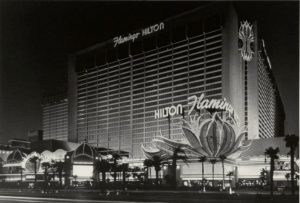 are so small that these air filters don’t do a thing.” There’s an interesting dissent from Paula Larson-Schusster, a Flamingo dealer and union member who’s developed a smoker’s cough and various other bronchial ailments over the years. She opposes a smoking ban: “The bottom line is, if we don’t have customers, I don’t have a job.” Of smokers themselves, she says, “Probably 80 percent of them are much more aware of secondhand smoke or are more careful, but there are still going to be individuals that just don’t care, and they’ll blow it right in your face.” How charming.
Mind you, casino companies have been only too eager to set up shop in jurisdictions from Massachusetts to Macao where smoking is banned. As waitress and cancer victim Lysa Buonanno observes, “It’s proof that they can still survive and still make money.”
Jottings: Eyeing the nearby Tennessee market, Hard Rock International is pushing for a casino in Bristol, Virginia. Said Jim McGlothin, CEO of partner The United Co., “This focus on music will complement our region’s country music heritage and dynamic music 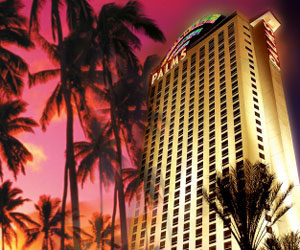 scene in the Twin City” … Gamblers chasing losses are going to love PlayOn. The new hardware enables players to buy more chips at the table game. Its initial deployment will be at the Palms, although problem-gambling pundits are raising red flags. (The system only accepts debit cards, preventing overdrafts) … No college-game bets and no mobile wagering: Those are two aspects of sports-betting legalization being mulled in California. With such restrictions, Nevada sports book operators aren’t worried about being crimped.
