
Despite one less weekend day than 2017, December was good for the Las Vegas Strip. Visitation was up over 2% and room revenues leapt 16% to an average of $104/room. 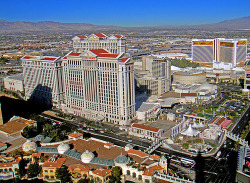 This was particularly impressive given a 23% decline in convention attendance. Even with so many fewer conventioneers, hoteliers were able to push room rates almost 12% higher, to an average of $128/night, on 81% occupancy (87.5% on weekends). Visitors to Vegas numbered nearly 3.3 million, with 222,000 of them conventioneers. Drive-in traffic was strong, up 4%, with a 3% increase in Californians.
By the way, it’s goodbye Total Rewards, say hello to Caesars Rewards. While we’re loath to part with a catchy moniker, Caesars is the best brand name in gambling and the company has underutilized it, particularly during the Gary Loveman regime, so we like the change on balance.
* MGM Resorts International closed on its purchase of Empire City Casino/Yonkers Raceway, an $850 million deal with the Rooney family that adds 5,200 VLTs to the MGM inventory. However, the lion would prefer a Vegas-style casino, complete with table games. The racino also comes with 50 undeveloped acres, so are you thinking what I’m thinking? (Megaresort.) Also, with New York City practically within his grasp, will MGM CEO Jim Murren still want a casino in Connecticut? (Probably yes.) MGM is so flush with cash right now that it only needed $246 million in debt for the acquisition. The Rooneys will get another $50 million if MGM gets a table-game license (probable) and does so by the end of 2024 (much more than probable). Upstate casinos have a monopoly on table games through 2023 although Gov. Andrew Cuomo (D) says that while it’s “an evolving field” he has no intention at this time of moving the deadline forward.
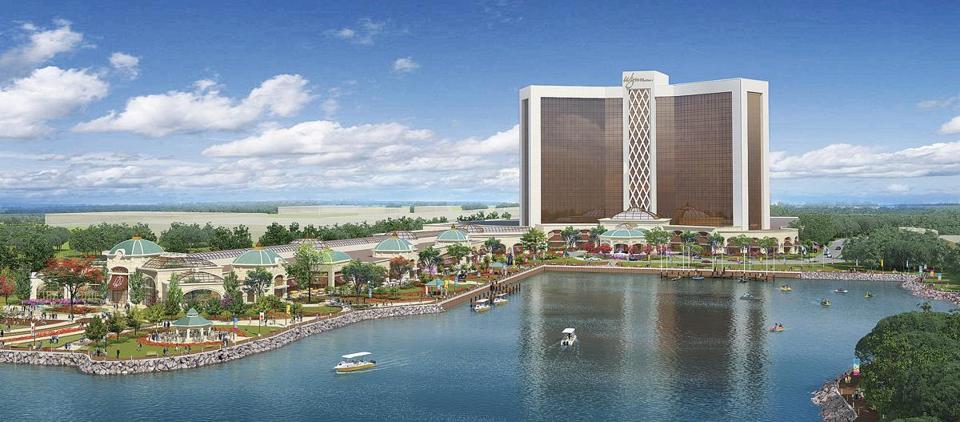
* The Massachusetts Gaming Commission huddles behind closed doors today to  discuss what it’s going to do about the injunction Steve Wynn has placed on the company’s report of his depredations. No word whether any action will ensue — probably just talk about how they can fine Wynn Resorts for misdeeds they’re not allowed to disclose. The company recorded a $391 million net tax benefit (thank you, Donald Trump) which helped bolster narrowing 4Q18 profits. In Macao, the company is seeing a 13% revenue increase for Wynn Palace ($740.5 million), which more than makes up for a 5% drop at Wynn Macau ($553.5 million).
Speaking of Macao, Credit Suisse analyst Cameron McKnight balances long-term positivity with near-term caution in his latest report. Wynn Resorts overcame “extreme
volatility” to gain 16.5% market share. However, Swiss watch exports — a leading economic indicator — were down. Also, Chinese economic-stimulus measures “have not meaningfully boosted sentiment among small and medium sized enterprises … Chinese [c]onsumer confidence ticked up in January, following a decline in December, but still  well below 2018 highs, according to a survey we track. In particular, the survey found that sentiment toward buying a car or home and domestic and overseas travel improved from the end of last year.” As for companies that do significant business with China, the indicators were not great. Caterpillar noted lower sales, Apple saw $5 billion less in Chinese revenues and Nvidia downscaled its 4Q18 revenue forecast, while junkets to Macao fell 8% last year. On the plus side, Chinese New Year is nigh, air traffic into Macao has increased and the new HKZM Bridge is expected to funnel more customers into the enclave.
* Keeping Internet gambling illegal in the Netherlands has had less than no effect, according to a study commissioned by casino monopolist Holland Casino. (Remember when Harrah’s Entertainment was going to buy them? I thought you did.) Survey says … 20% more people have flocked to illegal, offshore sites to have a flutter. It’s estimated to be a $687.5 million industry with the potential of generating over $200 million a year in taxes. Holland Casino Director Erwin van Lambaart said, “More and more Dutch people gamble totally unprotected on the Internet. They do so with international providers who are established on sunny holiday islands with dubious regulations. Moreover, these companies do not pay gambling tax and that is unfair competition.” Expect the Dutch government to revisit the issue by next year, especially if Holland Casino is amenable to a 29% tax rate, as it seems to be.
