
Today’s news takes us straight back to Washington, D.C., where Sens. Chris Murphy (D) and Richard Blumenthal (D) 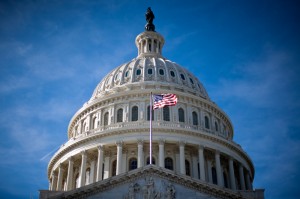 are demanding that the Bureau of Indian Affairs get off the fence and clarify its stance regarding the $300 million East Windsor satellite casino being developed by Mohegan Sun and Foxwoods Resort Casino. What the senators want to know is whether the existence of a satellite casino would breach the existing gaming compacts: you know, the ones that guarantee Connecticut a 25% annual cut of tribal slot revenue. Could the creation of the East Windsor casino be a clever tribal ploy to wriggle out of that obligation? Blumenthal and Murphy imply as much.
Over at the BIA, Acting Secretary Michael Black has made the unhelpful comment that there is “insufficient information upon which to make a decision,” which sounds like just plain laziness to us. After all, the debate surrounding the satellite hasn’t exactly been conducted in secret. Even additional information supplied by Gov. Dannel Malloy (D) didn’t budge Black one way or the  other. Perhaps he is waiting for the casino to become a fait accompli — groundbreaking takes place next month. However, the Trump administration is beginning to show signs of an anti-tribal tilt (re-invoking the old “commuting distance” rule for off-reservation casinos, for starters), so Black could pull the rug out from under the Pequots and Mohegan at the last minute. We trust him as far as we can throw him, which is not at all.
* Applications for Pennsylvania satellite casinos aren’t due until Jan. 15 at the earliest but Westmoreland County isn’t being shy about its interest. (Seven towns have explicitly opted out out.” One of the hitherto unreported provisions of the new  law is that it creates 25-mile-radius zones of exclusivity for existing casinos (who can put their own satellites within the radius). Westmoreland falls outside that “line of death,” and county officials are contemplating a casino for Latrobe or Greensburg. “We’ve been adamant for years that Westmoreland would be a good place for a casino,” County Planning Director Jason Rigone told reporters.“With our population size and local area, Westmoreland County should certainly be considered.” Laments Latrobe Mayor Rosie Wolford, “We’re losing a lot of revenue from our residents who are leaving the county to gamble.”
Now the county has to find an existing license holder with whom to partner, since outsiders are initially excluded from the application process. Penn National Gaming has been squawking about the new casino licenses. Maybe it could protect its flank by going into Westmoreland. You don’t even need to have a site secured: The law permits you put to a casino anywhere within 15 miles of your originally designated one.
* It’s Election Season across the South and that includes the Mississippi Band of Choctaw Indians, who will be voting on whether or not to build a fourth casino. The tribe already has a gaming presence in Jones County and Neshoba County. If 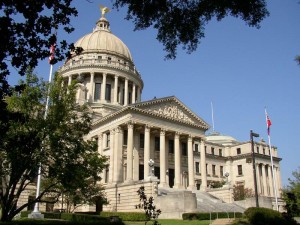 successful at the ballot box, it would extend that reach to Red Water in Leake County. Opponents within the tribe contend a fourth casino would be one too many, cannibalizing existing business, while Chief Phyliss J. Anderson projects 250 jobs and $50 million in new revenue. It’s also to be built in her hometown, a point on which critics have harped. They also look to a study that shows $18 million in existing gaming revenue being shifted to Red Water, enriching Anderson’s friends and neighbors. (Anderson doesn’t argue the point.)
With the tribal populace booming since the introduction of gaming, Anderson argues that the tribe needs the next influx of $31 million she argues that a fourth casino would bring. “With … 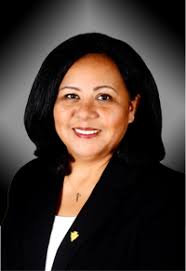 over 50 percent of the population under 25, the need for jobs is there, but what this casino will allow us to do is to use those funds to reinvest back into the tribe for government services.” she told the Clarion-Ledger. It could also help the tribe dig out from under $155 million in casino-related debt. “We want fairness in the election process, but we keep getting chopped down like trees,” carps opponent Barry McMillan, who complains that the ballot question is more of a push-poll, using pro-casino verbiage. Still, historically low turnout will, he believes, put Anderson on the losing side.
* While on the subject of history, it replayed itself when the Standing Rock Sioux Tribe was screwed over by the Dakota Access Pipeline. Disruption related to the pipeline (and protests against it) set the tribe’s Prairie Knights Casino back some $6 million. However, improved access — and a well-attended Nitty Gritty Dirt Band concert — are starting to turn things around. In case you wonder what’s at stake for the tribe, ask former chairman Dave Archambault II. He told the Bismarck Tribune that the casino bankrolled “food distribution, insurance and bonding, programs for the elderly and veterans, fire and ambulance services, waste management, health programs, and K-12 education.” Not all the money leaves the casino. The next order of business: new slot machines. After all, you’ve got to give those customers reasons to revert to their old habits.
* In lieu of nationalization of its casinos, Macao is likelier to impose stiffer regulation. The government will also regulate junket operations, promote responsible gaming and boost the Macao casino industry’s competitiveness,” stated Chief Executive Fernando Chui. “Clearly there is a focus on non-gaming 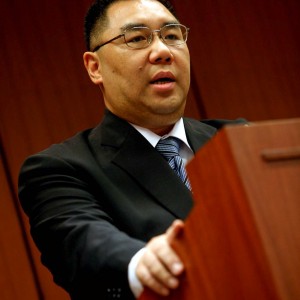 [amenities] on the part of the government, but I think the operators were going to get there anyway,” Union Gaming Securities analyst Grant Govertsen told Bloomberg News. The six concessionaires will have plenty of time, if needed, to get their houses in order. MGM Resorts International and Sociedade de Jogos de Macau come up for renewal in March 2020, and everybody else has until June 2022, by which point all the in-progress megaresorts will have opened and presumably matured their business.
“Operators would also strive to better compete in this market by delivering higher quality, luxury facilities and amenities to cater to this business segment,” Bloomberg Intelligence analyst Margaret Huang said of VIP players. They’ll also be looking to improved infrastructure such as completion of the Hong Kong-Zhuhai bridge and the Macao light-rail system. Huang’s unit projects $36 billion in gaming revenues for next year, a bonanza to be sure, barring new governmental intervention.
