

Online sports betting was quick out of the gate in Virginia—$59 million in handle in 11 days—although books spent so much money acquiring customers that they took a loss on the month. “Debuting ahead of the NFL’s conference championship games and the Super Bowl ensured there would be heavy interest from bettors. In addition, launching with top-flight sportsbook operators in place to serve a market with years of pent-up demand is a recipe for success,” diagnosed PlayUSA analyst Jessica Welman. Although Tennessee, with a full month of wagering, notched $134 million in handle, the neighboring state recorded less wagering per day than did Virginia. As for the monetary loss, analyst Dustin Gouker observed, “We saw the very same dynamic play out in the first days of Michigan’s online market, as well. The bottom line is that Virginia’s market is off to a good start, with significant interest from bettors across the state. That will certainly pay off for the state in coming months.”
While per-operator numbers are not available, first-mover status (Jan. 21) undoubtedly redounded to the benefit of FanDuel. It was followed into the market on Jan. 24 by BetMGM and DraftKings, then BetRivers on Jan. 26. William Hill didn’t arrive upon the scene until February, although it won’t be the last into the pool. Since enabling legislation for sports betting in Maryland is still tied up in the Lege, Virginia has every opportunity to make hay whilst the sun shines.
Room rates on the Las Vegas Strip continue to shallow, a good sign for operators, if not for consumers necessarily. For the March 21-27 booking window, the average nightly rate is $113, -46% off last year at the same time. Weekend rates are down 35%, midweek ones 52%, the latter number somewhat better than we expected. Venelazzo continues to lap the field, with midweek rates up 62% and 14% on weekends. Caesars Entertainment outperforms the market on weekdays (-44%) and underperforms it (-40%) on weekends. MGM Resorts International is down 59% on weekdays and off 40% on weekends—did CEO Bill Hornbuckle go wide open prematurely? Finally, Wynncore is -59% midweek and -38% on weekends. We’re not jumping on the ‘surging demand’ bandwagon but we see baby steps toward recovery.
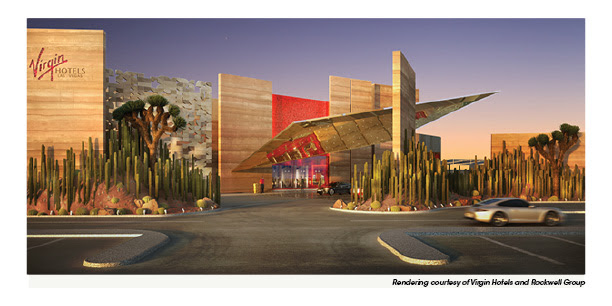
Over at Virgin Las Vegas, CEO Richard Bosworth may be canonized before the place even opens. He’s eschewing parking fees and (hurrah!) resort fees. Considering that Virgin is an off-Strip property with limited brand equity, Bosworth showed some real stones in pushing back against the petty money grubbing which has come to characterize present-day Las Vegas, especially at Caesars properties. On a similar note, analyst Steve and Jack Gallaway predict a “Roaring Twenties” for Sin City, at least if it’s seen as a “return to its heyday as the premier destination for fun. If Las Vegas and other destinations can reach past short-term gains in favor of the long-term opportunity, a return to the Roaring ’20s is here for the taking.” Are you listening, casino execs? The Gallaways predict “a new era of historic economic prosperity,” and it that’s the case, Vegas shouldn’t give its target audience an excuse to spend that largesse elsewhere.
The brothers draw a number of parallels between the America of 100 years ago, as social liberalization (women’s suffrage) was met with a backlash of regressive conservatism (Prohibition). In the case of Prohibition, its demise was spurred by a need for state revenue, just as tax-starved jurisdictions are now going all-in for sports betting. Compared to the Great Depression, “It was Covid-19 that became the unforeseen and unstoppable force that set the economy back, and it was the tourism and hospitality sectors that were among the first and the most heavily hit.” Even now, the tourism industry is hobbled by a “petrified” infrastructure. Before Coronavirus, “Las Vegas had [already] been struggling in the years prior to the pandemic as the costs of gaming, leisure and entertainment became prohibitive.” Tourism had peaked, due in no small part to annoyance with nickel-and-diming that included (you guessed it) resort fees.
Without many of its signature amenities, Las Vegas isn’t the unique destination it used to be and must compete with up-and-comers that include casino-free cities like Austin and Nashville. The vast majority of regional casinos will be back, if they’re not already. That much is a given. Las Vegas’ near-term future is more equivocal. Diversity of entertainment is lacking (most of the reopened shows are of a rinky-dink sort) and international air travel is almost nonexistent. No wonder baccarat revenues are tanking. As the Gallaways say, Sin City “will need to rely on the reopening of each and every function of the global tourism ecosystem.” They recognize one hopeful sign, in that prospective tourists are manifesting interest in returning to Vegas—provided that it’s a value proposition once again. In other words, charging customers full price for a half-shot of liquor isn’t the way back to prosperity.
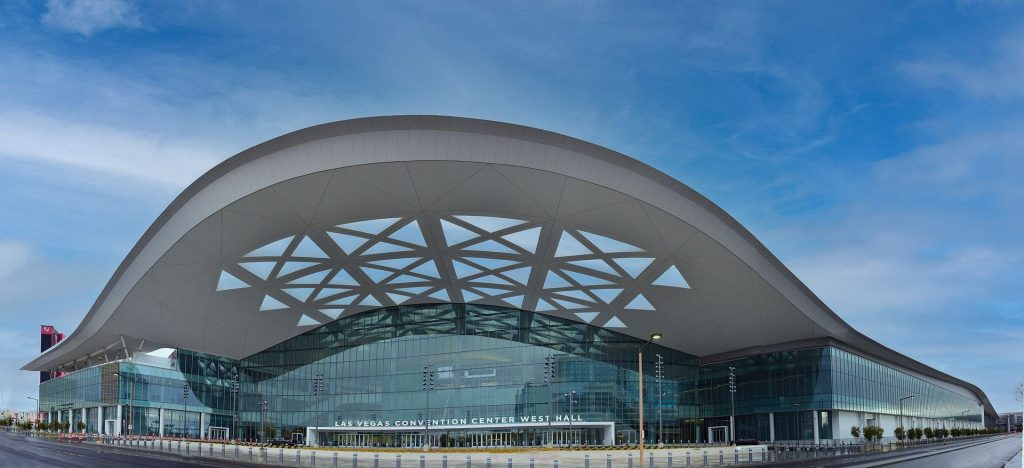
One definite green shoot is the return of the Barrett-Jackson collectible-car auction to the new and improved Las Vegas Convention Center on June 17-19. Said CEO Craig Jackson, “The extraordinary new West Hall is the perfect venue for our three-day collector car auction. It offers the perfect blend of ample indoor and outdoor space with the latest technology that complements our commitment to the health and safety of our guests.” The Las Vegas Convention & Visitors Authority, for its part, promises “stringent health and wellness protocols,” and is proudly noting its first-in-Nevada status as a Global Biorisk Advisory Council STAR facility accredited for its anti-Covid measures. This is all very encouraging for those of us who have Las Vegas convention commitments later this year. So get your vaccine, book a flight to Sin City and plunk down some stimulus money on a classic car.
Across the country, there’s a new publicity push on at Bally’s Atlantic City. Our Boardwalk correspondent was nonplussed. “In the Sunday AC Press, Bally’s AC had a whole full page ad. Their new slogan is ‘Gambler’s [sic] Love Rewards. Bally’s Loves Rewarding.’ They promise a lot. ‘New restaurants’ and photos show spaghetti with a lump of something on top, a pastry, and salmon with asparagus. Wow, I’m really underwhelmed with the innovation. It will ‘returned to the first class resort it once was.’ The ‘Multi-Million Dollar Makeover’ photo shows the same original Pacific Avenue facade that it was built with, no point in changing too much. Or paying someone to do artist’s renderings. Saving the best for last: ‘sister-property visits to New England, Lake Tahoe, and The Gulf Coast.’ Do they think the average customer knows (or cares) where Lake Tahoe or Biloxi is? Who knows, perhaps in the next year or so they will be able include Richmond in the mix.” Hey, don’t forget about Twin River in Tiverton, Rhode Island. Once they’ve seen that, how is Bally going to be able to keep them down on the farm?
 The manufacturing sector has been much in the news this week. Scientific Games took a hit in its gaming revenue, down 36% to $286 million, ameliorated somewhat by social/digital revenue (+19%, $220 million) and lotteries (+10%, $256 million). Operating expenses were trimmed by $19 million and R&D by $3 million. “Looking ahead, SGMS expects some lingering impact from COVID-19 restrictions on its Ops business in the U.S. and U.K. during the 1Q, but this should ease in the 2Q given falling case counts and vaccination trends,” wrote JP Morgan analyst Joseph Greff, adding that Scientific’s liquidity position, strong to begin with, was improving. Hinting at asset sales, he continued, “We remain Neutral on SGMS here. While SGMS’s Digital/SciPlay businesses have benefitted from COVID-19, and the Gaming segment should be levered to a recovery, with Lottery stable, we believe that at the current ~$48 level, this is already well reflected in the stock.” He also fretted about the company’s high ($9.4 billion) debt load.
 International Game Technology was in a similar predicament, but worse. Lottery business was up 11%, to $630 million, but gaming-segment revenue imploded 63%, bringing in a comparatively anemic $255 million. IGT’s installed-slot base in the U.S. and Canada shrank by 1,702 machines. Perhaps to distract from such bad news, IGT and Scientific rolled out a cross-licensed cashless-gaming patenting agreement (“cashless” being the current shibboleth in the gaming industry). Patents for cashless product will be shared between the two companies, forestalling innovation-crippling litigation. Reading between the promotional blat, the agreement covers both existing technologies as well as those yet to be developed. Proclaimed IGT CEO Renato Ascoli, “Cashless gaming is here to stay, and this strong portfolio of cashless IP can help casino operators ensure the safety of players by reducing cash handling and points of contact with slot games, while considerably improving casino operating efficiencies.” Let the synergies commence.
This week, lots of pretty pictures of the Las Vegas Strip, a new health-and-safety protocol at T-Mobile Arena, shows begin returning and did you know that playing the Borgata Casino app improves your chances of a three-way? On a related note, LiveNation CEO Michael Rapino says full-capacity concerts and other events could be here by midsummer. Holy super-spreader occasion, Batman!
