


We wouldn’t have believed it but it appears that both California sports-betting ballot initiatives could go down to defeat in November. While we favor sports betting, on principle, we don’t have a dog in this fight. Both Proposition 26 (tribal) and Proposition 27 (Big Gaming) have their merits and drawbacks. Thus you’ll not see us endorse either one prior to Election Day. Promise. The gloomy prospect of a double-barreled defeat comes from Eilers & Krejcik Gaming, a source that should be taken seriously. “The political power and deep pockets of interests with dogs in this hunt … together with competing sports betting measures whose back-to-back presentation on the ballot is likely to confuse voters have us leaning negative on California’s sports betting legalization prospects this fall,” they forecast.
Already an obscene amount of money has been spent on this dogfight and we’re not even into September. If—a bigger and bigger “if”—one or both of the initiatives passes, the expected revenue ($3 billion) would make New York State look like chicken feed, especially if California were to impose a less usurious tax rate than the Empire State. Meanwhile there’s not much room around the margins of sports betting if you’re not one of the big few. But that’s not stopping identity-crisis plagued Fubo from entering the New Jersey market, along with SportTrade and Prophet Sports Betting Exchange. What makes the latter two different is their parimutuel business model, which puts all the risk on the bettors. There’s a long line of sports betting apps queued up behind them for entry into the Garden State and we wish them all luck because they’re going to need it.
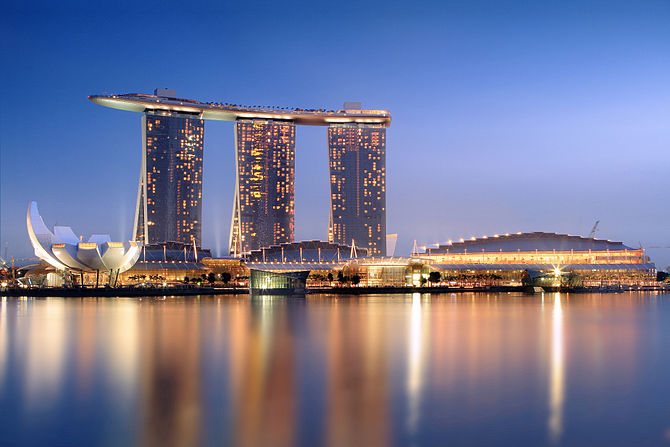
Global Gaming Expo Asia ends today at Marina Bay Sands in Singapore and, for those covering it, perhaps not a moment too soon. Despite reporting it virtually, one could be run from pillar to post keeping tabs on the various seminars, nearly all of which overran their allotted time (one “45-minute” panel dragged on for a mind-numbing 80 minutes). However, there was much valuable intelligence to be gleaned from some of the best minds in the Pacific Rim. For instance, there was general agreement that gaming regulation in Asia (and especially Australia) has a long way to go.
So does Macao, although presenters differed over whether it would be a near-term runup or one taking as much as five years. The consensus was that junkets were all but dead and satellite casinos rapidly dying in the enclave. Pundits have also cooled on Japan, although prospects looked rosier in South Korea and perhaps even Thailand (though not as rosy—$35 billion a year—as the government thinks). Nippon was repeatedly held up as a cautionary example of how not to stand up a casino industry, while Bangkok could be attractive to the industry’s big shots if strong regulation is present—and maybe even if it isn’t. Of course, if it’s government oversight you want, nobody beats Macao: Of the new gaming-regulation law one veteran said, “That level of supervision has never been seen before anywhere else.” So if you want to complain about ‘excessive regulation’ you’ve obviously never done business in Macao.

While all eyes were on Singapore, Golden Gaming scored a deal that had Wall Street applauding. It unloaded western-Maryland casino Rocky Gap Resort for $260 million to Vici Properties (real estate) and Century Casinos (operations). Century got a particularly good deal: $56 million. The move makes sense, in that Rocky Gap was clear on the other side of the continent from Golden’s core operations and Century is looking to geographically diversify, unlike Golden. The latter does incrementally raise its Nevada risk profile should there be an economic downturn, but hardly in a worrisome way. Vici also got the property for cheap: A below-industry-average 5X cash flow. So it’s a win-win-win all around.
“Synergies for [Century] include cross-marketing opportunities with its Mountaineer Resort and, potentially, accretive slot mix/reconfigurations. There are also potential expansion opportunities at Rocky Gap, in our view,” wrote analyst David Bain. Upsizing Rocky Gap would make sense as it only has 16 table games and 630 slots. Deutsche Bank analyst Carlo Santarelli echoed Bain, saying the sale shores up Golden’s balance sheet “as we believe it furthers the growth/capital return story, at a favorable price, for an asset we deemed to be noncore.” What’s Golden going to do with the money? Well, Reno has been mentioned …
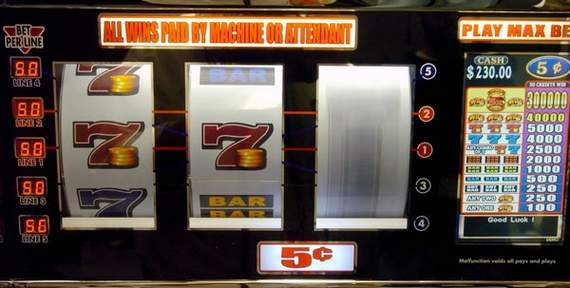
Black-market slot routes continue to be a headache for Missouri regulators, who have received 93 complaints and get-rich-quick inquiries about the banned bandits in the past seven months. The casino industry and certain politicians are at loggerheads on the issue, as the riverboats don’t want slot routes doing to them what they did to Illinois, while the legislative proponents of slots-everywhere have self-interested motives of their own. Some wannabe slot mini-moguls actually have the audacity to call regulators and ask them for advice: “Caller wants to know how to get a license and get suspected illegal machines in his business.” Well … you can’t. Lacking a proper enforcement body, cracking down on rogue slots is the business of the highway patrol and we’re sure the Smokies have their hands full with their more-convention remits.
So brazen are the black marketeers that “it is rare to see a gas station in many parts of the state that does not have the machines.” And if you think you got cheated, tough luck. The state can’t help you. How do you enforce ‘fair play’ on a device that never should be there in the first place? Expect the issue to be revisited during the next Lege, probably as a tradeoff for sports betting. (Incidentally, if Georgia Gov. Brian Kemp [R] wants a campaign issue, we’ve seen black-market slots cropping up in our neighborhood. No need to thank us, guv.)
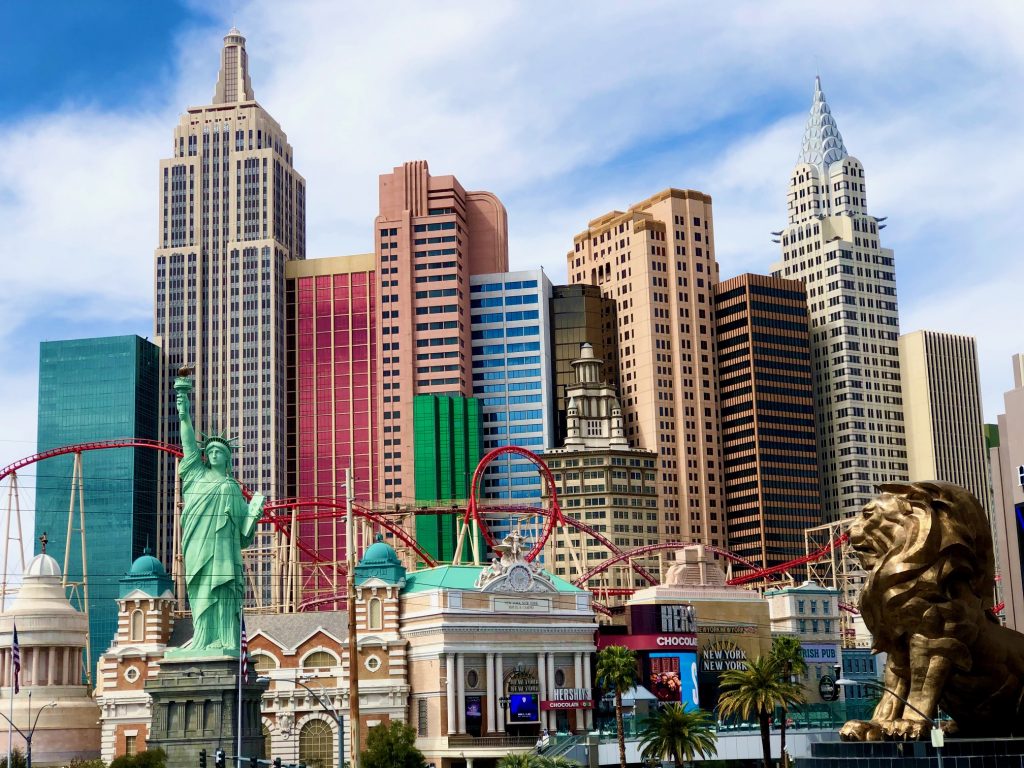
Jottings: While rival companies are going wacko about new casino development, MGM Resorts International is sticking to its knitting, putting $63 million of capex into New York-New York. It’s a mix of making rooms roomier where possible, bringing them up to date technologically and redesigning them with “exposed faux brick walls and accent colors,” for a New York state of mind … It’s a good thing this report came out after the new labor accord in Atlantic City. Boardwalk casinos made 14% more in 2Q22 than the year before. Occupancy ran at 77.5%, led by Hard Rock Atlantic City‘s 95% and trailed by Golden Nugget‘s 58%. No wonder it’s so easy to get comped at the Nugget … Room-tax revenue in Reno (say that three times fast) went off the charts in June. Overall occupancy has almost caught up with pre-pandemic 71% … Want to get a casino in Portugal? Two licenses will be available soon, one of them formerly belonging to the late Stanley Ho, so any new operator will by definition be an improvement … Another strike against Horseshoe Baltimore: Nearby Camden Yards will offer on-site sports betting, courtesy of SuperBook. At least Caesars Entertainment is already licensed in Maryland, unlike relatively untested SuperBook.
Quote of the Day: “I thought you had to go for a walk in Atlantic City streets to see the live boxing. Soon you can see it indoors too.”—anonymous, on the return of the sweet science to Bally’s Atlantic City, Sept. 9.

[…] Source link […]
Nostradamus, I am not, but I predicted this mess months ago, the Initiative process in California is hopelessly broken, we have two entities who have chosen to use exploitative tactics… In my opinion the Native Americans want to tame and bury sports wagering by limiting to in person betting at locations widely scattered in a giant state. And the “Big Gaming” folks, instead of highlighting the specifics, have made their advertising pitch about homelessness and non-gaming Native American tribes. Homelessness is unsolvable by any means, let alone one single gambling bill. Just once it would be nice to have elections based on facts, heck it would be great to always have that, but monied interests do not share my views… Very disappointed in the Prop 27 advertising, I have had to explain the specifics to many folks, Prop 27 should change strategy and just tell the truth instead of trying to say who will get the $$$…