

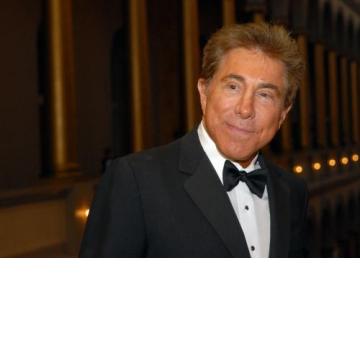
 Yes, the recovery in Las Vegas could be said to be a chastened and limping one. The national press will leap at just about anything to restart the “Vegas is back” narrative. And yes, CityCenter ROI improved exponentially … to 4%. But all that being the case, nothing seen in recent numbers — like a 15% revenue increase in February — would appear to warrant the doom-and-gloom demeanor that Steve Wynn adopted in Carson City. “Right now the gaming industry has a serious health problem,” Dr. Wynn proclaimed glumly outside the operating room. Now, when Wynn makes ones of his rare visits to the state capitol, he’s usually seeking a tax break. There’s scant chance of that happening but the Wynn Resorts CEO seemed more concerned with heading off any increase in state gaming taxes. However, Wynn’s proclamation of ill health would be a more convincing piece of spin doctoring were his company not coming off a profitable 1Q13 that saw a 7% revenue increase at its Las Vegas Strip operations. If Steve keeps talking about ‘health problems,’ it won’t be long before someone points out that his board of directors is alarmingly superannuated.
On the other hand, a company that has been struggling with diminished visitation has to be questioned  for taking two Strip hotels out of action. That’s what Caesars Entertainment did, helping the company post a bigger-than-expected loss for 1Q13. Analysts expected -$1.46/share and CEO Gary Loveman delivered -$1.76, an under-performance aggravated by the conversion of Imperial Palace into The Quad and the closure of Bill’s Gamblin’ Hall. These moves helped drive a 3% decrease in Strip revenue. Given that Caesars is in dire penury, was the $550 million Linq project or the $187 million makeover of Bill’s into Gansevoort Las Vegas really such a high-priority item? It’s bad enough to let your existing properties go to seed, worse to mothball them entirely. Caesars is like a compulsive gambler, down $24 billion and determined to keep worsening its odds.
Perhaps Wynn’s otherwise unaccountable gloom was provoked by the news that Wynn Macau had to pay $2,500 — pocket change, really — for tiptoeing through customers’ personal information and  exporting it to Wynncore. A similar case against Sands China is still pending. Closer to home, voters in Everett will decide Wynn’s fate there on June 22. Wynn’s deal with the Massachusetts city is arguably the most “george” yet seen in the Bay State. Its particulars include brownfield remediation, $30 million in front money and $25 million in yearly payments to the city. At $1.2 billion, the project would also be the costliest yet proposed.
Interestingly, since El Steve planted his flag in Everett, one has heard almost nothing more about the $1 billion Suffolk Downs racino makeover that would be bankrolled by Loveman and Richard “Coastal Marina” Fields, two men who would be hard-pressed to come up with cab fare to the track, given their history. (Fields’ elongated and abortive pursuit of Trump Marina was a sorry shambles.) Of the various Boston-area proposals, Wynn’s has the most impressive credentials and the firmest bankroll. This should be a no-brainer for voters and the Massachusetts Gaming Commission alike.

When you look at Steve Wynn’s accomplishments, all you can say is – INCREDIBLE. Why second guess him now? Time will tell.
Agree 100% on Wynn’s Massachusetts proposal.
Funny about Caesars Downs, etc. I don’t like the design and can not believe that they are even using the Caesars brand which they seem to guard rather closely.
Best guess: They think their chances are better with an up-market brand, as opposed to “Horseshoe Suffolk,” etc.
In 2012 39.7 million visitors spent $44.9 billion dollars in Las Vegas. This is the one of the many reasons Genting Group bought the Echelon site and is developing a huge multibillion dollar hotel-casino there.
That surprised lots of people and then there was this a couple of weeks later: “A Third Observation Wheel proposed for the Strip? Really?” in the Las Vegas Sun on March 20th. The location for another ferris wheel is on the east side of the Strip just south of Harmon Avenue.
I think the Elvis hotel-casino project was announced here back in 2007. Now I would be shocked if another ferris wheel was built here so it looks like whoever owns this land is going to sell it. The question now is who will buy the land and for how much money.
At $2 billion, Resorts World Las Vegas looks very doable. At $7 billion … I dunno. Perhaps Genting Group should ask Jim Murren how his $8.5 billion investment on CityCenter (in a superior location) is performing.
You bring up a good point Mr. McKee. Thinking again about the total cost of Resorts World Las Vegas getting a good ROI (Return On Investment) on anything above $2 billion dollars would be pretty difficult.