

Oklahoma Gov. Kevin Stitt (R) is escalating his rhetoric in his war with the Sooner State’s casino tribes. He says they’ll be operating gambling “illegally” starting on New Year’s Day. But his verbal volley wasn’t aimed  at tribes so much as their vendors, who he implied would be operating at risk if they continued doing business with the tribes. Laying on the invective, Stitt said, “I feel so confident that Oklahomans can see right through a certain industry, the casino industry, saying, ‘These [compacts] go on forever.’ That can’t be true.” Both sides have painted themselves into a corner. Stitt won’t negotiate with the tribes unless they acknowledge that their contracts expire in 20 days. The tribes won’t talk until Still accedes that the compacts extend into perpetuity—or at least for another 15 years. “Governor Stitt’s position is not supported by law, logic or the compact’s plain language,” said Chickasaw Nation Senior Counsel Stephen Greetham. “Those are terms the state offered to us 15 years ago, and it is beyond untenable for it to arbitrarily and at the 11th hour suddenly say it didn’t mean what it said. Oklahoma is better than that, and the state-tribal relationship deserves better than that.”
Saying he doesn’t want to negotiate in public (although when your opening gambit is a Tulsa op-ed, your claim of blushing modesty is somewhat ironic), Stitt won’t disclose what, if anything, is on the table for tribes in return for a bigger share of their revenue, of which he wants a nation-leading 25%. (We never said he wasn’t audacious.) For his part, Chickasaw Nation Gov. Bill Anoatubby whistled in the feds, writing to the Department of Interior, threatening legal action over Stitt’s  ultimatum. “We reserve our right … if necessary, to protect the Chickasaw Nation’s legal and sovereign rights as well as the material interests of our citizens who rely on government programs and services supported by our gaming operation revenues,” Anoatubby wrote. Stitt may be dealing from a weak hand. The state racing commission has already OK’d racino operation for another year, compacts be damned, and former U.S. Solicitor General Seth P. Waxman, author of the compacts, says they are meant to renew. For his part, Stitt is trying to—pardon the pun—trump the tribes by taking his case to the White House, a venue currently hostile to tribal gaming.
* California card rooms are understandably up in arms after Golden State gaming regulators promulgated a new rule requiring the position of banker to rotate among players every two turns. This will please tribal casinos, which have long accused the card-room industry of flouting the  rules and offering de facto banked games. In practice, what card rooms do is have an employee act as dealer while a third-party businessman collects from and pays players. Card rooms like this practice because it makes for smoother play. As the Los Angeles Times put it, “Things could get confusing, they say, if a novice player with a weak grasp of the rules becomes the banker.” Faced with having to be the banker, critics say, players will desert the card rooms in favor of tribal casinos. And that would kick an important tax prop ($71 million) out from under some dodgy California cities.
For instance, Commerce is almost solely supported by Commerce Casino. “It’s going to devastate a lot of working-class communities, not just the city of Commerce,” reacted City Manager Edgar Cisneros. 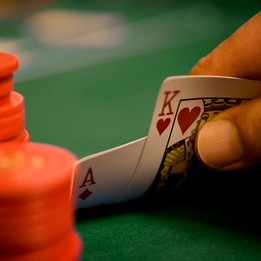 While CNIGA maintained neutrality on the Bureau of Gambling Control‘s edict, the card-room lobbyist group California Gaming Association unloaded with both barrels. “If these regulations were adopted as proposed, they would kill the card room industry and devastate dozens of communities and thousands of working California families across the state,” they fulminated. “This proposal is a clear attack on the card room industry and a message that the bureau is intent on eliminating this lawful $5.6-billion industry and putting 32,000 Californians out of work.” With so much money and so many jobs at state, card rooms are certain to find sympathetic ears in the Lege.
… but not if they behave like Gardens Casino, a card room in the microscopic city of Hawaiian Gardens. The card room hushed up a federal investigation and related $3 million fine when applying for renewal of its state license. For this excess of discretion Gardens Casino 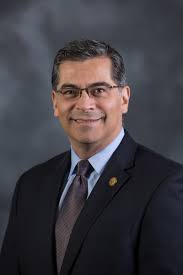 will be out another $3 million. Grandstanding state Attorney General Xavier Becerra was clement with Gardens Casino, which his deputies wanted to shutter. FinCEN had earlier penalized the card room for violations of the Bank Secrecy Act, described it as “susceptible to money laundering and terrorist financing activity.” Transaction-reporting requirements were routinely disregarded.
No doubt Becerra’s mercy was motivated by the fact that Hawaiian Gardens would have lost two-thirds of its civic budget without Gardens Casino. “For better or for worse, if this thing goes bad, we would cease to exist as a city,” sighed City Manager Ernie Hernandez. He furthermore accused Becerra of being a puppet of tribal casinos. For his part, Becerra said “There’s no excuse for failing to comply with the law and deliberately attempting to mislead regulators.” And that price is $3 million. Ironically, the present owners of Gardens Casino came into the property in 1988 after the previous propriety was hit with indictments. So you might say it’s business as usual in Hawaiian Gardens.
* Virginia man Ming Zhang faces 18 months in the slammer after pleading out to charges that he defrauded the Maryland casino(s) that employed him as a dealer. As he dealt baccarat he would show his cards to a pair of conspirators in return for a $1,046,560 slice of the fraudulent winnings. Law enforcement obligingly hushed up the identity of the casino(s) at which this scam took place.
* Wakayama is putting a $71 marker down on the legalization of casinos in Japan. If it gets assigned a megaresort it will follow through with the purchase of 51 acres of land destined for casino development. Marina City, an artificial island, is the intended site. The eventual casino developer, whomever that might be, would be sold the land for what the city paid.
* New Year’s Eve marks the end of the line for Vanguard Lounge on Fremont East. The place was a douchebag magnet and won’t be missed. Don’t let the velvet rope hit you on the way out.
