
Gaming revenues inched up 3% in Nevada last August, while the Las Vegas Strip was up 5%, to $568 million. JP Morgan analyst Joseph Greff wrote that the latter implied “strong 3Q for MGM 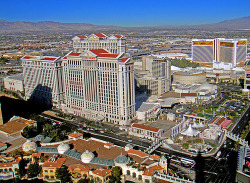 table games given WYNN and LVS’ combined 3Q table game revenues declined by $5 million y/y; this makes sense given MGM’s strong 3Q convention calendar.” Strip slot revenue rose 4% on 3.5% higher coin-in, while table games winnings were up only 5% despite 15% greater wagering. Baccarat players were lucky indeed, wagering an astonishing 47.5% more but losing only 3% more to the house. “We believe the baccarat results were boosted by the Golovkin/Alvarez fight mid-month,” noted Deutsche Bank analyst Carlo Santarelli. Miscellaneous Clark County jurisdictions like Primm and Mesquite eked out a 1% gain to $96 million, while Laughlin‘s $37 million was good enough for a 3% gain.
Downtown ($49 million) was flat, North Las Vegas ($19.5 million) fell 8% and the Boulder Strip slid 6% to $53 million. Locals slot revenue fell 5% despite 6% more coin-in. Reno, by contrast, had a very good month, up 9% to $59 million, while nearby Lake Tahoe slipped 3% to $21 million. Elko was up 5% to $52 million and Carson Valley gained 4.5% to $9 million. (Note: Poker rake is now included when Nevada casinos report table games revenue, blurring the picture somewhat.
* The ink on Pennsylvania Gov. Tom Wolf‘s signature is hardly dry and already gaming boffins are predicting $120 million in state revenue from licensing Internet casinos. A report by PlayPennsylvania.com, penned by Chris Grove, predicts $154 million in casino revenue in Year One, growing to $275 million
 by the fifth year (the point at which licenses come up for renewal). “Pennsylvania’s unique structure makes it difficult to forecast revenues with precision, but the successes in other states suggest that online gambling will be a significant and reliable revenue driver for years to come,” writes Grove. “Pennsylvania’s high tax rate will force operators to cut back on marketing and promotion, and could dissuade some consumers from leaving black market sites. It is certainly possible that lawmakers will need to revisit the tax rate in order to ensure a market that works best for both the commonwealth and the casino industry that has contributed billions to Pennsylvania’s coffers.”
Grove adds that this could be the tipping point for other states that have fiddled with the idea of i-gaming. West Virginia is the  next-likeliest to follow but don’t count Ohio and New York out, especially with the Empire State hurting for revenue after a big upstate casino expansion flopped. Pennsylvania casino operators have a four-month window of exclusivity to apply for Internet casinos, whereupon the process opens to outside parties. Actual play is expected to begin a year from now. Interestingly, the two terrestrial casinos with the most brand equity — Sands Bethlehem and Parx Casino — are likeliest to losing out by remaining on the sidelines. Talk about cutting off your nose to spite your face!
* Et tu, Caesars? Yes, Caesars Entertainment is going to make Nevadans pay for parking at all its Las Vegas properties except The Rio. (Could they be repositioning the latter as a locals 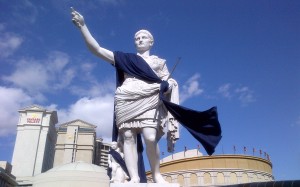 casino?) Platinum Level members of Total Rewards are exempted from the levy. Blaming the victim, a Caesars flack wrote, “We have noticed an uptick in people coming to our properties only to park. This has limited the availability of self-parking for our actual customers — especially during concerts and sporting events taking place elsewhere on the Las Vegas Strip.” The Las Vegas Sun has all the grisly details on what it will cost you to leave your vehicle at a Caesars property.
* It’s game over for Phil Ivey. The United Kingdom Supreme Court ruled that he must repay Genting Group $10 million smackers that he won at a London casino. Let that be a lesson to any of you who are trying your hand at ‘edge sorting.’
