

What is almost completely missing from this commercial? Caesars Entertainment guests are lengthily shown drinking, dining, riding the High Roller (which could use the traffic) and — as a very brief afterthought — gambling. So the company’s definitely on the curve as regards the changing demands of the Las Vegas tourist. The purpose of the spot is to promote the company’s new mechanical-check-in system, currently being field-tested at the Flamingo Las Vegas, Linq and Caesars Palace. Once any kinks are worked out, expect the system to go wide at Caesars’ Strip properties.
This innovation — conceived with convention traffic in mind — is described as “similar to what’s seen at check-ins at airports and rental car companies.” (emphasis added) And guess where Caesars CEO Mark Frissora made his reputation? Considering how backed up check-in desks can get, especially on weekends, Frissora’s initiative is to be applauded. After all, one needs only add more kiosks if they get swamped by demand — and they never need coffee breaks and won’t (hopefully) call in sick. The check-in process can be further expedited by initiating it from your home computer or by a mobile application.
While assuring the Las Vegas Review-Journal that check-in clerks’ jobs were not in danger, President of Hospitality Bob Morse said, “Our goal is never have anybody wait more than 15 minutes, and we were far exceeding our goals by double during certain times of day and days of the week.” A similar, handheld device may be introduced at Caesars pools this summer, to expedite food and beverage orders. While the new kiosks eliminate the personal element of the check-in desk, it also assures Caesars that customers aren’t getting room upgrades by slipping the clerk an extra $20 on the side. Another Vegas tradition bites the dust.
Frissora’s checkered past at Hertz Global Holdings, while a subject of regulatory concern, ultimately didn’t stand in the way of Nevada casino license. While Frissora’s past was the main subject of discussion at his Nevada Gaming Control Board hearing,  current events overtook his Nevada Gaming Commission appearance. One of these was a court-appointed examiner’s finding that Caesars could be on the hook for as much as $5.1 billion in controversial asset transfers that shielded prime casinos and intellectual property like Total Rewards from Chapter 11. Frissora sought to erect a “Chinese wall” between himself at the ongoing bankruptcy case, which is nominally the province of Chairman Gary Loveman, cleaning up his own mess.
Like Banquo’s Ghost appearing at the feast, former Park Place Entertainment CEO Thomas Gallagher testified at the hearing, on his own behalf and that of other former company executives who are suffering from deferral of their pensions. “It has not been a priority, and that’s part of the problem. And the strategy has just been to keep putting it off,” Gallagher said. Frissora was relatively noncommittal. “I’ll do everything I can to help, but we’ll see how it plays out,” he said ominously.
* Making official what was previously reported here and by Wall Street analysts, MGM Resorts International and Dubai World announced that they are are selling 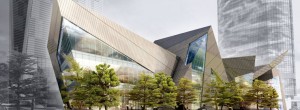 Crystals to Simon Property Group, which will give Simon control of four megamalls in Las Vegas. The price is the previously reported $1.1 billion, which gives MGM a handsome return on a non-core asset, of which the company has shed a number of late. Initially an empty mausoleum masquerading as a shopping mall, Crystals has recovered sufficiently to deliver some of the best ROI in the industry. “We view the transaction as consistent with MGM’s stated intention to monetize assets, when attractive, and consider the multiple fair given the property is relatively new,” commented JP Morgan analyst Joseph Greff. Remember, you read it here first.
In other news, MGM got Nevada Gaming Commission approval for conversion into a REIT, MGM Growth Properties, which will own seven of MGM’s 10 Las Vegas Strip 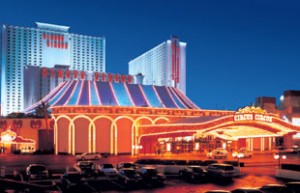 casinos, MGM Grand Detroit and the company’s two Mississippi properties. Among the MGM properties excluded from the sale-and-leaseback arrangement are Bellagio and The Mirage, which generate the highest MGM cash flow on the Strip, and Circus Circus, whose exclusion from the REIT should cause concern for fans the of the clown casino. It has a ton of underutilized acreage and, should the north Strip make a comeback, would be a prime site for a new megaresort, especially once the Las Vegas Convention Center expands to where the Riviera now stands.
* Although Jamul Indian Village lacks a gaming-management agreement, the National Indian Gaming Commission ruled this week that it can open without one. This could mean that Penn National Gaming, which has been bankrolling the project to 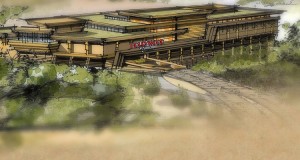 the tune of $360 million, could find itself cut off from the action. It also means the Jamul would have to forfeit the brand equity of the Hollywood Casino moniker. If the management agreement is approved by the NIGC, Penn will operate the casino for seven years. The tribe has stated its intent to open and operate the casino on its own if no management agreement is in place. (You have to wonder why Penn didn’t have this nailed down sooner.) The project is expected to be low-return venture, with ROI estimated at 8%, maximum.
Anti-gambling activists continue to nip at the Jamul’s ankles, claiming the casino isn’t being built on reservation land. The Jamul Action Committee has lost before, with U.S. District Court Judge Kimberly Mueller ruling that “The court is aware of no statute or regulation, and the parties have cited none, that would require the NIGC or [Bureau of Indian Affairs] to review or approve a management contract before the subject casino is constructed or operated, or to approve construction at all. To the contrary, the [Indian Gaming Regulatory Act] implies the Tribe may construct and operate a casino on its own land without a management contract.” JAC is now trying to get the Ninth Circuit Court of Appeals to intervene on its behalf. If the defendants prevail, the casino is expected to open in a few months with 1,700 slots, 43 slots and a rooftop beer garden. Drink up!
* High casino taxes are hardly an exclusively American phenomenon. Genting Highlands is subject to a 25% impost — which is about to get higher.

Congratulations to MGM for selling Crystals. I think The Park will do real well when it opens next month and maybe they can get a NHL hockey team in the new T-Mobile Arena.
I have read this blog at least three times a week since it started back in 2008 and David McKee is a very good writer who talks about the casino industry in Las Vegas, the United States and pretty much everywhere else in the world. Back in May of 2013 Mr. McKee had an excellent blog entry entitled, “Profit vs. investment on the Strip”
and as of today this entry has been viewed over 1,000,000 (one million) times. I made a comment then and if you click on my name you go to my website.
The first thing I would like to say is that a better name for my proposed nightclub would be just Dice or maybe Tumbling Dice. I was able to get the website for Disco Dice so I went with that. Since most of the top nightclubs have only one name (XS, Hakkasan, Marquee, Tao) Dice would be the best.
If you did take the time to peruse my website http://www.discodice.com thanks for looking. It is possible that different parts of my business plan which include Market Analysis, Industry Trends and Marketing Strategy could be valuable information for people starting either a restaurant or nightclub in Las Vegas so if that helps some people out I have no problem with that. The more options for people coming to Las Vegas (or for people who live there) the better.
In 2015 Las Vegas had 42 million visitors and they are not gambling as
much because 6/5 blackjack is prevalent now in most casinos and also the slot machines are tighter. But since there are hundreds of casinos currently in the United States people visit Las Vegas now for
nightclubs, dayclubs, high end restaurants, spas, shows and shopping.
Gambling is secondary.
Keep up the good work Mr. McKee.