

Call it Revel, call it Ten but, whatever you do, call it “closed.” Because that’s what Revel is. Owner Glenn Straub is frittering away the prime earning weeks of the year while he fights with state and local officials, 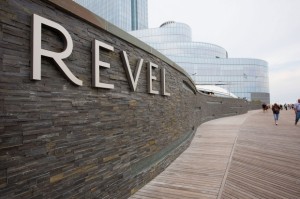 whether it’s over his need to get a gaming license or the importance of submitting a site-plan application. Now he’s disputing payments to the Special Improvement District. With characteristic hyperbole, Straub said, “Please don’t get into blackmail. You do that, I don’t start up. It’s not worth the condition. We’ll take it to court. It’ll take us nine months. It’ll take us three years. We’ll fight it in court and see who’s right or who’s wrong. I’m an American citizen. I fight for what I believe in.” Yes, Straub would keep Revel dark for three years just to prove he’s right.
And what does Straub believe in? Proving that special circumstances should apply to him, no matter what collateral damage ensues. Considering how much importance the Division of Gaming Enforcement would put on reopening Revel, er, Ten, a Straub licensing application would probably have sailed through (the way Donald Trump‘s used to), but that wasn’t good enough. He’s compounded the problem by hiring a completely inexperienced operator to run the casino. And he’s reported to have been slapped with a $62,641 lien covering unpaid Casino Reinvestment Development Authority fees. I’m sure Ten will be impressive when it opens. But the question is: When? And at what price?
* Wait ’til next year. That Brooklyn Dodger sentiment coming out of the New York State Assembly relates not to baseball but online  poker. A bill to legalize the sport sailed out of state Senate but swiftly collapsed in the Assembly, where point man Rep. Gary Pretlow (D) can never seem to get anything done. Now he’s promising action sometime in 2018. One would think that the danger of Attorney General Jeff Sessions revising the Federal Wire Act would spur Pretlow to action but you’d think wrong.
* Except when forced to face reality, casinos continue to cling to the self-delusion that putting a “smoke-free corridor” across the middle of their casino floor will somehow magically deter the smoke from drifting. Or, as Dr. James Repace puts it, “Drawing a line on the floor simply doesn’t work, because the smoke does not know where to stop. 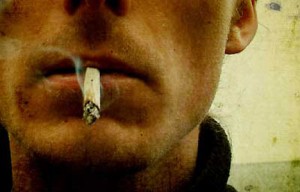 It’s governed by the laws of physics, so it will diffuse right over the line.” While less than 20% of the general population smokes, according to the Centers for Disease Control & Prevention, smokers get 50% of the gaming floor in Pennsylvania casinos.
That may be about to change. State Rep. Matt Baker (R) has introduced a bill to remove casinos’ exemption from the state’s smoking ban. Its odds are long but scientific opinion is in Baker’s corner. The problem is exacerbated by Pennsylvania casinos’ — with the exception of Presque Isle Downs — tendency to lump smoking and non-smoking areas right next to each other on the casino floor. Although Repace’s determination that “casinos had four to six times more particulates and carcinogens than the outside air” dates from 2009, he stands by his data as still accurate.
It’s not like Pennsylvania players have anywhere else to go. All the surrounding states have smoke-free casino floors. That’s the wave of the future and Keystone State lawmakers should take it seriously. As for players, if they really want to breathe polluted air, give them dedicated smoking lounges, where they can foul each others’ lungs at will.
* Speaking of player comfort, how important are chairs? So much so that The Cosmopolitan of Las Vegas replaced 2,000 to improve the gambling experience (and encourage longer play, no doubt).
