

While Station Casinos CEO Frank Fertitta III won’t be mistaken for a pauper anytime soon, he’s the most restrained of Las Vegas‘ top six gaming CEOs
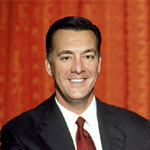 when it comes to compensation. On top of his $1 million base salary, his compensation package grew by only $200K last year, putting him just under $2 million and at a 63-to-1 ratio to median Station employee pay. (As the 86% owner of Station, Fertitta benefits directly from good stock performance.) That might sound like a lot but it’s sackcloth and ashes compared to what other CEOs were making. True, Caesars Entertainment‘s compensation committee spanked then-CEO Mark Frissora by cutting his stock awards by almost $12 million, leaving him to eke out a living on $13 million (360-to-1).
Leading those making out like bandits was Sheldon Adelson. The Las Vegas Sands high panjandrum enjoyed a 591-to-1 ratio, with $5 million in salary and $19 million in other compensation. Adelson’s Las Vegas Review-Journal tried to spin the numbers as a sign of austerity but most Americans would love to 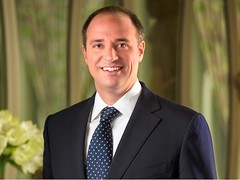 practice this kind of fiscal restraint. MGM Resorts International supremo Jim Murren took home $2 million in salary and nearly $11 million in other compensation (355-to-1). If MGM really wants to save money, perhaps it should look at its executive suite. Continuing to fail upwards, Wynn Resorts CEO Matt Maddox vaulted 4X from his 2016 salary to $17 million once stock awards and other compensation is added to his base pay of $2 million (387-to-1 sexually harassed employee). Maddox got dramatically fewer stock awards than in 2017, so there’s some justice on Wall Street.
Rounding out the top six was Boyd Gaming‘s Keith Smith, who took home $1 million-plus in salary and almost $8 million in other compensation (315-to-1). Boyd, the only company to cooperate with the R-J in the story, said that the ratio is misleading, as it doesn’t include tips, that bedrock of employee compensation in Vegas.
* Big Gaming is rolling out the heavy artillery this week in Osaka. Vowing to spend over $10 billion on a megaresort (the required minimum is $8.5 billion), Melco Resorts & Entertainment CEO Lawrence Ho said he was “absolutely confident” his company held the winning hand. “Japan is in a unique position, because we have the ability to learn from the mistakes made by others in the past and draw upon what’s been learned by previous successful premium tourism ventures,” said Ho while announcing a “City of the Future” concept for Osaka.
Not to be outdone, Marina Bay Sands CEO George Tanasijevich said his parent company was “well-positioned” to make a run at Osaka. “We’re the only operator that has active operation in the top three integrated resort 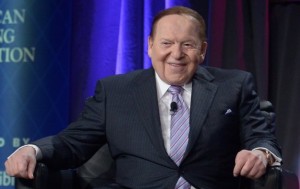 markets in the world, and they’re all distinctively different,” he elaborated. Like Ho and MGM, Tanasijevich was chary with details other than making a commitment to a Yameshima Island site. As might be expected from anything involving Sheldon Adelson, the Sands rep said his company would be uncomfortable with being a minority owner, even while it was interested in and soliciting participation from Japanese companies. “That doesn’t mean we have to be 100%. But where lies between 51% and 100%, I can’t say at this point of time. It is going to depend upon what the partners and investors want, and what level of commitment they can make,” Tanasijevich explained.
* Caesars hasn’t even been sold yet but it’s already unloading assets. It cashed out its 70% stake in South Africa‘s Emerald Resort & Casino for a paltry $49 million. That won’t make a dent in Caesars’ corporate leverage but it does seem like a harbinger of retrenchment to come. This transaction is expected to close sometime this autumn.
* “We will judge people by not what they say but by what they do. Because nobody likes to be betrayed,” warned Unite-Here President D. Taylor. His union and the Culinary Union are collecting on Nevada Gov. Steve Sisolak‘s  marker. Sisolak owes his election to a heavy Culinary push and, in return, the union would like to see state employees empowered to bargain collectively. “Supporters say the bill would give about 20,000 state workers such as prison guards, janitors and secretaries the ability to secure better wages and working conditions while curbing turnover … Republicans, conservatives and business groups opposing the legislation say it would be costly for the state and hamstring efforts to rein in costs during an economic downturn,” reports the Las Vegas Sun. The Culinary wields a great deal of political muscle in Southern Nevada and it will difficult to tell it ‘no.’
