

Donald Trump‘s casino years are back in the news again, thanks to a New York Times exposé of his tax records that described the 1985-94 period as “an era of 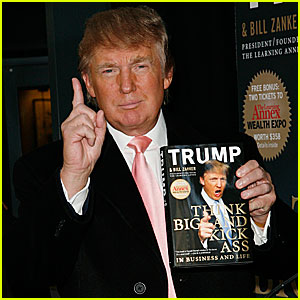 fevered acquisition and spectacular collapse.” During a two-year period in the middle of that decade, Trump’s business losses “were more than double those of the nearest taxpayers in the I.R.S. information for those years.” The Trump White House has hunkered down, challenging the NYT‘s veracity and adding “I.R.S. transcripts, particularly before the days of electronic filing, are notoriously inaccurate.” When the news is bad … While the NYT doesn’t have The Donald’s returns themselves, the documentation that they have tracks closely with father Fred Trump‘s returns from the same period, the president’s former sugar daddy. Papa Fred’s businesses are described as “stable and profitable,” while the young Trump’s sources of income vary wildly. “But always, those gains were overwhelmed by losses on his casinos and other projects.” He was able to stave off disaster some of the time by posing as a corporate raider, pretending that he was about to take over various and sundry companies, then riding the boost this gave his stock. (We didn’t say he wasn’t clever.)
When the NYT takes up the thread in 1985, Trump was riding high from a 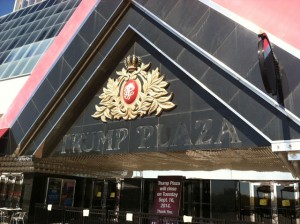 variety of projects (including the USFL and his first Atlantic City casino, Trump Plaza) that were about to go south—or be significantly delayed—lumbering him with debt. Trump’s best year was 1987, when he lost ‘only’ $4.5 million. By 1994, they had ballooned to $918.5 million. In 1989, New Jersey casino regulators had cause to look into the business dealings of the Trump Shuttle and found that its namesake was keeping it aloft by dint of $7 million/month in personal cash infusions.
Then came the infamous Trump Taj Mahal, which not only carried $800 million in debt but a punitive interest rate. Trump sued stock analyst Marvin Roffman for pointing out the obvious: The Taj couldn’t earn enough to keep 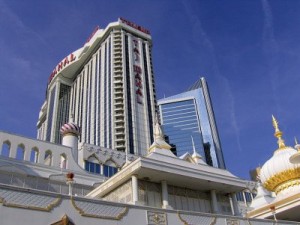 its head above water. Indeed, not only didn’t it, the Taj sapped the health of better-performing Trump’s Castle and Trump Plaza. This was the onset of dark period for both Trump’s debts, which grew phenomenally, and his business enterprises, some of which had to be turned over to lenders. But … “One of the most valuable special benefits in the tax code, depreciation lets owners of commercial real estate write down the cost of their buildings.” If Trump’s casinos earned a reputation as rundown, rattletrap edifices, so much the better for The Donald’s finances. “I love depreciation” he has said and there is no reason to doubt him. (In The Art of the Deal, he even uses the depreciation of one of his casinos to illustrate was a valuable financial tool it is.)
Nor would the net operating losses of his casinos have cost him much sleep, as negative cash flow provided him with a ‘get out of taxes free’ card, as it were.  Hype didn’t hurt either. Garden State regulators found out that a purported 5% stake and $55 million profit on United Airlines stock were actually less than 3% and only $11 million respectively. Trump was able to report a $63 million buyout from Merv Griffin, during the Trump Plaza runup, as personal income. As for Fred Trump, the only time he appears to have lost money in the 1985-94 period was when he invested some of it with Donald. Should we call him The Prodigal Son?
* A big S&G thank-you goes out to Christina Aguilera, who is donating $1 from every ticket sold to her next string of shows to the Shade Tree Shelter. Shade Tree helps women and children escape abusive situations and get back on their feet. It is perhaps the most deserving charity in Las Vegas and we’re right chuffed to see Aguilera reaching out to it.
* Due to what is described as overwhelming demand, Janet Jackson has added three shows to her Park MGM residency. Entertainment continues to give the quasi-new resort its identity but that’s no bad thing: Back when it was Monte Carlo, it had the worst brand equity (according to customer surveys) of any MGM Strip hotel.

Steve Wynn once quoted something to the effect that “Donald Trump never knew how to operate a casino company”. Dan Lee at Full House Resorts just quoted on their most recent earnings call that he is “running the country just like he did his casino business” Ouch
He did have some nice run ups in Resorts International, Ballys and more recently Riviera. Those are all I know off the top of my head, in the gaming business.
Trump Casinos: A few years ago, The Press of AC accurately reported (must have been a new reporter) that Trump had four casinos. The 4th was “Trump World’s Fair Casino” which was adjacent South of AC’s Boardwalk Hall. Trump Plaza is adjacent North of Boardwalk Hall. The 4th casino was built as the Playboy Casino, which had the typical NJ one year temp license. The casino regulators denied the permanent license. A new company took over, now named “Atlantis Casino”. It went bankrupt, and Trump bought it, sharing the Plaza casino license with “World’s Fair”. When the Plaza first opened, it was called “Harrah’s At Trump Plaza”. “World’s Fair” didn’t last long and it seems odd that a nearly new hotel and casino building was taken down. Could it have been for Boardwalk Hall expansion that was not needed, or just bad choices (as usual) by AC government? Last month, I bought a photo of the missing Trump casino on Ebay for $0.99 with free shipping.