

Daily fantasy sports backlash has claimed its first casualty. Relatively minor site TradeSports.com has gone out of business. “Recent negative events in the industry have already increased our costs of  operating (and will most likely continue to do so); or perhaps even prevent operations all-together. Put simply: We aren’t making enough money,” TradeSports told the Wall Street Journal. This closure comes at a time when Georgia, Maryland, Rhode Island and Ohio are joining the pileup of states looking into the propriety of DFS. Even DraftKings is said to be lowering its profile, trying to cut back on its advertising: “We are always in dialogue with [our partner teams], including now.” I’d say especially now.
Better news for Boston-based DraftKings came in the form of Massachusetts Attorney General Maura Healey‘s proposed consumer protections for the industry. These ranged from limiting play to individuals 21 and older to “preventing players from making deposits of more than $1,000 a month unless they verify they have the financial ability to sustain high losses.” This met with the  approval of DraftKings, which called Healey’s “a thoughtful and comprehensive approach.” However …
… DFS has drawn the scrutiny of advocates for the problem-gambling community. “It would be akin to an alcoholic finding out about a whole new street of bars that he never knew about — exciting, great bars,” says addict Joshua Adams. DFS gave him the quick fix that season-long fantasy leagues didn’t. Things got so bad for him that he was driven to the brink of suicide. (It should be noted that what Adams lost on DFS was dwarfed by his degenerate play on illegal sports-betting sites.) Against a story like Adams’ comments like FanDuel CFO Matt King‘s “Our product is all about entertainment value,” sound tone-deaf.
Adams, who started betting at age 13, is the template for the kind of person Healey is trying to protect with her common-sense package of regulations. It’s a good sign that the DFS industry seems willing to accept regulation as an inevitability, for it clearly is needed. “Fantasy games appeal to the demographic most likely to develop gambling problems — young men, who researchers say are more prone to taking risks,” reports the New York Times. And who do you see in DFS TV ads? Twenty-something douchebags. The Times also found that the appeal of DFS was filtering down to grade-schoolers. As one counselor put it, “all the students talk about is fantasy sports.”
Despite the urging of the National Council on Problem Gambling, DFS sites are not listing the numbers of problem-gambling hotlines on their Web sites. And, for obvious reasons, they don’t let the word “gambling” appear. After all, the difference between gambling and skill is at the crux of the DFS debate. DraftKings is working on some self-exclusion measures, which is a step in the right direction. On the other side of the coin, the Times reports, “a [problem gambling] client who had quit gambling confided that, in September, DraftKings had offered to let him play for free if he signed up a friend — which he did, and he won $35.” That’s like casinos offering free play to degenerate gamblers. (And when the man asked for his deposit back, DraftKings welshed on him.)
* Given the current debility of Macao‘s casino market, Deutsche Bank analyst Carlo Santarelli lowered his price target on Wynn Resorts stock all the way down from $100 to $82. The stock is currently trading at $60.35, so Santarelli is merely circumscribing 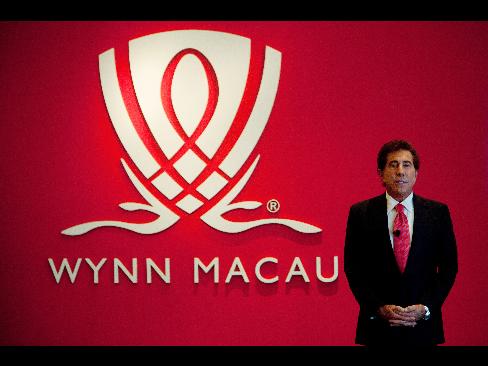 the degree of his vote of confidence in Wynn. The stock “continues to be very binary, hinging largely on the success of Wynn Palace and its ability to take share, or grow the market, something we see as less likely … forecasting Macau [gross gaming revenue] remains very difficult, so comfort continues to be fleeting,” Santarelli wrote. He’s projecting 23% return on investment for the first full year of Wynn Palace, though, so things can’t be that bad.
