

 Steve Wynn is singing his “we’re a Chinese company” refrain again. This never goes over well on the home front when he does it and his threat to move corporate HQ to Macao was met with a general chorus of, “How can we help you pack up and leave?”
But the Wynner has point. When it comes to revenue growth, China (and the larger Pacific Rim) is where it’s at nowadays. Las Vegas is years, perhaps many years away from justifying major new development. Domestic markets that are on the cusp of gambling expansion are either moving slowly (Massachusetts) or are otherwise problematic (Florida). So if you take China out of Wynn Resorts, its present and future dim considerably.
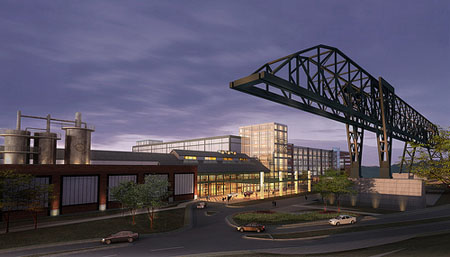 Photo finish. Table-game revenues have been reported in Pennsylvania and Sands Bethelehem (+8%) continues to exceed Wall Street‘s expectations by a healthy margin. Although Sands brought in almost $8 million at the tables, Harrah’s Chester Downs nipped it at the wire, grossing $100K more. Gaming expansion continues to drive enormous revenue growth at the casinos, with The Rivers in Pittsburgh and Sands (+46) surging the most, while little Presque Isle racino (+8) brings up the rear.
The pecking order remains the same. Parx Casino ($43 million, +23%) remains the unrivaled top dog and Rivers ($30 million) continues sneaking up on Sands ($31.5 million) for the #3 spot. With Sands’ long-promised hotel set to open in a fortnight, we’ll see if that puts a third wind in Sands’ sails … and how much a welter of looming construction costs dampens that breeze.

Casino developments the size of Echelon and Fontainebleau (which are obviously not done) are over in Las Vegas for a long, long, time. But the economy is improving in Las Vegas. In 2010 37.3 million tourists visited Las Vegas and spent $36.9 billion dollars. $7 billion dollars of the money spent was on gambling.
If 20% of tourist spending went into gambling, that shows the folly of then-Gov. Paul List’s “tax shaft,” which pegged the state budget to casino and retail revenues. It was, as R-J columnist Steve Sebelius put it, a model designed to fail in bad times. Even with the degree of recovery we’re seeing, there’s enormous “collateral damage” off the Strip. Yesterday, Mayor Oscar Goodman put the community’s recovery eight to 13 years away. That’s a hellish price to pay for having a one-dimensional economy.
The problem that Las Vegas has is the casino industry and the construction industry ran the town for years and years and after September of 2008 the house of cards came tumbling down. The Strip will be alright; people love Las Vegas and will continue to visit. The problems affecting Las Vegas are the oversupply of local casinos far off the Strip and thousands of thousands of extra houses that were built that were never needed. Also, there is way to much commercial space that is not rented out all over Las Vegas.
Mind you, housing developments and commercial space in major cities in Arizona, California and Florida face the same problem as Las Vegas. Developers in these areas kept building, building, buliding, building until the economy collapsed.
I am more worried now about the high cost of gas prices affecting the overall economy. I was watching CNBC last month and Erin Burnett (she recently CNBC for CNN) said the airline industry has lost $58 billion dollars since 1978. Wow, if that is correct that is a ton of money.
I think it’s great that US companies like Wynn and General Motors are doing so well in China but it also wound not surprise me if, someday, there isn’t a day of reckoning about too many eggs in the Chinese basket. For now, however, the eggs clearly are golden.