
As we saw earlier today, Las Vegas and Reno are pretty badly screwed for at least the next month. What about perennial problem child/comeback kid Atlantic City? Just when it’s back on its feet and roaring again, along comes Coronavirus to knock it off its pins. Global Gaming Business talked 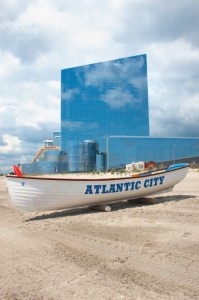 to gaming advisor Cory Morowitz about the Boardwalk’s indefinite shutdown. Morowitz likened Covid-19 to Hurricane Katrina … if Katrina had devastated the entire U.S. “Everyone’s in survival mode,” said Morowitz. “The people I’m talking to are thinking about emergency planning: How do you marshal cash to get through the next couple of months? If you own your building, how do you pay your bond payments? If you’re part of a REIT, how do you pay your rent? Will there be a federal response that’s going to be helpful?” (Yeah, those REIT rentals were a problem nobody foresaw when REITmania was sweeping the gaming industry.)
Big Gaming, Morowitz said, is “figuring out how to be fiscally responsible” and making recovery strategies, although that must be difficult when the timeline for recovery is somewhere off in the hazy yon. Asset-management firm HotelAVE crunched the numbers and it’s a gloomy prospect: five years before full recovery of occupancy and profitability. “The industry’s pre-COVID-19 challenges of above-average new supply and the impact of shadow supply—Airbnb and others—are new obstacles the industry did not face in prior downturns,” said CEO Michelle Russo. That might even be an optimistic scenario, as it is predicated on Coronavirus having a SARS-like tenure of four months. If the hotel industry acts on Russo’s recommendations, expect a diminished hospitality experience.
As HotelsMag.com summarizes her nostrums: “Close restaurants and bars, eliminate stayover housekeeping, close club lounges, pools and  fitness centers, shut down entire floors, cancel ongoing maintenance contracts or reduce their frequency, eliminate items like in-room coffee and bottled water, and furlough bell staff and concierges.” In other words, run a bare-bones operation. (We don’t know how well that would go over in service-intensive gaming.) Other prescriptions—cut back on marketing, focus on the business class and don’t discount aggressively; Reduce F&B, staffing and service but ramp up sanitation; And don’t pay anything you don’t have to.
Hotels executives—including MGM Resorts International CEO Jim Murren—meanwhile, continue to clamor for federal subsidies. Their  stated reason is to keep their doors open and employees on the job, although it’s an unanswered question of whether they’ll be able to do that if tourism continues to tailspin. (Even if Hilton CEO Chris Nassetta‘s stated concern for his workforce is sincere, will he be able to justify carrying employees at half-empty hotels?) Any financial relief should be contingent upon its going toward employee salaries primarily, not gimmicks like stock buybacks. (To MGM’s credit, it nixed a $1.25 billion buyback when Covid-19 reared its head on the Las Vegas Strip. Said Murren, “we are actively managing our costs to help protect our margins.”)
Incidentally, it is worth noting that when Macao casinos were closed for 15 days, gaming bosses didn’t utter a peep. Nor, then or since, have they demanded cash payouts, tax cuts (and they pay 39% over there), subsidies or zero-interest loans. And they didn’t lay off a single worker. It cost them $2 million/day/casino but they were stoic. A little of that good corporate citizenship would not come amiss over here.
At least Atlantic City has one secret weapon: a mature Internet-gambling market. The Golden Nugget grosses more from online play than walk-up 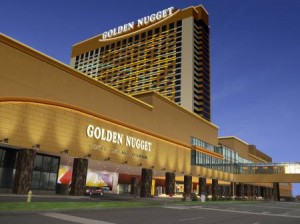 action. Other resorts, admittedly the ones at the lower end of the food chain, may soon be part of that trend. If you can’t go to the casino, New Jersey can bring the casino to you. Unfortunately for most other states, they have been slow or downright oblivious to the importance of i-gaming. Morowitz is skeptical, saying, “the people I’ve talked to are not really banking a lot on online betting.” He also strummed that golden oldie, “pent-up demand,” as though Americans are hoarding cash or, as reporter Marjorie Preston put it, “if people have any money at that point.”
The American Gaming Association, meanwhile, is trying to promote a business-as-usual attitude, saying, “Health and government officials have continually assured the public that healthy Americans can ‘confidently travel in this country.’ While it’s critically important to remain vigilant and take useful precautions in times like these, it’s equally important to make calm, rational, and fact-based decisions.” We agree.
* Taking their cue from Big Gaming, tribal casinos are also looking to Washington, D.C., for a bailout—$18 billion worth. If not, “Tribal governments will be unable to provide health and education services and will default on loans unless they get federal support to make up for lost
casino money,” reports Reuters. Defaulted loans can’t be collected upon in 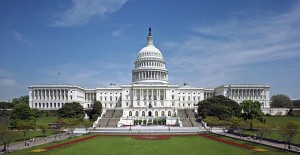 Indian Country, but basic government services are an obvious concern. However, there is a certain irony in sovereign nations throwing a Hail Mary pass to the Beltway when things get rough. Remember, except for the National Indian Gaming Commission, there’s almost no outside oversight of tribal casinos, so the money would essentially be no strings attached (including special legislation suspending interest payments for 26 weeks). If Congress comes to the rescue of the private-sector gambling industry then tribal casinos deserve equal consideration (maybe slightly more so since their money has to be reinvested in the the tribal community) but it’s a tough call.
Considering that tribal gambling generated $37 billion last year, the National Indian Gaming Association is basically asking for a 50% subsidy. It is, however, intended to be proportionate to the Native American populace, pegged to Donald Trump‘s $850 billion economic-stimulus package. We’re talking about a 460-casino industry that employs 700,000 Americans, gradually being idled as tribal casinos belatedly shut down in the face of the Covid-19 pandemic. (Washington State‘s Snoqualmie Casino has insisted on staying open.) Should they get the money? If the private sector gets bailed out we say, Why not? What’s another $18 billion among friends?
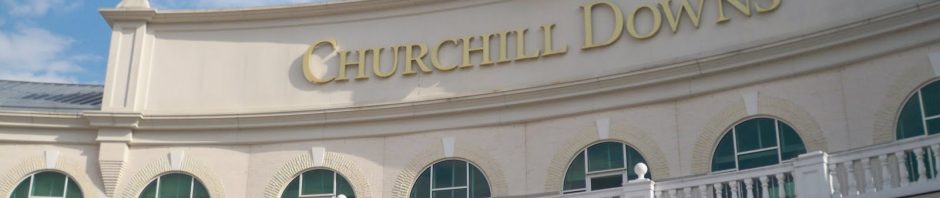
* In a move that sent Churchill Downs stock south 17% this morning, the Kentucky Derby has been delayed until September 5th, the first postponement of the Run for the Roses since 1945. According to CEO Bill  Carstanjen, cancellation was never on the table: “Throughout the rapid development of the COVID-19 pandemic, our first priority has been how to best protect the safety and health of our guests, team members and community. As the situation evolved, we reached the difficult conclusion that we needed to reschedule.” The Derby will be prefaced on Sept. 4 by the Kentucky Oaks, so it will be a big weekend for CHDN … and for the city of Louisville, which counts on the race for $400 million in economic impact.
At least the company knows when the Derby will be. The Preakness and Belmont Stakes are in limbo, with racetracks in Maryland and New York State closed until further notice. NBC-TV is trying to reschedule the Triple Crown but there’s not much it can do at the moment.
Jottings: The Maryland state Senate has approved sports betting, including for horse tracks like Laurel Park and Pimlico Racecourse … Tribes promoting sports betting in California say they already have over 50% of the signatures needed to get it on the November ballot … In a win for South Carolina Sen. Lindsey Graham (R), a land-into-trust bill for the Catawba Indians has been green-lit by the Interior Department. The tribe’s goal is a Charlotte-area casino.
