

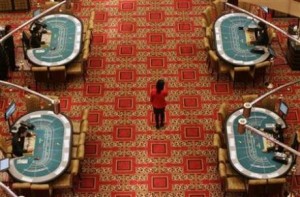
 Whenever one goes to a gaming expo, one of the main lines of product on display is the robo-dealer. You know: An electronically run roulette, blackjack, baccarat, craps or sic bo “table” (more of a big workstation, in reality), presided over by an unsettlingly blank-faced, computer-generated “dealer.” These sorts of machines are coming on strong both domestically and overseas (particularly in Spain). However, they’ve run into player resistance in the world’s two most gambling-mad marketplaces: Macao and Singapore.
Seems that it’s a comfort issue, in a non-ergonomic sense. Casino players, generally being creatures of habit, are inured to the presence of a living, breathing dealer. Thus, even though the switch from fully automated to semi-automated dealer on, say, an Interblock “island” is largely cosmetic — the dealer being there mainly to put the ball or dice into play — it seems to make a world of difference for the punter. In Macao and especially Singapore, Interblock says it’s being asked by operators to retrofit its machines from automated to semi-automated mode. While manufacturers may have misread the Pacific Rim’s appetite for robo-sic bo, it’s a valuable reminder of the important role that trial and error plays in the industry’s learning curve. And it is learning.
