

“We’ve had to cut our tribal government in half,” lamented Forest County Potowatomi Community Attorney General Jeff Crawford, whose tribe has furloughed 60% of its employees. “We essentially don’t have an effective operating budget for providing services. We are down to essential government services to take care of the needs of our members.” And if you’re a member of one of those tribes that makes distributions of casino revenue directly to its members, forget about checking the mailbox. Coronavirus has dealt a double whammy to tribes. In Wisconsin alone, 20% of tribal members live below the poverty line and unemployment is double what it is for you or me.
Steven Light, co-director of the Institute for the Study of Tribal Gaming Law & Policy at the University of North Dakota puts it bluntly. “When you have those kinds of deficits in the first place and because tribal gaming is expressly intended as a matter of public policy to mitigate those problems, Covid-19 has had a disproportionately high impact on tribal communities.” Or, as Stevens summarizes it, “There’s a point where nobody’s working.” The crisis makes economic diversification more important than ever. Stevens: “If we don’t understand it now we never will. If we didn’t listen to our elders then, we’ll listen to our experience right now.” Crawford is blunter still, saying “a lot of tribes are going to be looking at their budgeting processes and reevaluating keeping cash reserve emergency funds. We can’t tax our way out of Covid-19. We can’t run a budget deficit to get us out of Covid-19. We can’t print money to get out of Covid-19.”
WhiteEagle calls the $8 billion in tribal aid in the CARES Act “a starting point” but tribal leaders are looking toward the $20 billion earmarked for their people in the HEROES Act, which passed the House of Representatives but is bottled up in the Senate. As Native American Business Editor Gary Davis writes, “Predictably, it appears that our Native American communities will once again have to pick ourselves up by the bootstraps in the face of what appears to be slow, inadequate relief from the federal government … We paid for these relief packages generations ago through the forced secession of our lands, which compromised our cultures, traditional values and ways of life.”
 Tribes at least scored a big win in California, where state Sen. Bill Dodd (D) conceded defeat by withdrawing his constitutional amendment to permit sports betting for tribes and table games for card rooms. As gaming expert Ken Adams put it, this was indicative of “the power the tribes have gained over the last 20 years. Anybody who wants to get a bill through the Legislature is going to have to face that.” Not even a switcheroo by Stand Up for California anti-gambling scold Cheryl Schmit (“It’s much better if it’s out in the public”) could save Dodd. One of the sticking points with the tribes was that he wanted to permit mobile sports betting. Tribes want the wagering done on-property, so as to keep their customers.
Dodd vowed he would be back, saying, “It remains important that we lift this widespread practice out of the shadows to make it safer and to generate money for the people of California. I will continue to be engaged in the issue as we work toward 2022.” If he returns, he’ll butt heads with a competing, tribally backed ballot initiative. One of the big differences is that tribes would exclude California colleges from betting eligibility, saying it polls badly. The major leagues, meanwhile, want online wagering—as does Dodd. Adds one tribal leader, “There’s no way to know who’s using that hand-held device. It could be a child. That’s our biggest worry.” Gaming pundits like I. Nelson Rose counter that the tribes’ real worry is that people will stay home and play low-margin sports betting, rather than come in for the profitable slots and tables. For now, their status quo (and profit margin) remains intact.
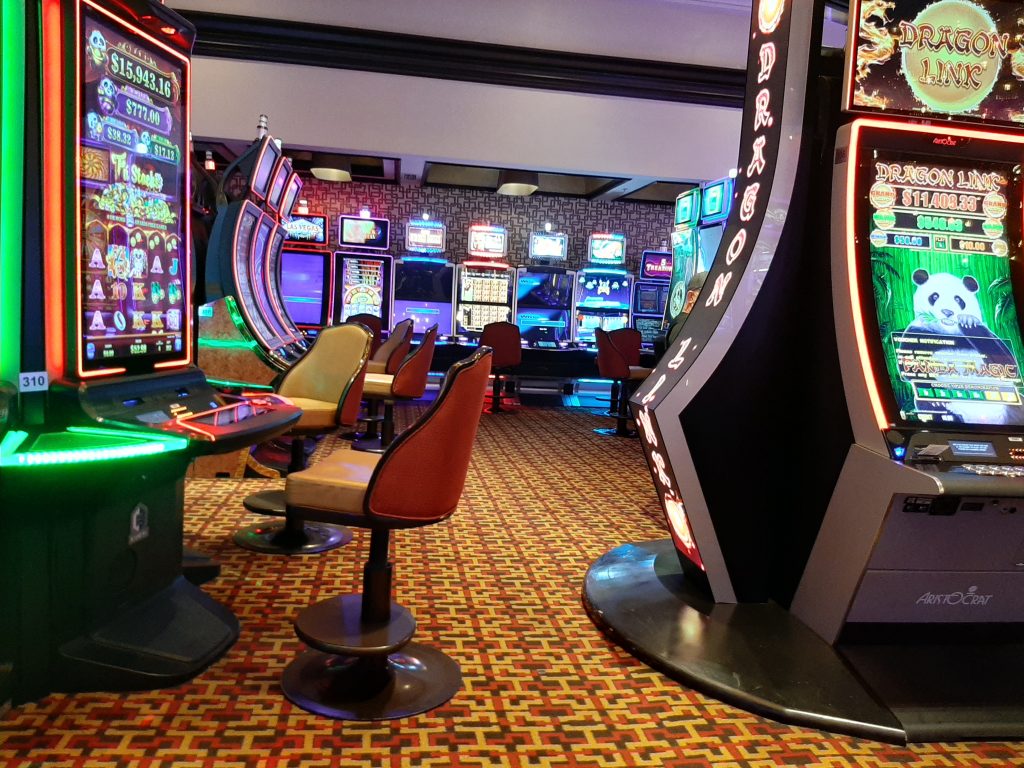
Illinois casinos and slot routes could reopen as soon as Friday, when Phase 4 of Gov. J.B. Pritzker‘s Restore Illinois regimen goes into effect. “The timing of resumption of video gaming and casino gaming is entirely dependent on the public health conditions at the time,” cautioned Illinois Gaming Board spokesman Gene O’Shea. The pandemic has idled 10 casinos and 36,145 unaffiliated slots. It won’t necessarily be easy to return. Verne’s Gaming Cafe owner Toni Yarber says, “I called my employees that worked here and only one of them is coming back. They found other jobs. So I’m scrambling to find employees, too.”
News of a lifted edict will come as a relief to the City of East St. Louis, which is dependent on Casino Queen for 33% of its budget. “We have not reached the point of having to lay people off yet,” reported City Manager Brooke Smith. “We’ve been able to manage. But I don’t know how much longer we’ll be able to.” (Casino Queen does not have a reopening date.) When casinos and slot routes do reopen, it will be without buffets, poker rooms, table game tourneys, valet parking or promos which would cause patrons to “cluster.” Other requirements include operating at only 50% capacity, maintaining six feet of social distancing, temperature screenings, masks for everybody, self-reportage of Covid-19 cases and frequent sanitization.
Rather than disable half her machines, Yarber is going for plexiglas partitions. “The partition has to go behind the chair of the player and above their head, I think a foot and a half,” she said. “I’m going to have to start building them, I guess. Everybody needs them, so they’re really expensive. You can’t touch them for under $400 or $600 each.” Safety isn’t cheap.

your new format is terrible and hard to read. I’d revert back to what you had.