

If there is one thing that Donald Trump is good at, it is making dealings with creditors that come out in his favor. Perhaps this fuels his current mania that he can make the rest of the civilized world bend to his personal 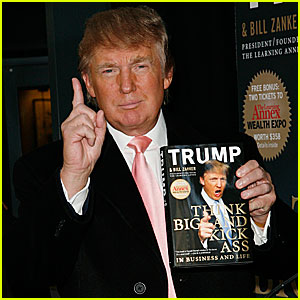 will. What it’s meant for the casino industry is bankruptcy upon bankruptcy in Atlantic City, where he paid himself $1.5 million in 1992 to take Trump Castle out of bankruptcy, setting a pattern of self-dealing at the expense of his creditors who “were told to take less than they were owed. Workers lost their jobs.” Trump’s ass, however, was never in a sling.
Trump has no remorse toward those he stiffed, saying, “They made plenty of money on me.” In the meantime, he was leveraging his casinos up to their hairlines, using the debt to shore up other parts of his flagging empire. He stayed in power in part because he had a valuable asset — a casino license — and because bondholders were dazzled by his star power on the Boardwalk. When Citibank‘s Patricia Goldstein wouldn’t block a forced sale of the Plaza Hotel in New York City, “I would see her at functions at various ballrooms throughout the city and I would say such things that some people were shocked.” That’s our Donald, always a class act.
Trump’s genius seems to have been, at least in part, an knack for structuring incomprehensible financial agreements, including one that got him out of personal bankruptcy for less than the agreed-to $110 million price. Another, retiring his 1990 Chapter 11, “I’m not certain if there’s any one person on our staff that really understood it,” says a staffer in the New Jersey attorney general’s office. If Trump publishes another book, it should be titled The Art of Chicanery.
* In what seems like a Quixotic joust, the Oneida Indian Nation — owners of Turning Stone Casino in upstate New York — is planning to sue the New York State Gaming Commission, seeking to void the three casino 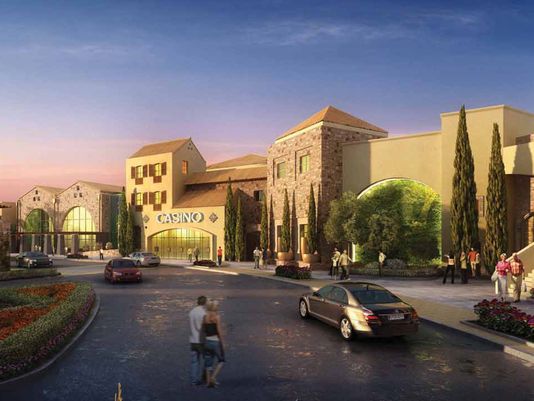 licenses that were issued last week. A particular object of ire is nearby Lago Resort & Casino, in Seneca. The Oneida are contending that in the licensing process, which moved at far greater speed than that of neighboring Massachusetts, permits “were hastily and improperly issued.” Beyond that, the tribe argues that there will be not net gain from the increase in casinos, merely a redistribution of the existing wealth. According to the Oneida, half of the new casinos’ revenue will come from casinos already in business. As Albany Law School gaming expert Bennett Liebman says, “There is no reason to think it’s going to be any different, even with additional casinos.” Daily fantasy sports could also take a $55 million or larger bite out of casino revenues.
The tribe has an ally in the Legislature, state Sen. Joseph Griffo, who is skeptical of the economic projections made for the new casinos, saying, “Not every region is going to be able to sustain the job levels they wanted or have.” However, judging by the way the winds of have been blowing in Albany, Griffo’s is definitely a minority view.

Sen Griffo actually seems to be thinking! The projections are so outlandish they are rather funny and interesting that educated people are accepting them. NYS missed its opportunity with gaming; unfortunately.
On Trump, the article never mentions what Trump pocketed by selling his casino holdings to the publically traded company. He inflated the value of the hotel and then sold them to Trump Hotels and Casino Resorts at the expense of the stock holders. He came ahead there too. Quite well.