

 In his latest column, “Prohibition Is Not Regulation” (an early draft can be seen here) gaming-law guru I. Nelson Rose rakes the Obama administration for choosing “to ignore the lessons of history and take worst aspects of the choices available.” Mashing up a bunch of disparate state laws and pasting the result together with an obscure federal statute (18 U.S.C. 1955), the Department of Justice has basically written itself a license to raid the Internet, exacting stiff financial penalties as it goes. (As well as reigniting the old “game of chance or game of skill” argument, which may be central to future litigation.) And it seems to be working: PokerStars and Full Tilt Poker have cried uncle and negotiated settlements with Uncle Sam. Notorious renegade Absolute Poker, based on tribal land in Canada, can thumb its nose at the feds until the cows come home.
Writes Prof. Rose, “basing this attack on Internet poker [in part] on Nevada law would look it like was motivated by the landbased casinos. After all, who are the big winners here?” Hmmmm …
Let’s ask Associated Press reporter Oskar Garcia who had this little scoop late last week. With PokerStars, Full Tilt and Absolute Poker in momentary disrepute (and the latter unlikely to come to the DoJ’s table), who better to step up and fill the void but Wynn Resorts or Caesars Entertainment — or maybe Station Casinos. The previous conventional wisdom, advanced by Forbes, was that Steve Wynn (and, by implication, other CEOs) had rashly assumed that amnesty for online-casino operators was imminent, only to get caught with his pants down by the DoJ.
It’s hard to say which sounds more far-fetched: Wynn making the mistake of knowingly sailing into “murky and arcane” legal waters … or major U.S. casino operators setting their online counterparts up to take a big fall. Now Wynn, Caesars, Station, etc., can point toward operating records, reputation, brand equity and relative financial transparency as wholesome, all-American alternatives to offshore rivals, especially if — per the new conventional wisdom — obscure and possibly shady online casinos are scurrying to the void left by PokerStars, et. al.
(Update: In an interview published today, Wynn waxes skeptical about the prospects for legalizing Internet federally, citing the opposition of Sen. Jon Kyl [R-AZ] as a leading obstacle, and bitches and moans about how the feds would screw legalization up. How this squares with his PokerStars alliance, Wynn sayeth not. He’s still rationalizing running away from Singapore, where his hesitancy left archnemesis Sheldon Adelson in possession of the field.)
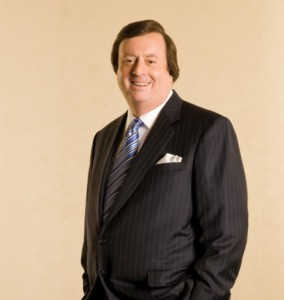 Garcia doesn’t appear to be buying the blue-sky argument that the recent indictments will be good for Full Tilt and PokerStars’ future in the U.S. (A line of claptrap advanced by everyone from Internet-poker lobbyists to Caesars CEO Gary Loveman [right, sporting his “Hans Brinker” look.) He writes, “it’s unlikely PokerStars, Full Tilt Poker and Absolute Poker will be allowed back into the U.S. market while their executives face allegations of bank fraud, money laundering and running illegal gambling businesses.”
Advantage: Wynn & Co. I mean, when Loveman says the solution is to permit “licensed, regulated providers to provide it,” who do you think he’s talking about? There aren’t any “licensed, regulated” Internet casinos in the U.S. at present. In case doubt remains as to his meaning, Loveman calls for guvmint to “bring these jobs and revenue home.”
(“Our industry has to modernize itself in a way that allows its services to be provided electronically and not in these massively expensive brick-and-mortar facilities,” bloviates Dr. Loveman. Maybe the good professor should have had that thought before he ran up an additional $18 billion in debt on those physical assets by taking the company private. And if “massively expensive brick-and-mortar facilities” are, like, so last year, why does Loveman keep building more of them?)
Moody’s Investors Service pooh-poohs Internet gambling as a serious rival to the Vegas-style iteration. But it’s urging legislatures to take advantage of the current paralysis at the interstate level (with a solution several years away) and pass intrastate online-poker legislation, lest Native American nations leave the private sector at the starting post.
Knowing an opportunity when the see one, some entrepreneurs were quick to offer online pacifiers in the form of free-play sites like Facebook-based DoubleDown Casino. Then there’s Zen Entertainment, a free-play site which seems to have been more lucky than prescient in its timing, having rolled out four days ahead of Pokergeddon. This “brand-centric marketing platform for social gaming” and “social game ecosystem customized for brand engagement” will be an interesting test case, as players compete against each other for such baubles as Tapout merchandise.
 Las Vegas-based Zen’s partners include newly enlisted Larry Flynt’s Hustler Casino and the UFC, whose site has been set up to offer “UFC Poker” (those Fertitta Brothers are ubiquitous!), and Card Player magazine. If the presumed monetary value of Tapout gear doesn’t raise federal ire, the $100,000 monthly pot for which players compete looks a bit dicey in Pokergeddon’s aftermath. But that’s a question for Prof. Rose, who’ll be in town next week for the iGaming North Gaming conference at Monte Carlo Resort & Casino.
With hilariously bad timing, the event was trumpeted on April 18 (Pokergeddon Plus Three). This year’s theme: “The Road to Regulation.” Methinks that road just developed some big-ass potholes — and that many anticipated attendees are now lying low. Anyway, three more days later, iGaming announced a special Pokergeddon panel to “contemplate the results and impact” of Attorney General Eric Holder‘s beatdown. Online veteran Mark Balestra is among those slated to address the topic, the very first order of business, in fact.
Not appearing on the panel — but probably fielding a God’s plenty of questions anyway — will be Caesars Senior Vice President of Communications & Government relations Jan Jones (tipped as a likely congressional candidate in 2012). Other speakers include regulatory watchdog-turned-PokerStars lobbyist Randall Sayre and a gentleman who goes by the handle of “Cookie” Lazarus. It should be fascinating to see what additional twists and turns of the Pokergeddon narrative emerge from Monte Carlo next week.

[…] Read the article: Was Pokergeddon a setup? […]
Of course, the Stars and Tilt deal was about giftwrapping Internet poker and giving it to Harrahs and other US-based casino concerns. After all, they’re the ones who juice up the pols, I meant, participate in the political process.
The online poker deal is just a hijacking, pure and simple.
Why do you think Loveman’s not sweating his debt load? My advice, when the IPO comes out, as it surely will eventually, jump on it. Harrahspoker.com is unfortunately an eventuality.
My advice: Never underestimate Larry Flynt. He took an old poker club, The El Dorado in Gardena, and re-branded and transformed it into LA’s finest. Flynt has always been courageous and savvy in business, and he holds an acute understanding of what people want. I agree with Wynn that the current Senate has too many gambling obstructionists like Kyl to get bipartisan legislation passed that legalized online poker, and thats without even mentioning the Tea Party dominated House. Who would have thunk that of all the names mentioned in this post, that I would have the most trust in a porno mogul.