
French President Emmanuel Macron could be collateral damage of a made-in-Vegas scandal involving the 2016 Consumer Electronics Show. At the time, Macron was minister of the economy but had the ill 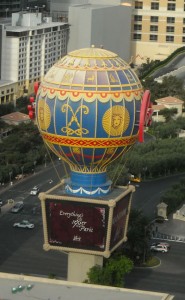 judgment to headline a “French Tech Night” that was underwritten by ad giant Havas. Trouble was, Havas got the deal to foot the $238,000 bill for the fete on a no-bid basis. Macron, who is currently (and ironically) pushing an anti-corruption agenda back home, isn’t the primary focus of the investigation. No, that would appear to be Minister of Labor Muriel Penicaud. The latter is already a lightning rod for French labor unions for her efforts to curb their power. Expect more bolts to be flung in her direction as the Vegas scandale grows legs. Already Havas HQ have been raided and allegations have been made that Macron’s team exerted pressure on its behalf. As for Penicaud, she’s pushing her boss under the bus, launching her own internal inquiry and asserting that she clawed back the Havas payment when it came to her attention.
* Tokyo, already the world’s most densely packed city, might not have room for a casino megaresort, metaphorically speaking. Prime Minister 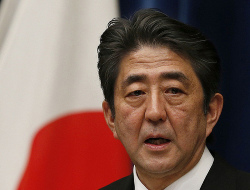 Shinzo Abe‘s Liberal Democratic Party lost 37 Tokyo-area seats to Governor Yuriko Koike‘s Tomin First party, which is diffident toward casino development, although not opposed outright. With Osaka and Yokohama both pressing their case for consideration with considerably more ardor, Tokyo could be the odd city out. “We think Tokyo is less likely to receive a license because of an unclear government stance … as well as the city not needing an economic boost relative to Osaka,” read the conclusion of three Morningstar analysts, who continue to tip Las Vegas Sands and MGM Resorts International as the presumptive favorites. Disqualifiers include “relatively weaker non-gaming resort experience, lack of presence in Singapore and/or the United States; questionable practices, or portfolio restructuring,” (that’d be you, Caesars Entertainment). Winter resort Hokkaido, as well as Nagasaki, are being dangled as consolation prizes.
It has also been noted that Tokyo by-elections, a harbinger of nationwide votes, could make it more difficult for Abe to push his always-difficult casino agenda through to fruition. (Remember, casinos 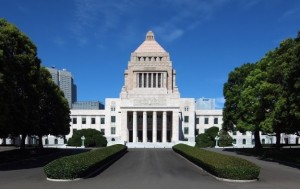 are widely unpopular among the Japanese public, according to opinion polls.) Already the IR Implementation Bill is being questioned by the Japan Tourism Research Association, with one prominent member faulting the lack of technical input, saying, “There is a commercially untenable gap developing between the government’s academic theory and practical operational reality.” If Abe’s “arrow” of casino development has not been diverted from its target, its point has been blunted and may have a harder time getting through.
* States rights “got a black eye during the civil rights era,” writes legal expert I. Nelson Rose. However, it may be making a comeback, 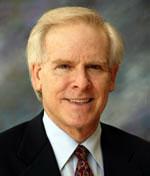 particularly as the Supreme Court prepares to hear arguments for and against New Jersey‘s sports-betting law (and, by extension, the autonomy of other states to legalize the practice). Noting the Tenth Amendment disconnect between state and federal policy, Rose cites the diametrically opposed public policies of Utah and Nevada with regard to gambling as well as, more topically, the widening, state-level legalization of medicinal marijuana vis-a-vis Attorney General Jeff Sessions‘ disapproval of loco weed.
“Imagine a statute passed in 1928, declaring that it was a felony to offer movies with sound, but exempting states that were already showing talking pictures. Regardless of whatever changes occurred in technology or in the way society viewed films, only a dozen states could have talkies,” Rose speculates. “I’m hoping the Court will give us a clean decision. The worst result would be a ruling that New Jersey only has the right to decriminalize sports-betting, but not regulate it. Other states would follow, with some truly weird statutes eliminating laws against sports-betting, and who knows what else.”
* Speaking of cannabis, Las Vegas is the new legal-pot capital of America. Pot smokers, shaking off their sloth, made such a run on dispensaries that supplies were exhausted within a week. This 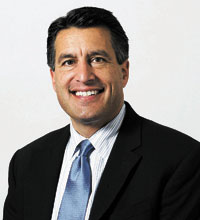 prompted the slightly surrealistic spectacle of Gov. Brian Sandoval (R) declaring a state of emergency whereby the Nevada Tax Commission could lift restrictions of sales. At the, er, root of the problem is a regulatory bottleneck created by giving transportation rights strictly to licensed liquor wholesalers — an approval process that is slow to bud.
“We continue to work with the liquor wholesalers who have applied for distribution licenses, but most don’t yet meet the requirements that would allow us to license them. Even as we attempted to schedule the final facility inspection for one of the applicants this week, they told us their facility was not ready and declined the inspection. As of mid-day Friday, not one distribution license has been issued,” said Tax Department spokeswoman Stephanie Klapstein. She added, “Unless the issue with distributor licensing is resolved quickly, the inability to deliver product to retail stores will result in many of these people losing their jobs and will bring this nascent market to a grinding halt. A halt in this market will lead to a hole in the state’s school budget.” The little red school house being propped up with with marijuana money? Now I’ve seen everything.
