

Such been the plight of Maryland, a state that’s experienced the curious predicament of having more casino licenses than applicants. It’s much the same as Kansas, where things have gone awful quiet. Now, Kansas is like a corn-fed Macao: You build the casino, you run it but at the end of the day, it belongs to the state. You’re operating on borrowed time and money.
 Maryland’s rapacity for new revenues resulted in a 67% tax rate, for which terms like “usurious” and “confiscatory” seem inadequate. What kind of facility can one afford to build, say, at Ocean Downs — and what kind of reinvestment is possible — when $23 million of your $35 million 2011 gross goes straight to Annapolis? Even executives at Penn National Gaming (who opened the first Maryland slot parlor), when discussing the impact of additional slot houses, frame it in the context of the ramifications for the company’s Charles Town, West Virginia racino, not their Perryville, MD property
In late September, there was a sudden flurry of applications: two for a Baltimore-area site and three for the Rocky Gap Lodge & Golf Resort, which had gone begging for three years. One of the Rocky Gap threesome even had some heavy political juice behind it. This neat trick was achieved by dint of a special, only-for-Rocky Gap tax markdown to “only” 50%, plus an exemption to the rule that limits casino owners to one property apiece (a law that has confounded Penn no end).
 Going for the jackpot, Caesars Entertainment plunked down $22.5 million for the right to apply for the Baltimore site. Within days, state officials drop-kicked a rival Baltimore bid, as well as one of the lesser Rocky Gap offers. Still, the Caesars move was a head-scratcher. At Global Gaming Expo, veep Jan Jones criticized high tax rates (like Maryland’s), making the argument they discouraged investment: “If you have higher volume [of business], you’ll get a better tax return. It’s so logical.”
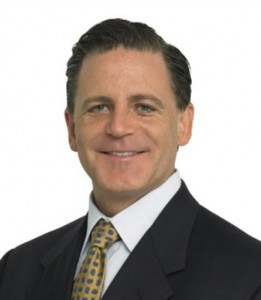 What wasn’t logical was Caesars’ undercutting of its own position by running straight at the worst-taxed market in the U.S. But it started to make sense last weekend once it was clear that most of the money (80%) wouldn’t be coming from Caesars but from Dan Gilbert‘s nascent Rock Gaming. Lord only knows how Caesars CEO Gary Loveman suckered persuaded Gilbert (right) to bankroll this low-ROI venture. Gilbert’s men have admirable goals but massive tax hit they’ll be taking will militate against the downtown revitalization that they clearly have in mind. Something’s going to have to give, whether it be Maryland’s ban on table games or the dollar signs dancing in lawmakers’ heads. Greed and short-sightedness are opposite sides of the same coin, and Maryland’s casino policy is a textbook example.
In an amusing (?) side note, Cordish Gaming has gone the Trump Entertainment Resorts route and entrusted its Arundel Mills casino to a refugee from the Bernie Goldstein era at Isle of Capri Casino, also dredged up from third-tier MTR Gaming Group, as was Trump’s current CEO. Cordish has also engaged in some eyebrow-raising methods in order to lure investment from China. So much for creating 4,000 local jobs. Nice move, Cordish.

The “progressive” definition of “fair share”—
everything you have.