
… don’t advertise sports betting. Actually you can’t, thanks to a new “Dignity Decree” that was the first priority of Prime Minister Giuseppe Conte‘s right-wing government. The provocation was a  proliferation of gaming advertising during Italy‘s World Cup games. As a result, you can’t advertise gambling anywhere in Italy anymore. It’s like the anti-DFS backlash in the U.S. only far worse. And it didn’t just make waves in Italy. In England, gambling concerns ran nearly 90 minutes of advertising during World Cup matches, 17% of the total. (Number of ad spots: 172)
Reports The Guardian, “Bookmakers and online casino companies enjoyed one and a half times as much screen time as alcohol firms and almost four times that of fast food outlets.” Only automobile ads even came close to that frequency. Curbs on gambling ads in Great Britain have been discussed before in parliament and it looks as though the issue will rear its head again. “One of the only downsides to this brilliant World Cup has been the bombardment of gambling  advertising on TV and social media that thousands of children will have been exposed to,” huffed Labour Party‘s Tom Watson. His party proposes a tax on the gaming industry to pay for the study of disordered gambling. Imagine how riled up they’ll get next season when nearly half of Premier League footballers and the vast majority of Championship League ones flaunt gambling logos on the front of their jerseys.
Australia has already gone farther than the mother country, banning gambling ads during sporting events. Back in England, complaints to the Advertising Standards Authority shot through the roof: 115 were logged, compared to 27 the previous month. Gaming’s got as much right as anyone to flog its product, but there’s a reasonable amount of advertising and then there’s just plain asking for trouble.
As a sports fan myself, I always feel somewhat insulted when the American Gaming Association says that legalized sports betting will raise the level of viewer engagement. Trust me, when I lived and died with every pitch of the 2002 World Series champion Anaheim Angels, it wouldn’t have changed my  sentiments if I had money riding on the games. But the AGA has now trotted out a study that backs up its contention. We can blame Millennials making $100,000 or more for the outcome. “Expanding access to legal sports betting will bring millennial audiences back to sports broadcasts and stadiums, which is a huge benefit for sport enterprises across the country,” says the AGA’s Sara Slane. Must everything be tailored to the douchey Millennial demographic now? (Can you tell that I just turned a year older today?)
* “Although one wouldn’t know it from looking at the stock charts, regional gaming operators delivered solid 2Q18 results and provided a handful of favorable data points related to the  outlook for the business. Despite the timing of July 4th and an unfavorable weekend calendar in July, [gross gaming revenue] is tracking at roughly flat y/y for the month,” reports Deutsche Bank gaming analyst Carlo Santarelli. He blames the flattened revenue on heightened promotional activities by the casinos (translation: more comps for us). He says he remains “confident in the overall health of the regional gaming consumer” and concludes by saying he continues to like Boyd Gaming, Eldorado Resorts, Penn National Gaming and Station Casinos.
* It’s a good thing regional casinos are so robust because if I were a Las Vegas gaming executive I’d be keeping a nervous eye on Lake Mead. The Bureau of Reclamation says the lake is on pace 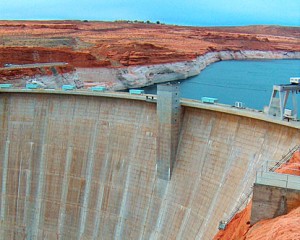 to fall below the crisis mark of 1,075 feet in 2020. When that happens, a water-shortage declaration goes into effect. Business for Water Stewardship CEO Todd Reeve told the Wall Street Journal that “if a water shortage is declared, that would be a huge shot across the bow that, wow, water supplies could be uncertain.” (A good thing that the enormous lagoon at Paradise Park has been put on hold.) The story focuses more on ramifications for farmers in Arizona but don’t think Nevadans wouldn’t have to make sacrifices.
* The Mechoopda Indian Tribe of the Chico Rancheria could bring a Class III casino to an area near Chico now that it has compacted with California Gov. Jerry Brown. The casino could have a maximum of 2,000 slots plus table games. The compact still needs ratification from the Legislature and some in Butte County could fight it tooth and nail in the Lege. The tribe’s fight for recognition went all the way to the United States Court of Appeals for the District of Columbia Circuit. Brown maintains that the compact is previous to other such accords his office has negotiated.
