

Did the casino industry drink its own bathwater vis-a-vis Massachusetts? The Boston Globe asks “whether the industry didn’t fully understand how tough it would be to attract gamblers in a regional market that has 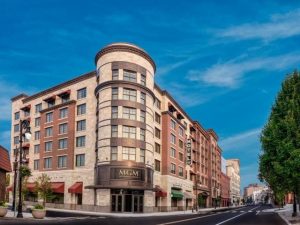 become increasingly competitive.” Both Encore Boston Harbor and MGM Springfield are looking at $100 million revenue-projection shortfalls, and Encore has been gobbling up some of Plainridge Park‘s business. The Massachusetts Gaming Commission‘s Enrique Zuniga seems to have grasped the dreaded Penn National Effect when he observes, “Fundamentally, the theme that I glean is that everybody may have overestimated how easy it was going to be to . . . get a new player.”
Thanks to confiscatory tax rates, however, the commonwealth is $460 million richer than it was before casinos were legalized in 2011. State Representative Aaron Michlewitz, who chairs the Ways & Means Committee remarked that “We are capturing revenue that was being sent off to other areas … at the end of the day the bill that was crafted has produced a net positive so far.”
Lucy Dadayan, a researcher with Beltway think tank the Urban Institute isn’t impressed with the tax haul. “At the end of the day, it doesn’t really matter whether casinos’ tax revenue overestimates are honest projections  or driven by political gimmicks,” she told the Globe. “What matters is that casino tax revenues are behind the projections and not meeting the promises.” Count on anti-gambling scold Les Bernal to put a moral spin on it: “They deliberately oversell how much revenue they’re going to bring into the state because there’s no merit to the business.” I don’t believe it. Why would you hype your revenue numbers knowing that you’d be asked ad infinitum why you’re not hitting them once you open?
Gaming analyst Harry Curtis counsels patience, saying these properties need time too mature. That may be true for Encore but what’s MGM’s excuse, having been open a year already? Already some are pointing to 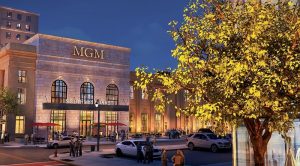 sports betting to be a game-changer but it would take a lot of lost wagers to fill the gap between what MGM Resorts International and Wynn Resorts projected and what they’re actually making. Clyde Barrow seems closer to the mark when he says that casino companies have to predict their financial outcome “in the sunniest possible light” to appear more attractive than whoever they’re competing against for the casino concession. “You’ve got to make your forecast sound better than everybody else’s.” Also, no matter how good the economy is, consumer spending at casinos has been more conservative since the Great Recession.
Regulators didn’t help matters with botched studies of their own. The MGC predicted $500 million in Springfield by mid-2021 and $705 million-$825 million for Encore by the end of Year Three (Encore might still eke out that $705 million). “The commission just got dazzled by the bells and whistles that Wynn and MGM dangled in front of them,” says Barrow. MGM spun its response to  the Globe to emphasize its non-gaming amenities while Wynn Resorts and Penn National Gaming clammed up entirely. The MGC went on the defensive, saying “Gaming as an economic development tool is a long-term play. It is a dynamic industry that is accustomed to market and regulatory changes and gaming expansions. It will take time to truly assess the economic outcomes of the Commonwealth’s decision to authorize expanded gaming.” Yes, but how much time? At least Massachusetts is better off than upstate New York, where gaming expansion has been all but an abject failure. The moral of the story is, whatever your revenue projections are, distrust them.
* Did Carl Icahn put one over on Steven Witkoff when Icahn bought Fontainebleau for $150 million and sold it to Witkoff for four times that amount (and let’s not forget depreciation)? Also, does the $3.1 billion “cost” reflect work already done or the considerable amount of construction that remains undone? Inquiring minds want to know.

“Uncle Carl” has a knack for getting in and then getting out at the right time (too many transactions to note)!