

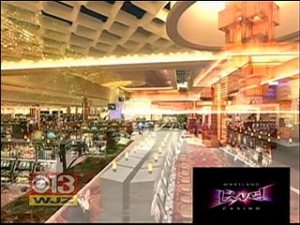
 In the absence of a strong regulatory apparatus, Maryland Live, at Arundel Mills, is taking matters into its own hands. A 200-strong security force and a Batcave of surveillance technology search for the slightest nuance of untoward conduct. “A number of known cheaters came in and tried to take advantage of us, because we were a new operation,” says General Manager Rob Norton. The casino’s response has been remorseless. Card counters are 86’d and the number of people in Maryland Live’s “Black Book” runs into the hundreds. Considering all the redundancies and backstops built into the Cordish Gaming property, you’d have to be crazy to consider trying to cheat it … by many do, often in simpleminded ways. There’s even been a ripple effect, with crime falling in the immediate area, too — contrary to the picture gaming opponents enjoy painting.
Which isn’t to say that casino patrons don’t get held up on occasion (71 occasions last year, actually) and that the worse side of humanity doesn’t manifest itself. But at Maryland Live, The Man will get you in the end.
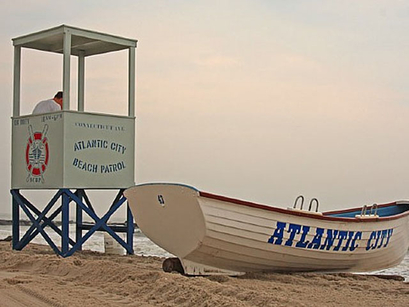 Fewer visitors, longer stays. That’s the Atlantic City market of today, according to a new study from the Lloyd D. Levenson Institute of Gaming, Hospitality & Tourism at Richard Stockton College. Casino owners have to be happy about the greater duration of visitation — but at the price of fewer visitors? They’re not jubilant, I suspect. The good news for Atlantic City proper is that this new crop of tourists spends more time away from casinos. ” In effect, the quality of the visitors is going up. You’re getting visitors who are coming longer and doing more. They’re eating; they’re shopping; they’re staying overnight,” said study author Bryan Tyrell. One of the indicators Tyrell is tracking is the luxury tax, levied at 3% on alcohol and at 9% on amenities like cabanas. Last August saw bring in more dollars than ever before.
But parking fee collections declined 6% in 3Q13, confirming a decline in drive-in traffic. So while casinos would probably prefer more players and longer stays, they’ll probably be content with half a loaf, especially since it has taken so much time and money to transform the market from a day-tripper destination.
It seemed crazy when Sheldon Adelson spent $7.5 billion on a Singapore casino and he’s having the last laugh. So one has to take him seriously when he flings his wallet on the table in  Japan, saying he’s ready to spend $10 billion on a Nipponese megaresort or two, but would be happier to spend less. Keeping his eye on the convention market, Adelson is targeting Tokyo and Osaka, and spurning Okinawa. “He’d only consider metropolitan cities with wealthy population and infrastructure which can support heavy visitor traffic,” says BNP Paribas analyst D.S. Kim. Adelson has a long list of potential partners, provided they share his appetite for risk. However, he didn’t sound thrilled about the prospect of a mandatory joint venture (why should he?). “These people can’t keep up,” he groused. “But I’m not ruling it out. I’m keeping my mind open to see whether or not a fair and reasonable partnership deal can be worked out.” As for Japanese casinos in general, the debate has metastasized, with discussion now of as many as 12. Of course, we’re talking about casinos that might not get built for six years yet, so these tea leaves are particularly hard to read.
