

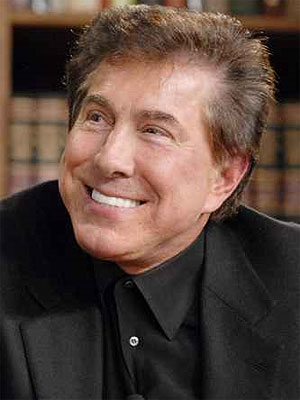
 Now we know why Steve Wynn was careful to mend fences with Philadelphia Mayor Michael Nutter (below) in 2010 when negotiations to take over the doomed Foxwoods Casino Philadelphia project abruptly feel apart and Wynn skipped town. He’s back with “Wynn Philadelphia,” a 300-room, 100-table, 2,500-slot knockoff of Encore Macau, to be built in stages and sited in the Fishtown neighborhood. As Wynn obliquely admits to the Philadelphia Inquirer — and was patently clear at the time — Wynn Resorts didn’t perform its due diligence on the Foxwoods project. But instead of simply licking his wounds, Wynn has used the subsequent two years to invent a better mousetrap. S&G has long been of the mindset, bolstered by years of data, that Philadelphia can’t support five casinos. (Although when Casino #5 is a Steve Wynn property, an exception must be made.) Already, Parx Casino, downtown’s Sugar House (whose expansion has been stymied by intra-ownership squabbling) and Harrah’s Philadelphia, in Chester, and
  Valley Forge Casino & Resorts are gnawing on each other’s femurs. Wynn Philly would hit SugarHouse the hardest, due to sheer proximity and a shared emphasis on table games, but would also to be close enough to it to establish the “critical mass” characteristic of the most successful gaming markets. Parx is sufficiently distant to continue cultivating a suburban clientele but it may soon be time for Caesars Entertainment to put declining Harrah’s Philly on the market. It would make a nice consolation prize for at least two of the potential also-rans in the upcoming steeplechase for that last City of Brotherly Love license.
But if it was almost a cakewalk for Wynn last time, now he faces no fewer than five other competitors. Parx is teaming with Cordish Cos. (flush from the overwhelming success of Maryland Live) on a plan to engorge a Holiday Inn as the cornerstone of $425 million-$500 million “Stadium Casino,” scarcely two blocks north of Citizens Bank Park, home to the Philly Phanatic, best mascot in all of sports. Then there’s Wynn-sounding “The Provence,” which is proposed for the heart of downtown Philly.
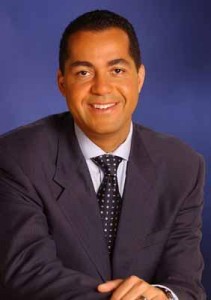 Like Parx, Valley Forge owner Ira Lubert is trying to hedge his bet by allying with a Goldenberg Group project in downtown. But Goldenberg is on the bubble and yet another developer, Parkway Group, has expressed interest but cited no firm location. The Provence, a lavish ($700 million) proposal involving rooftop dining and movie theaters, is in the hands of Bart Blatstein. A possible rival, J. Donahue Peebles (above) has quietly dropped out of contention since midsummer. That one could run into serious community opposition. And Penn National Gaming, never having too many irons in the fire, has dibbed a site directly adjacent to the Cordish/Parx one, although it will have to find majority partners, due to Pennsylvania‘s 1-and-1/3 rule, intended to prevent one company from controlling two casinos. A quiet threat on everyone’s flank comes from Harrisburg, where the Legislature will mull adding keno and online casino games to the state’s lottery.
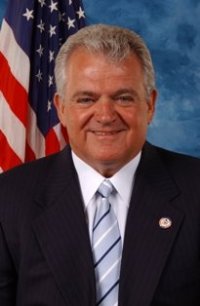 As if this weren’t enough, Rep. Bob Brady (D-PA) brought The Crazy by pitching that the City of Philadelphia borrow a half-billion dollars, build its own casino on the Delaware River, almost directly east of the Cordish/Parx site. “It’s a no-brainer,” proclaimed Brady, though he might be describing himself instead. Public-sector casinos weren’t envisioned when the State of Pennsylvania amended its constitution to allow gambling. Also, Brady’s wish list of amenities (5,000 slots, a 5,000-seat concert hall, a nightclub, “tailgate park” and a 300-room hotel) is likely to push the budget well past the $500 million mark … assuming the facility were built to anything resembling major-market standards. Besides, this is the sort of thing best left to private entrepreneurs.
From here, it looks like a Wynn vs. favorite son Blatstein contest, the latter having allied with Hard Rock International. Cordish isn’t associated with high-end properties and there is a snob factor that would work against it — but it can finance its project, it says, without taking on a penny of debt. Ditto Penn, whose ubiquity would also be a minus, while Lubert and Parkway look like extreme long shots. However, El Steve likes to spend big and there hasn’t been the ROI in Pennsylvania to justify a $1 billion-plus casino. In other words, proceed — but proceed with caution.
Just for the record, post-Hurricane Sandy revenue numbers are in for Atlantic City and predictions of a 25% falloff by Moodys Investor Service weren’t far off. On a same-store 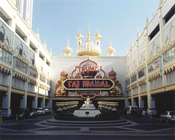 basis (i.e., excluding Revel), the resort city’s gambling haul was down 23.5%. Percentage-wise, Trump Taj Mahal (-38%) had it worst while Golden Nugget got off with a 4% haircut. The real news was the dismal $9.e million gross at Revel, putting it just below the Atlantic Club and Resorts Atlantic City and slightly above the Nugget. That’s not a revenue “neighborhood” Revel was ever expected to inhabit. The worst news for the Boardwalk will come in November, as business has been very slow to return. Kudos, incidentally, to Tropicana Atlantic City for donating unused furniture to homeowners who bore the brunt of Sandy. Good on you, Tropicana Entertainment.
