
If Wynn Resorts wanted to change the subject of conversation, at least on Wall Street, away from the damning Nevada Gaming Control Board report on sexual harassment it 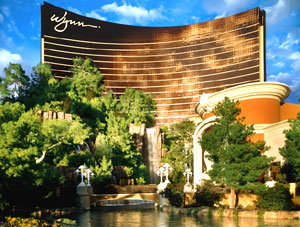 found a magical elixir in its fourth-quarter report. Net revenue at Wynncore was up 3% to $393.5 million, Wynn Macau slipped 5% to $553.5 million but Wynn Palace jumped 13% to $740.5 million. Impressive. It helped make up for a 60.5% cost increase in the “executive expense” category. Occupancy at Wynncore ran at 88.5%, room rates averaged $315 and room revenues were $279/average (up 13%, besting Las Vegas Sands‘ 6%). Table game wagers increased 18% to $508.5 million, slot coin-in was up 8.5% to $904.5 million and win/slot/day was $350, up 4.5%. Table revenues were $114 million, slots $58.5 million, increases of 12.5% and 3% respectively. On the other side of the ledger, promotions and discounts were up 19% as Wynn Resorts spent $67 million to buy business. The Macao-derived revenues were 11% higher than Wall Street consensus expected.
Credit Suisse analyst Cameron McKnight chalked up the Macanese results to “extreme volatility which “explained the variance versus management’s dire November guidance” and noted that the Strip was bolstered by a “strong convention calendar.” He estimated that Wynn’s share of the Macau market was 12%. Looking ahead, “While our forward indicators are pointing to decelerating growth next year, consensus estimates are likely to increase as the Street took prior guidance at face value. The Vegas outlook is sound, and management is optimistic on 2019.”
Joseph Greff of JP Morgan was even more bullish, writing that he “feel[s] better about the near-term in Macau than three months ago.” Adding that he and his colleagues “like its relatively underappreciated pipeline-driven growth trajectory, which includes Boston 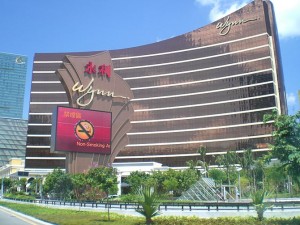 ($2.6b project opening in 5 months), $200m investment at Wynn Macau that will be complete in the 4Q19, and its much-needed LV convention expansion and golf course reopening in 2020.” Greff noted that Wynn Macau was negatively affected by the banishment of “second-tier junk operators” but Wynn Palace had “stronger than anticipated mass [market] trends.” Wynncore “recaptured some of the high-end baccarat share it had lost in the 3Q” and generated non-casino revenues of $289 million, a 3% improvement from 4Q17. Management expects to open its new convention center in Las Vegas in January 2020, adding 4%-6% in hotel occupancy.
The reopening of the Wynncore golf course will coincide with the debut of the convention center. Management said little about the prospects of the New Frontier/Plaza/Alon/Wynn West site other than that it was in the early design stages. In Macao, Wynn has reconfigured the gaming floor at Wynn Macau and renovated the Encore Tower Suites. It continues to work on the 200-room expansion of Wynn Palace, expecting to start work in 2020. Elsewhere, “We expect that WYNN will retain its Massachusetts gaming license, subject to a monetary fine.”
As for other Strip powerhouses, McKnight wrote of Caesars Entertainment, “In our view, CZR is misunderstood and forgotten by a broad swathe [sic] of investors, who are 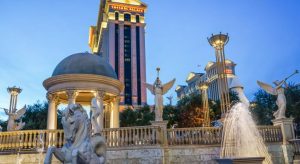 looking to play 1H strength in Las Vegas through MGM; and (mis) perceive CZR as over-levered, under-invested … Moreover, we think there is still strategic interest in CZR’s assets – which should act as a backstop, notwithstanding reduced probability of an MGM+CZR merger.” He also noted a three-month growth trend in Strip restaurant sales figures and that home prices rose almost 5% in November, an economic indicator “leading by 12 months with strong statistical significance.” On the flip side, consumer confidence fell for the first time since 2016.
