

JP Morgan analyst Joseph Greff has had a busy week, meeting with most of the top companies in gaming. First up was Penn National Gaming, which had little new to 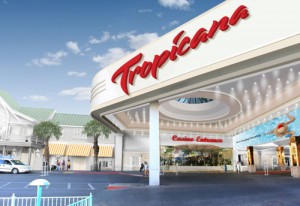 report on the Tropicana Las Vegas other than it was looking for “some synergies” with M Resort. (Could that be code for resort fees, which M doesn’t charge?) Although popular perception of the national economy is that it’s poor, Penn says its casinos “continue to benefit from low gas prices and see some level of wage growth. In February, [it] saw increased spend/visit and visitation up beyond any impact from leap year.” Biloxi, for some reason, “remains difficult,” but it’s a small piece of the larger Penn picture.
With so much of its Massachusetts competition hamstrung by construction delays, Penn was bullish on Plainridge Park, where it expects to see four-figure slot/win/day. Between lower expenses and job-cutting, the property is experiencing better profit margins. Penn is now dangling the prospect of a sale/leaseback of Plainridge Park (presumably to Gaming & Leisure Properties) three years down the line. The company is also branching out into slot routes, with new subsidiary Prairie State Gaming. Among other virtues, this would protect the company’s Illinois flank and would provide a means of leveraging the Marquee Rewards database to create customers. Penn expects slot routes to spread in the Midwest and “views the VLT space as a strong rollup opportunity given it is fragmented and operated by a large number of mom/pops.” Beyond that, Penn wasn’t “chasing” acquisitions, it said.
Las Vegas Sands reports that the Macao market is rotating toward a more mass-market orientation, which plays to the company’s strengths. As for high rollers, Sands “believes there is a lot of pent-up demand, but many VIPs do not yet feel comfortable returning” 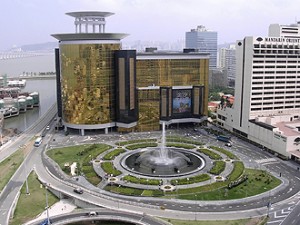 given current governmental scrutiny. Sheldon Adelson‘s company “believes the Chinese government is a lot more supportive of Macau than investors perceive, but the government wants Macau to be more sustainable, diversified, and middle-class focused, not just a haven for high-end VIP gaming.” Sands “does not believe Macau VIPs have gone elsewhere given the difficulty of moving cash out of China, lack of supportive gaming data, and VIPs’ natural bias to go to Macau, which is the closest and most culturally comfortable gaming destination.”
Gaming has become secondary to lodging in the company’s Las Vegas priorities, but it sees the local economy as being in “a strong operating cycle” that could last as long as the next four years. Sands’ retail malls in Macao and Singapore are up for sale: “It views both as trophy assets that could achieve high valuations given recent operating performance and industry transaction activity.”
Last, but far from least, is Wynn Resorts. Job One is Wynn Palace, although management hinted a further delay in its opening, at least to the extent of a few extra weeks. It’s going to 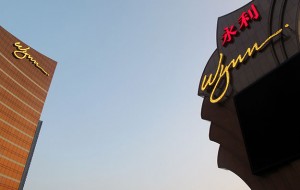 staff the property on the lean side, potentially moving 1,000-2,000 Wynn Macau employees to Cotai as business ramps up. It will also get around the limitation on table games by moving 75 “underutilized” ones from Wynncore Macau Although junkets will remain a key component of driving business (the Dore Entertainment scandal notwithstanding), Wynn will market directly to VIP customers. It will also put a heavier emphasis on mass-market play, given its enlarged base of hotel rooms. Wynn is even more optimistic than Sands on the return of VIP play, noting “decent” Golden Week play, “good” Chinese New Year action and “supportive comments” by Secretary for Economy & Finance Lionel Lang.
Seen as “an attractive value proposition” and a convention magnet, Las Vegas remains dear to Wynn Resorts’ heart. As in Macao, mass-market play is solid but high-roller action “has still not recovered given macro headwinds and weaker currencies.” Citing balance-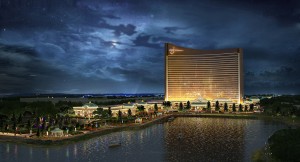 sheet constraints, the company said that any expansion of Wynncore would not happen until Wynn Palace is opened … but that it would consider enlarging upon areas in which it is underrepresented, specifically convention and meeting space. (Nice knowing you, Wynn Golf Club.) On the Boston front, Wynn is taking a relatively upbeat view, believing that Somerville Mayor Joseph Curtatone‘s attempt to kneecap the development of Wynn Everett will be disposed of in four months, six at the most. The company views Boston as a $2.4 billion market that could generate $500 million a year in cash flow, especially since the Connecticut casinos draw 40% of their business from the Bay State.
