Lake Tahoe is the crown jewel of western Nevada. High in the northern Sierra, 91 miles around, with its cutthroat trout, black bears, pristine beaches, and dense pine and fir forest, the lake is about as far from Las Vegas, figuratively, if not exactly geographically, as it’s possible to be and still be in the Silver State.
Another distinction separates the two sides of Tahoe, Nevada and California; the state line runs right down the middle of the lake. There’s no mistaking the transition between them on the south, where the high-rise casinos of Nevada give way to the low-rise sprawl of California, or the north, where the small master-planned communities of Incline Village and Crystal Bay on the Nevada side yield to rampant development and commercialism on the California side.
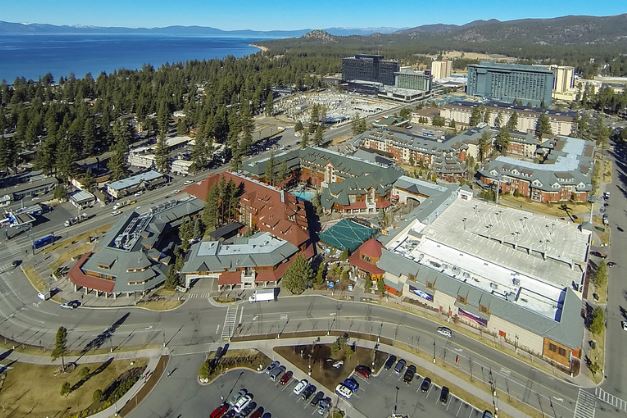
In fact, there’s so little public open space on the west side of the lake that it’s an almost contiguous asphalt jungle.
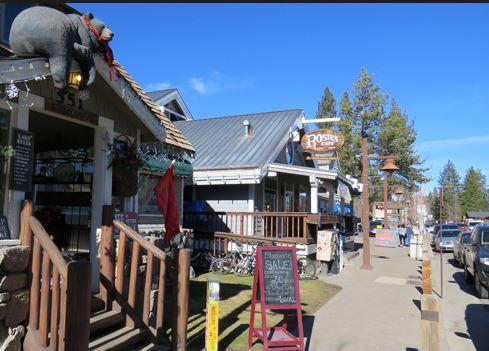
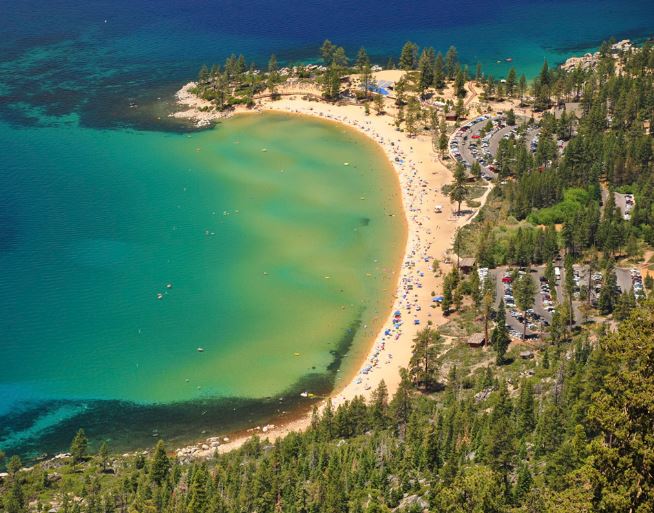
The east side, by contrast, is completely undeveloped from the south edge of Incline Village to the north end of Zephyr Cove. Lake Tahoe-Nevada State Park and U.S. Forest Service land stretch along the lakefront for nearly 20 miles and up into the mountains for four to five miles to the east—just steep slopes, tall trees, and hiking and mountain-biking trails. Sand Harbor (pictured directly below), part of the state park, is the biggest and most picturesque beach on the lake.
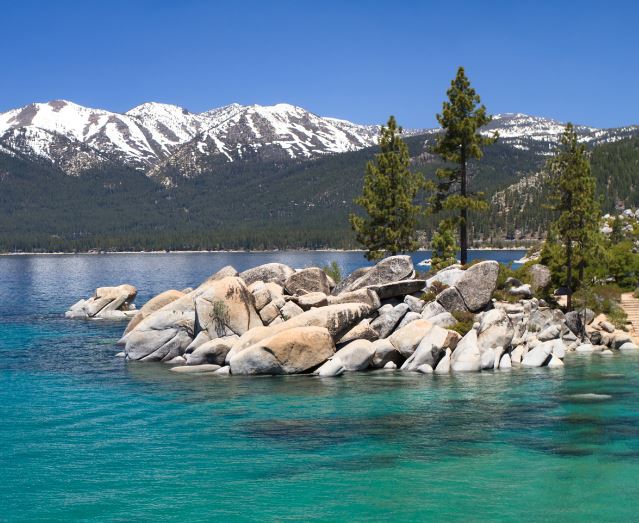
How did this happen? How can half the lake be overrun with private development, while the other half is so immaculate that it’s almost primeval?
The answer, the gambler George Whittell and his Thunderbird Lodge, will be the subject of the next Greater Vegas blog.

 Never miss another post