Life is change, the sages tell us. Heraclitus of Ephesus was a Greek philosopher remembered for his “Doctrine of Change,” in which “everything gives way and nothing stays fixed.”
For a couple thousand years, Fortuna, the Roman goddess of chance and luck, has been represented as holding a wheel, symbolizing the incalculably transitory nature of all things, not the least of which is human destiny.

The goddess of chance turns the wheel of fortune, expressing the eternal ups and downs, the vicissitudes, of life. Human forms cling to the rim of the wheel as they rise to the top, then sink into the depths as it turns. The lucky one on top, often drawn as a king, looks down on the lower forms, but as soon as the wheel starts rotating, he too is brought low, to a position of enduring a miserable existence full of pain and tragedy.

In the 1600s, the great French philosopher, mathematician, and inventor Blaise Pascal attempted to produce a perpetual-motion machine using a spinning wheel. He didn’t succeed, of course, but 100 years later, it occurred to someone in France to adopt Pascal’s design for a gambling game.
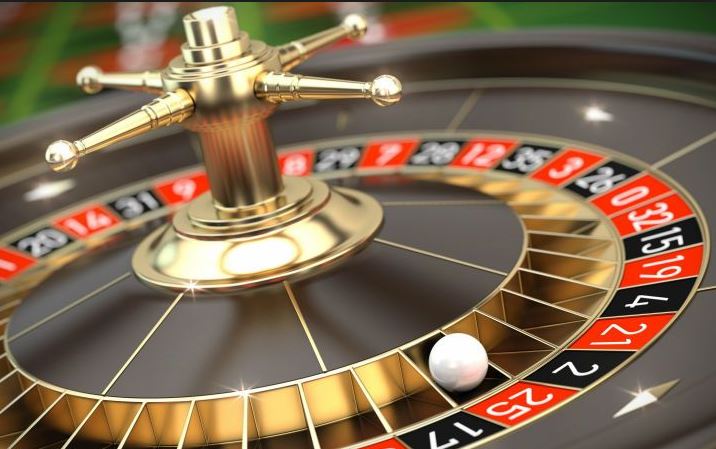
A small ball spun on a revolving wheel and forced to jump around by means of obstacles would create a situation in which the result of play would be as independent from deliberate interference as possible. Thus was roulette, another wheel of fortune, invented, right around the time of the French Revolution in the late 1780s.
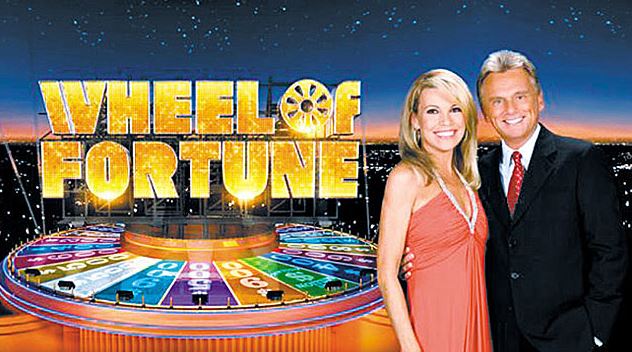
And you thought the Wheel of Fortune was a progressive slot machine based on the TV game show with Pat Sajak and Vanna White.


 Never miss another post