George Whittell Jr. was born in San Francisco in 1881 into one of the wealthiest families in California. When George was 40 in 1921, he inherited $29 million. A gambler to his core, he invested it in the stock market and for the next eight years, he watched it nearly double. But also seeing his edge completely evaporate, a few weeks before the 1929 stock market crash, he cashed out. With $50 million liquid during the Great Depression, he began amassing a fortune worth billions in today’s dollars.
One of his first plays in the early ’30s was to move to northern Nevada to avoid California income taxes. George and his money were a common sight around Reno and in 1934, he was approached to buy 40,000 acres on the Nevada side of Lake Tahoe, including 27 miles of shoreline, from several large landowners, all of whom were trying liquidate after the crash. Whittell paid $2.7 million, or $68 an acre.
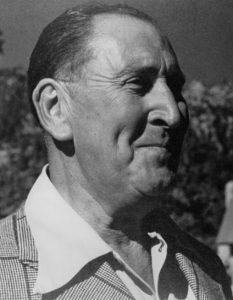
Over the next several years, Whittell planned and built his lodge, called Thunderbird after the mythological creature that graces the tops of totem poles. In 1939, nearing 60, Whittell’s retreat was completed.
Becoming more and more reclusive, in the ensuing years he abandoned plans to develop a hotel-casino, ski resort, and surrounding summer homes and had miners excavate a 600-foot tunnel so he could walk from his lodge to his boat and card houses in complete privacy.
Whittell was something of a libertine who said, “When men stop boozing, womanizing, and gambling, the bloom is off the rose.” He liked to host all-night poker games against celebrity neighbors, such as Ty Cobb, Bill Harrah, and, it’s reported, fellow recluse Howard Hughes.
As he grew older and more infirm, Whittell’s land was whittled away. In 1959, he sold 10,000 acres to a developer, which quickly turned into Crystal Bay and Incline Village. The state of Nevada bought a little land here and confiscated, through eminent domain and condemnation court cases, a little more there. Much of it was sold to the Forest Service. Other than Crystal Bay/Incline Village, none was ever developed and George Whittell is remembered as an “accidental conservationist.”
Today, the Thunderbird Lodge Preservation Society owns the remaining six acres around the compound and conducts tours of the only bona fide historic estate in Greater Vegas.

front door of George Whittell’s summer “cottage”
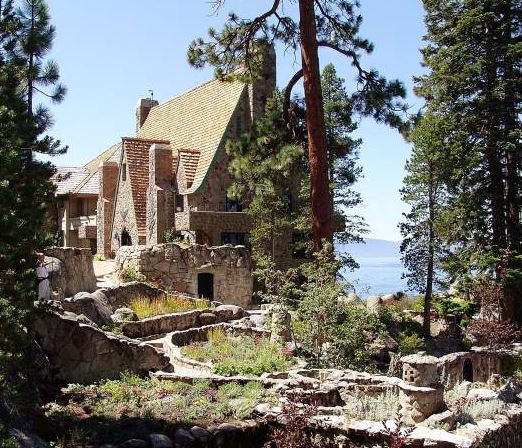
side view looking across from part of the extensive stone walkway
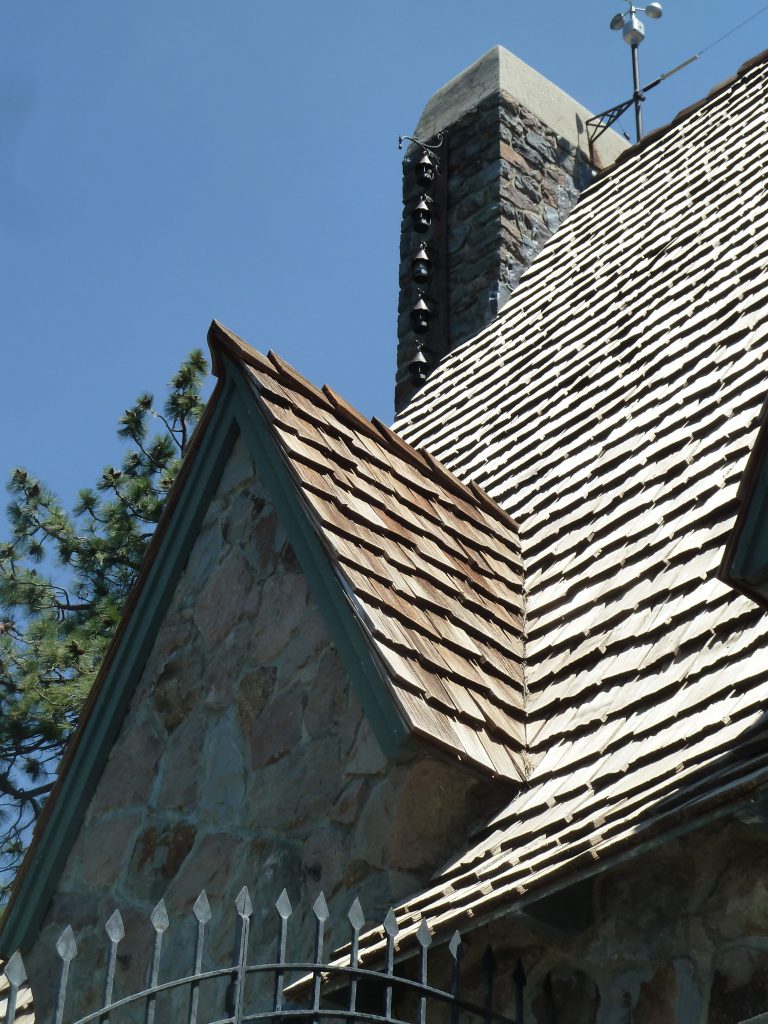
Signal lights on the chimney could be seen from the Cal-Neva in Crystal Bay: Red at the top meant the wife was home, don’t come; orange meant she’d be leaving soon, come later; one green meant just the boys to play some poker; two greens meant the boys and one girl apiece; three greens meant bring all the girls.

Cornish miners excavated 600 feet of granite between the lodge and boathouse — for privacy. Tracks were laid for rolling carts carrying supplies from delivery boats.
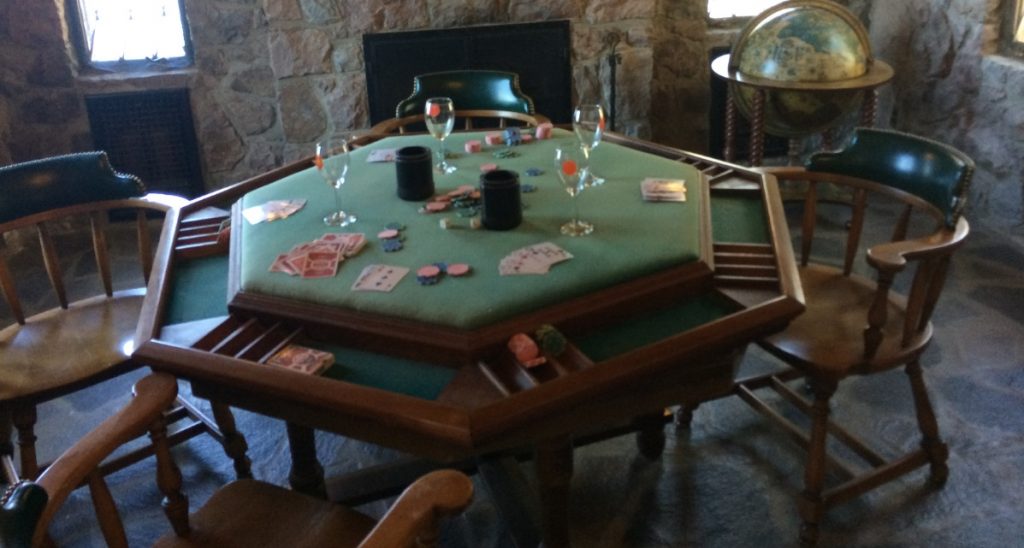
The poker table where local sharps liked to relieve George of some of his riches. By all accounts, he was a sore loser. Also, the house rule was, “You can play, but you can’t stay.” No guestrooms were built in the lodge.
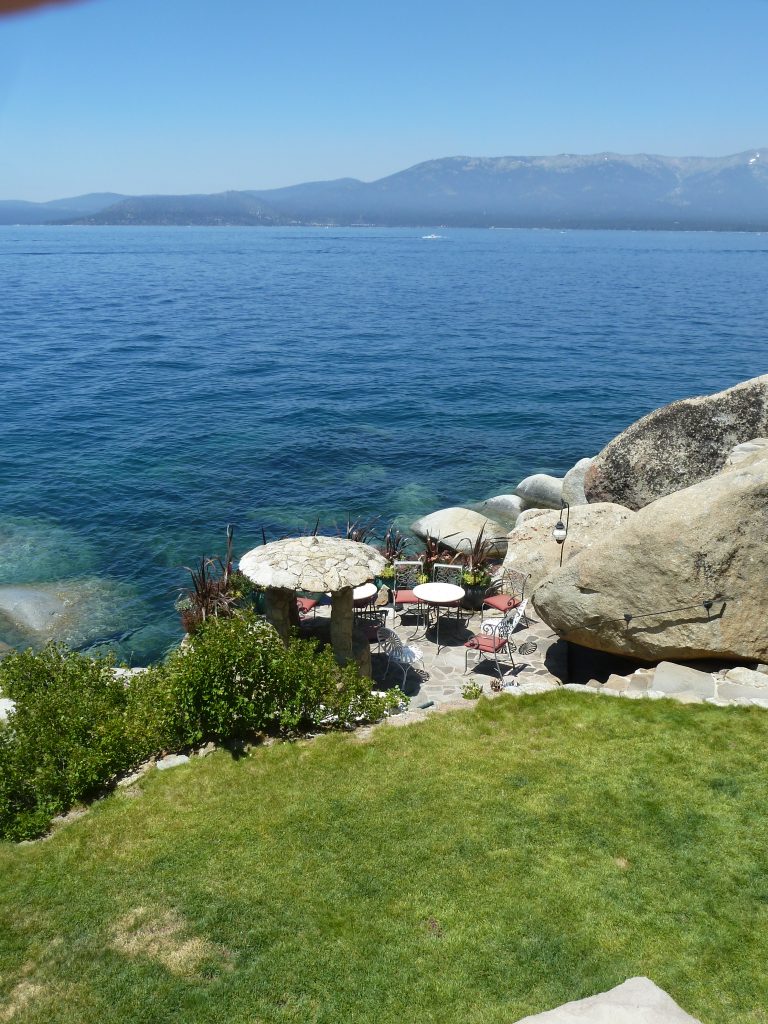
lakeshore picnic area

lighthouse on the point of the property from which Whittell could see the entire Lake Tahoe; Sand Harbor, part of Lake Tahoe-Nevada State Park and the original 10 acres that Whittell had to give up visible in the distance.

 Never miss another post
Love this series. I think the David Mamet movie “Things Change” which I saw like 25 years ago might have been filmed at this house or one nearby that looks a lot like it.