Here are a few more skills that the best blackjack pros (potentially) have in the arsenals of weaponry that can be deployed against the casinos when good opportunities arise.
 Ace Sequencing
Ace sequencing is similar to shuffle tracking, except it’s more of a memory than a tracking technique. Here, your goal is to remember the “key” cards that the dealer picks up from dealt hands and places on top of aces. Assuming, or at least hoping, that the ace and a key card or two will wind up together after the shuffle, when an AP spots a key card, he can try to make a big bet, figuring that the ace won’t be far behind. A sequencer who’s gone through fairly extensive memory training can memorize a dozen or more key-card sequences per shoe.
Edge Sorting
Edge sorting actually made headlines, when poker-pro and all-around AP Phil Ivey and a partner beat a UK casino, Crockford’s, for more than $12 million, and Borgata in Atlantic City in 2012 by using this technique at baccarat.
In edge sorting, a player exploits irregularities on the backs of playing cards; a good edge sorter, with a little assistance from the dealer, can distinguish asymmetrical edges that identify the card values.
For example, a player asks the dealer to turn face-up face cards one way and 5s, 6s, and 7s another way, using some superstition or luck as an excuse. Shuffling machines don’t change the orientation of the cards, so in a while, a cooperative dealer will turn the low cards one way and the high cards another; from the backs, the values can be determined.
Casinos almost universally believe this is cheating and the courts tend to agree; Ivey lost both cases when the casinos sued him for the return of the winnings, a little more than $20 million.
Loss Rebates and Show-Up Money
Taking advantage of promotional chips and loss rebates means big money for high-rolling advantage players and teams.
This topic is covered at length in Whale Hunt in the Desert—Secrets of a Vegas Superhost, but briefly, promotional chips, also known as “walk-in money” and “appearance fees,” are usually the first bet or two for a high roller; the casino might hand out $25,000, $50,000, even $100,000 in free play just to get the high roller through the door.
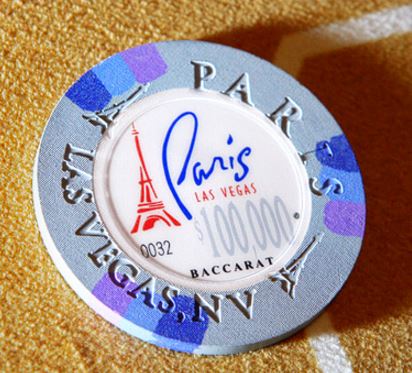
Loss rebates are simply discounts on losses that incentivize high rollers to pay in full, so the casino avoids and lengthy and expensive collection process. At first, a gambler had to lose $1 million to qualify for, say, a 10% discount; if he paid in full before leaving the casino, he only had to pony up $900,000.
But then the discount percentage started going up and the size of the loss started going down and a badly structured combination of appearance fees and discounts
can negate the house advantage. In addition, savvy pros have figured out how to maximize these opportunities—which don’t even factor comps into the equation.
Don Johnson (the blackjack pro, not the actor) took advantage of his high-roller status and the financial crisis of 2008 when casinos were desperate to attract action in this way: He negotiated some rule changes and a 20% discount on losses and won more than $15 million from Atlantic City casinos over a six-month period in 2011.

 Never miss another post