

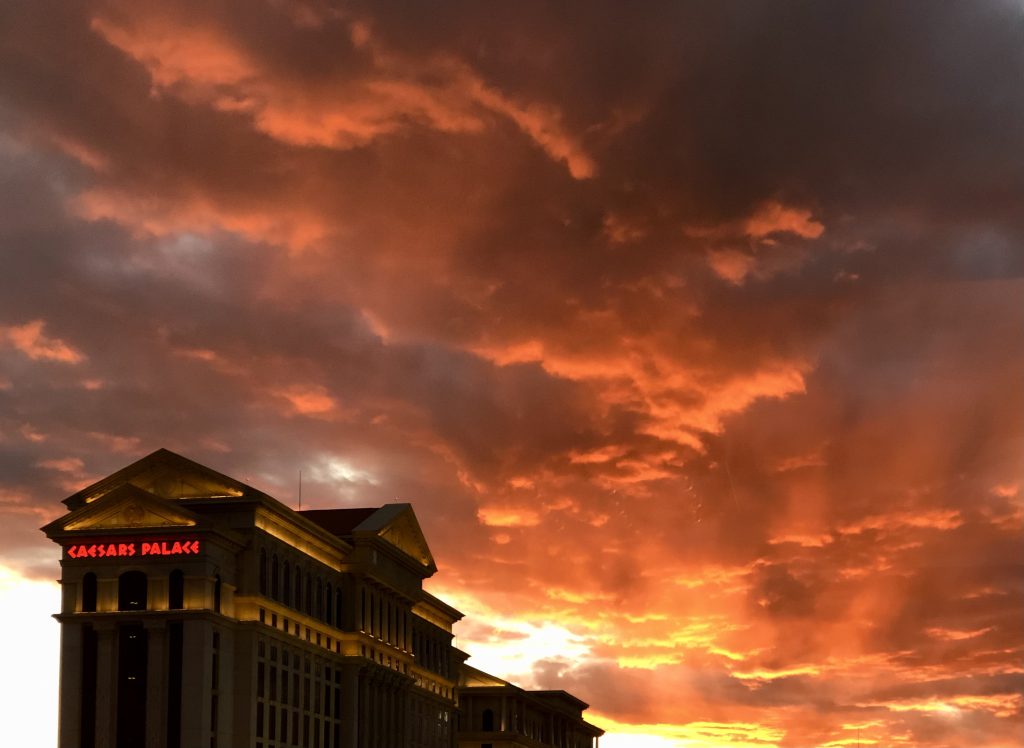
Analysts on Wall Street are going to be ratcheting up their forecasts for Caesars Entertainment for the remainder of 2022. Or so says Deutsche Bank analyst Carlo Sanatarelli. The Roman Empire’s 1Q22 cash flow of $296 million exceeded The Street’s consensus of $287 million. This was in spite of “the potential pitfalls associated with the domestic consumer … [and] the digital losses, all combining to drive the negative narrative.” As for that digital sphere, Caesars expects it to become profitable in two quarters’ time, but not before racking up a $1.5 billion cumulative loss. Meanwhile, the company continues to enjoy tailwinds on multiple fronts, whether it be the cessation of mask mandates in New Orleans or additional room capacity in Atlantic City. Still to be felt are the rebranding of Horseshoe Indianapolis, the expansion of Harrah’s Hoosier Downs and the return of the company to lucrative Lake Charles by year’s end.
The Las Vegas Strip, to which Caesars is so heavily exposed, handily outperformed with net revenues of $914 million, $37 million above Santarelli’s forecast. Occupancy averaged 83%, with 95% of rooms filled on weekends and 77% midweek. Management goosed 2Q22 expectations by disclosing 97% occupancy for April. Group business was also predicted to be exceptionally robust and cancellations/postponements continue to decline. Caesars Forum has booked $500 million in revenue, engendered 1.3 million room nights and lined up 150 events. (And to think CEO Tom Reeg wanted to sell it to Sheldon Adelson.)
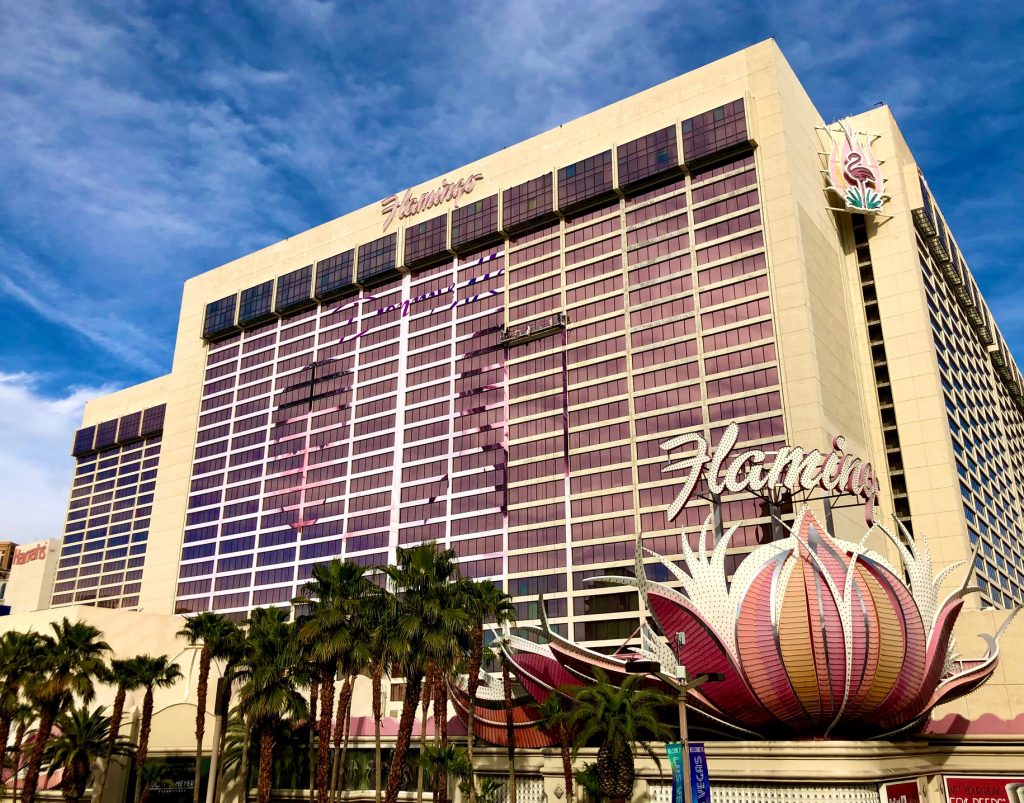
Santarelli—and we—buried the lead, which is Caesars’ much-hyped Strip asset sale. Says Santarelli, “We continue to believe CZR is likely to sell the Flamingo,” a deal expected to be struck in the third quarter. It seems highly doubtful that Reeg would get his desired $2 billion for the property but stranger things have happened lately. This would reduce Caesars’ room exposure on the Strip by 15%. “While investors focus primarily on the deleverage associated with the asset sale, we see the transaction as favorable for room night mix/ADR compression/margins,” wrote Santarelli, adding that the room inventory would fall by a further 11% in 2024 when The Rio is subtracted.
As for sports betting, Caesars has pulled back drastically on marketing, to the tune of $250 million. Some of that will go right back into promotion of i-gaming product once the company feels its library of online games is up to snuff. Digital wagering was the one area in which Caesars disappointed, eking out $53 million of revenue ($62 million was expected). Launches in New York State and Louisiana were a bath in red ink: $400 million in losses.
Barry Jonas of Truist Securities echoed Santarelli’s narrative, hailing a Caesars “driven by a record quarter in Vegas and strong performance at the Regionals.” Jonas was positively euphoric about the digital sector, predicting 50% ROI once it matures and saying that startup costs were over the hump. Terrestrially, 18 Caesars properties set first-quarter records for cash flow. Reeg and his confreres “noted that the post-Omicron surge of pent-up demand that hit right before the Super Bowl has not let up. CZR has not seen any changes to customer behavior from unfavorable macro trends and noted the older/core demographic’s full return is strengthening by the week.”
Station Casinos was right in line with Wall Street’s anticipations, although its lower-rolling customers are starting to be negatively affected by the larger economy—an issue that has not manifested on the Strip but is starting to show up in big-picture Nevada gaming numbers. (As Santarelli explained it, “While this segment improved a bit in April, the trend remains below 2021 levels. That said, the softness, in this lower worth segment, was more than offset by strength in the mid tier customer segments and the higher end segment.”) At least Station has been able to offset this with a strong comeback of players who were kept away by the pandemic—and who are spending more time at the slots. Net revenues were $402 million.
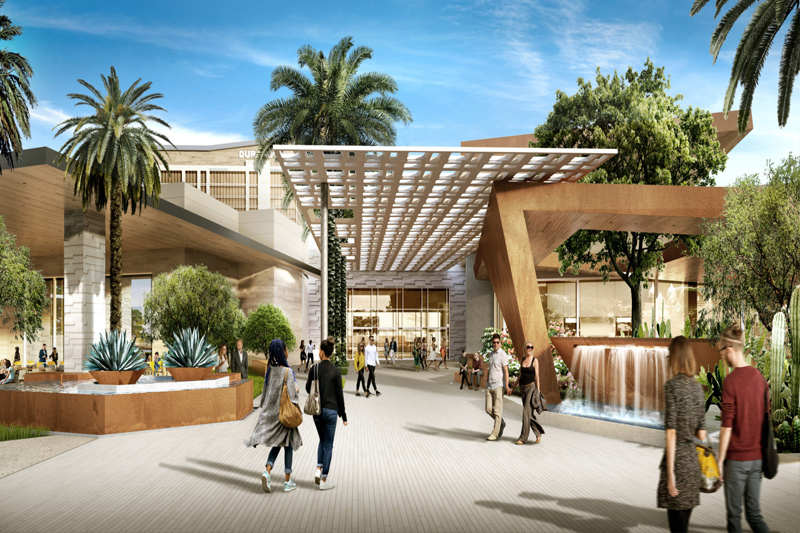
Durango Station has been 72% bid out to contracts and Station bosses maintain that long-term procurement contracts will help them weather their supply chain issues and meet their 1.5-two-year construction timeline, although the $750 million cost would be worrisome if the project were being built in any other part of the Vegas Valley.
With the exception of Sunset Station and all the little Wildfire casinos, Station has gone cashless “and did see some increased velocity among customers who had signed up,” according to Jonas. Management is unworried about new competition from Palms Casino Resort, “citing strong customer loyalty and preferential location attributes of [Station] properties.”

In an utterly unsurprising development, Chicago Mayor Lori Lightfoot (D) is reportedly about to do what she intended to all along—hand the Windy City casino concession on a platter to Bally’s Corp. The latter’s $25 million in front money was its trump card, according to the Chicago Sun-Times: “Those are key considerations for city officials desperate to start pumping casino tax revenue into depleted police and firefighter pension funds.” Highballed revenue projections didn’t hurt either. The clincher would be if Bally’s signs in an in-progress accord with Chicago labor unions. Area alderman oppose it, two to one, with supporter Walter Burnett having been strong-armed by Lightfoot into support after she threatened property-tax increases if she didn’t get her way.
So much for Lightfoot’s ballyhooed selection committee. As Alderman Brian Hopkins said of Lightfoot’s unilateral move, “the whole thing is just a charade.” Hopkins also beat us to the punch by pointing out Bally’s Achilles’ Heel: “the company acquired most of its 14 casinos in other states well after they were launched, and has never built a casino in a major market from the ground up.” It has certainly never, ever done anything on the scale it proposes for the Second City, meaning it has to learn on the job while building its “flagship” casino, as Chairman Soo Kim calls it. It might also need to reassure Chicagoans that they’re still a priority, given that Bally’s has been playing footsie with megaresort development in both New York City and Las Vegas, even Japan. And, as our Mom likes to ask, Using what for money? Maybe Bally’s will have the answer to that on tomorrow’s earnings call. Maybe not.

As Hopkins said, “To pick a team with no experience constructing large, multi-use projects is folly. This is not a project for beginners. They’re going to make mistakes. They’re going to do things that a more experienced team wouldn’t do. It’s going to delay the project. It’s going to cause all sorts of inconvenience to the neighborhood. We will probably wind up with something that is defective in some ways … Quickest to market is a promise that is unlikely to be kept by this inexperienced team that don’t seem to know what they’re doing.” While conceding some of Hopkins’ arguments regarding a worsened traffic snarl at the Bally’s Tribune site, Burnett surrendered to inevitable, saying, “It’s bigger than me. Bigger than the neighborhood. It’s for the city. It’s for the future.” That said, he added, “As far as I’m concerned, this is the mayor’s game. This is her thing. It didn’t come from the aldermen. It’s not aldermanic prerogative. This is coming from the top down to us.”
Lightfoot’s process was doomed from the outset because the really big boys in gaming passed on Chicago and its usurious tax rates. While Hard Rock International and Rush Street Gaming have proven track records of building and successfully operating casinos in major metro markets, they disqualified themselves by dint of having taken previous bites of the Chicago apple, in Gary and Des Plaines. Lightfoot was making sheep eyes at Bally’s from the outset and the two other competitors never stood a chance (poor site selections didn’t help—nor did frosty relations with labor unions). Between the tax impediment and mayoral criteria that skewed the playing field in Bally’s favor, Chicago will be getting the casino Lightfoot deserves.
Quote of the Day: “The gratification comes in the doing, not in the results.”—James Dean

I am really shocked that CZR is selling the Flamingo, considering that it is woven into Harrah’s and The Linq. Planet Hollywood would seem the obvious choice, as we all would have suspected. Last time I was in the Flamingo though, it needed much TLC; Planet Ho, not so much.
On Chicago, good luck to Ballys. Boyd made a believer out of me when then built Borgata, maybe Ballys can do the same in Chicago.
Since an analyst is making the prediction it will be the Flamingo going up for sale, I will not believe it till I hear it from CZR. AGG is right, its connected to Harrahs and LInq, and in the heat, everyone walks through the Flamingo casino when they travel down the strip, which has to be worth something. I think it will be Planet Ho. or less likely, flagship Harrahs. Its historical value may not be as high is its sales potential. The folks I know at CZR tell me that IF they sell a site, it will most likely not be Flamingo, albeit they have no real clue which, if any, will be sold. They can sell HO and have plenty of cash to fix up Flamingo. I cannot see them breaking up that run from Paris to Harrah’s. As for Chicago, a setup is a setup.