


Dragged down the golden albatross that is Macao, earnings of MGM Resorts International missed analysts’ projections by a whopping $1.61 per share for a 3Q22 loss of $1.39/share. More’s the pity, as MGM did so many things right. Wall Street expected 91.5% Las Vegas Strip room occupancy; MGM delivered 93%. The Street anticipated $3.2 billion in quarterly revenue; MGM saw that and raised it by $200 million. But Macao missed analyst estimates (which can’t have been very high to begin with) by 18%, eking out $87.5 million. J.P. Morgan analyst Joseph Greff dismissed the quarterly numbers as “more of the same,” while Deutsche Bank‘s Carlo Santarelli was slightly more clement, calling the results “some bumps, but broadly solid.”
While the Strip was 1% over Greff’s expectation, regional properties were slightly under, which he attributed to higher labor-related operating expenses, although the workforce is still 18% down from where it was before the pandemic. BetMGM narrowed its losses ($24 million negative ROI) and the company’s leverage is expected to diminish by $1.2 billion once the Gold Strike Tunica and Mirage sales close. The company’s “liquidity position remains strong, ending with domestic liquidity of $6.0b, including $4.4b of cash or $11 per share.” Greff reported that MGM’s “fundamentals remain sound” and it is seeing no “degradation” in consumer activity, particularly in Las Vegas, which company execs described as “exceptionally strong right now.” Teasing 4Q22 numbers, they said their October hotel revenue was the best ever. Baby Boomers are quite back at regional casinos yet but rated play is strong.
Greff didn’t share the optimism. “Looking out to 2023, we continue to embrace a recession scenario, given a murky and negative macro, though its impact isn’t as presently noticeable,” he wrote, assuming a 10% revenue drop-off next year, despite less red ink from BetMGM and a gradual upward curve in Macao. BetMGM is doing well: 30% of Internet gambling market share and 25% of sports betting. Compare that to Caesars Entertainment, which reported $38 million negative ROI for 6% of i-casino market share and 8% of sports betting, a lot less bang for the buck.
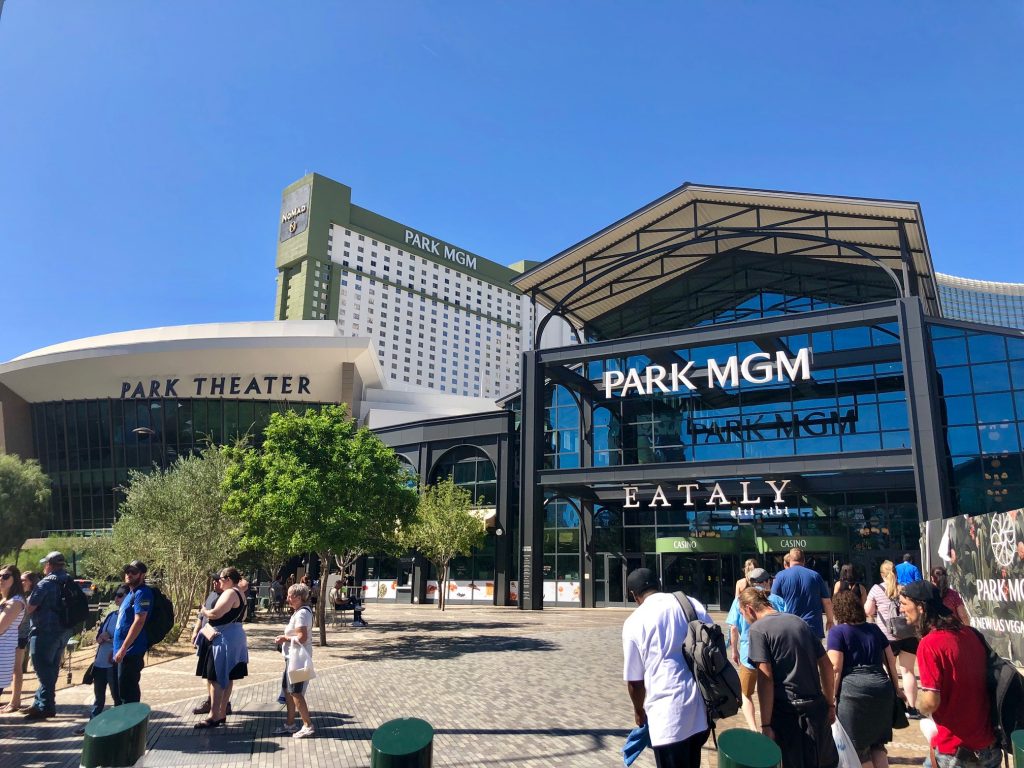
Greff likes MGM’s position in Sin City, “a market that should benefit from increasing event activity over the next 2 years, and should allow LV to perform relatively better than generic leisure markets.” Strip casinos were up 18% in revenue, 5% higher in gambling monies, helped along by 11% more slot win, offsetting a dip in table game revenues. As for New York City, Macao and Japan it’s hurry-up-and-wait time, as MGM can but twiddle its thumbs in hopes that the respective governments will hand out casino concessions sooner rather than later (as in next year).
Santarelli felt the numbers “while still solid, fell a bit shy of our expectations, as margins in both Las Vegas and the regional markets were lower than expected. While business and amenity mix played a role, we believe increased staffing levels and, to a lesser extent, higher wages, likely drove the delta versus our forecasts.” On the plus side, customers from Hong Kong and Singapore are avoiding Macao in favor of Las Vegas, a valuable hedge against any slowdown in domestic play.”We remain constructive,” he concluded, citing ongoing stock buybacks ($307 million last quarter), non-Vegas growth prospects, cash on hand, outperformance in i-gaming, and the benefit of lowered expectations for Vegas and regional properties.
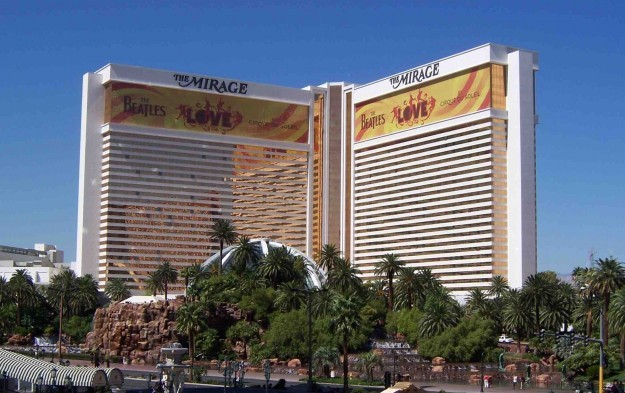
Ben Chaiken of Credit Suisse began by noting the Las Vegas outperformance in both revenue and cash flow, noting that this was the first full quarter to see contributions from The Cosmopolitan of Las Vegas. He added “at the end of the day, rev and EBITDA were better than expected, so there clearly was a mix dynamic that played a large role as lower margins revenues accelerated.” He also observed that MGM benefited from adding the Cosmo and jettisoning CityCenter, The Mirage (above) and Circus Circus. MGM, he argued, “continues to be one of the most misvalued companies in our coverage” and should benefit from a series of catalysts, including a reopened Macao, Formula One in Vegas, returning business travel and New York City expansion (we hope).
Echoing that was Barry Jonas of Truist Securities, who wrote, “MGM has not seen any impact on customer behavior from unfavorable macro conditions so far. Mgmt noted pricing power for rooms while F&B demand is strong, particularly for its luxury resorts … Mgmt did note that they would be monitoring for signs of slowing, and would pivot quickly in the event consumer demand slows.” Also noteworthy: “MGM did not report any impact from rising utility expenses, as the company highlighted its investments in solar and forward power hedges have mitigated rising energy cost risks through 2023.” Take that, fossil fuels!

“Stable” was Greff’s word for the performance of Penn Entertainment‘s regional properties, which is good because digital losses grew unexpectedly. “The only market where PENN is seeing some pressure is Pennsylvania, though this seems to be constrained to Meadows and Hollywood and is being partially offset by strength at its newer satellite properties —York and Morgantown.” Fortunately, the younger generations continue to come through for Penn though Baby Boomers falter, which is good because the company poured $12.5 million down the black hole that is Proposition 27 in California.
Digitally, Greff sees light at the end of the Barstool Sports tunnel, projecting positive ROI of $70 million next year and $106 million in 2024. “We like PENN’s value for patient investors and are maintaining our Overweight rating and see too much pessimism baked into PENN (still), with decent value embedded in the shares (even on our below-consensus forecast) and a stellar liquidity profile and balance sheet position,” he summarized.

Still, it’s not a good day when your fourth-quarter return on investment hinges on whether the Houston Astros win the World Series, enabling John “Mattress Mack” McIngvale (yes, the analysts are writing about him) to clean you out to the tune of $10 million. An Astros victory means Penn breaks even (sort of), a Philadelphia Phillies win a decent profit. The fourth quarter will also be complicated by the costs of launching sports betting in Maryland. Santarelli was less upbeat than Greff, calling Penn’s core assets resilient but the interactive window “shrinking.” He wrote, “While there were some one-time items in the Interactive EBITDAR, which, when combined amounted to ~$20 mm, Interactive results, on a whole, remained disappointing.” Growth in non-gaming casino revenue helped Penn beat estimates on the brick-and-mortar side.
Returning to his main theme, Santarelli wrote, “We note that there was essentially no mention of PENN’s performance in online sports betting in the release or slide deck and iCasino GGR declined sequentially in the period. With limited prospects, as things stand, for further iCasino legislation, and modest shares across live OSB states to date, we question where the revenue growth to scale the business is likely to come from.” He concluded, “Given concerns around the domestic consumer, elevated margins with limited room for cost cuts, sensitive free cash flow streams given the rental commitments [to Gaming & Leisure Properties Inc.], and still healthily embedded value for an Interactive segment that we don’t believe reaches even the further reduced expectations, we maintain our Hold rating,” taking a dollar off his price target.

Contrarily, Chaiken contended that Penn offered “cheap valuation with [long-term] growth.” He stressed that Penn delivered more than anticipated in both cash flow ($548 million) and casino revenue (almost $1.5 billion). Wall Street expected an interactive loss in the $25 million to $30 million range, so Penn’s -$49 million was an unpleasant surprise. Chaiken allowed that there were other adversities, writing, “Greektown has been hit hard since ’19 (rev down $80m), and the decline doesn’t get a tremendous amount of air-time.” However, he sees positive revenue drivers in Penn’s Columbus, Joliet, Aurora and M Resort (above) expansion projects, adding that Barstool “generates ~$220m in revenue and is profitable, and could also create other flywheel revenue effects in the portfolio.”
Truist’s Jonas was unsurprised by the Q322 results, citing early adoption of cashless gambling (five states so far) as a positive catalyst. Ditto stock buybacks ($168 million). The company is tweaking its properties to appeal even more to young players and got an additional tailwind from a “stable” marketing environment. Under the category of “Fixing the leaks” came “PENN highlighted the completion of its rebranding and renovations of its Greektown property [written down by $103 million] in Detroit following extensive water damage nearly two years ago. Mgmt expects the relocation of the aging Hollywood Aurora and Joliet riverboats to land-based casinos to cost $360M/$185M respectively.” One might only question why this decision was not reached sooner, before Full House Resorts was on the scene in force.

The Strat hit new heights for Golden Entertainment, striking an all-time apex for revenue in October, with occupancy running at 80% (100% on weekends). As for the third quarter, revenue and cash flow were down from 2021 but still the second-best in company history. Of course, when company executives of any ilk tease 4Q revenues it makes you wonder if the last quarter was anything to crow about. Such seems to be the case with Golden. Said CFO Charles Protell, stressing the positive, “We have one of the lowest leverage ratios in the industry and plenty of liquidity. These factors make us excited about our future and confident in our ability to continue creating long-term value for our shareholders.”
“Reduced occupancy at The Strat compared to last year is the primary driver of lower margins in our resort segment,” Protell added. “We expect margins to improve in the fourth quarter as occupancy continues to grow.” He argued “seasonality” as the reason for reduced revenue across most segments: “It’s similar to what we typically see at our properties when people tend to travel or get ready to go back to school. This was offset by increased revenue in Montana where we added new locations and benefited from increased summer tourism over last year.” Maryland was steady year/year at $21.5 million, which is good news for Century Casinos, incoming owner of Rocky Gap Resort.
Noting “pressures from utilities and labor,” J.P. Morgan’s Omer Sander concentrated on the “encouraging October trends” (as one must when the 3Q trends are suck wind). “Its more localized tavern business is benefiting from the seasonally stronger sports calendars,” Sander wrote, observing that every market save Laughlin was seeing improved 4Q cash flow. “It seems to us as though GDEN saw a return to more normal seasonality than we were initially modelling [sic], and that post-summer travel, its consumer returned to the trends seen over the prior few quarters.”
Remarking that Golden has $13/share in cash on hand, “With a strong balance sheet and wholly owned portfolio, we think GDEN has ample optionality on M&A or capital return, which we think accelerates,” Sander opined. “Its Nevada portfolio (>2/3 of GDEN’s EBITDA) should benefit from a strong calendar over the next 12-15 months as well as secular trends via migration to Las Vegas.” He saw room for improvement at The Strat, both in terms of occupancy (which is sub-2019) and room revenue mix, with 60-65% of the latter coming through online travel agencies.

Dismissing the third quarter as “a blip,” Santarelli prognosticated, “With the elections and a seasonally softer period until the Christmas/New Years Holiday upcoming, trends could surely slow, though forward bookings appear strong within the Nevada Casino business.” He predicted strong 2023 business drivers, including Consumer Electronics Show and the NCAA West Regionals “to name a few … More broadly, a return to normal seasonality and the difficult stimulus driven July comparison hampered both the Nevada Casino business and the locals business in the 3Q22, with these impacts also impacting the Nevada tavern business. Labor costs and summer heat driven utility expense creep also served to exacerbate the headwinds,” he explained.
Observing that Golden’s leverage will soon be down to 2X EBITDA, Santarelli commented that this boded well for expansion, “likely via tuck-in acquisitions in Nevada, though we imagine their willingness to be aggressive is tempered somewhat in the current financing environment.” He concluded that Golden “continues to represent compelling relative value … within the group,” especially as it owns its real estate, like rivals Station Casinos and Boyd Gaming.
Anyone have a guess as to what Tilman Fertitta‘s up to? After spending big to acquire a foothold on the Las Vegas Strip he splurged on Wynn Resorts stock, obtaining a 6% position. Perhaps he simply bought low ($58.30/share) betting on selling high. The stock leapt almost 10% on the news. Maybe Fertitta hopes for Wynn development capital, but why would the company underwrite a project 1.5 miles away, drawing business away from Wynncore on the north Strip? Your conjecture is as good as ours.

Jottings: Leave it to the Las Vegas Review-Journal to paint a smiley face on Bally’s Corp.‘s almost thoroughly depressing third-quarter earnings call. The company tried not to be pessimistic about the performance of its much-hyped interactive segment but it was difficult … DraftKings will have to wait until Monday. Suffice it to say that one analyst called the negative ROI “worse than expected.” Keep up the good work, Jason Robins … A drought on the Mississippi River has exposed the once-sunken corpse of Mississippi‘s first casino riverboat, the Diamond Lady, which succumbed to a storm last year. The vessel was found sitting upright and reasonably intact … Unless you’re attending the Las Vegas Grand Prix on Nov. 18 of next year you might want to give Sin City a pass that weekend. Hotel rates are being jacked up 305%, led by The Rio at 678% to $787/night. Caesars Palace is in front of the fare derby at $1,519/night … South Korea is back in the casino game in earnest as operators report “vastly improved” October revenues. The development comes as the government continues to relax Covid-related restrictions … 1,501 MGM Cotai guests and staff were liberated on Wednesday after all tested Covid-free, causing the Macao government to lift a lockdown on the property … Prairie Flower Casino, the Ponca Tribe gambling house that the Iowa private sector fought bitterly (and futilely) is obviously a huge hit. The Ponca broke ground on a new expansion six times bigger than Prairie Flower’s current casino floor … Lest you think all in online sports betting is gloom and doom, check out Rush Street Interactive. The company’s growth strategy twins OSB with i-gaming, a conservative plan but one that appears to be working.

[…] Source link […]