

Now that Las Vegas has fallen about as far as it can, private equity firms are picking over the city like vultures sampling carrion. Don’t get me wrong: It’s a much smarter strategy than those PE bozos who bought in when gaming stocks were at their apex, resulting in dilettantes like Colony Capital‘s Tom Barrick getting taken to the cleaners. On Wall Street, a fool and other people’s money are soon parted. (Note to private equity firms: A casino is not a widget factory. ‘Nuff said.)
 Fresh from pouncing on MGM Resorts International‘s half of Borgata, investor Leonard Green is at it again. This time his target of opportunity is the Palms. According to reporter Beth Jinks, embattled owner George Maloof is dickering with Green for continued operational control in return for a bailout, Maloof’s venture into condo development having proven his undoing. But look who Green’s partner is …
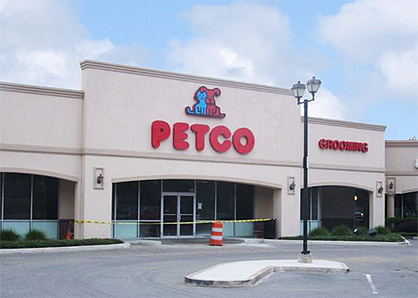
Oh no! It’s the dreaded Texas Pacific Group, co-author of the disastrous Harrah’s Entertainment LBO. (Green and TPG co-own Petco, which is too busy putting its name on baseball parks to stock the shelves of its increasingly seedy stores.) Writes Wells Fargo gaming analyst Carlo Santarelli, “we would anticipate the property being rolled into the Caesars [Entertainment] portfolio. We believe this would have a positive impact for both the Palms in its inclusion its inclusion in the Total Rewards program, and for Caesars, given Palms status as a differentiated Las Vegas asset when compared with its existing portfolio.”
Color me skeptical about Caesars’ ability to appreciate, let alone maintain, the unique half-SoCal/half-local customer blend that Maloof has achieved at the Palms — although Caesars is currently trying to reinvent The Rio in the Palms’ image. Then there’s Gary Loveman‘s notorious war against video poker players, who spit out the name “Harrah’s” like bad food, his aversion to maintenance and Harr, er, Caesars’ tired repertory of slots.
Those paytables are gonna tighten up like nobody’s business, even if Caesars CFO Jonathan Halkyard has to replace every EPROM chip personally. Besides, can you see that a stuffed shirt like Loveman doing a commercial opposite three talking slot machines? Only in a parallel universe, baby, and maybe not even then.
 The sight of Green snuggling into bed with Caesars also raises the question of how Boyd Gaming would feel about sharing proprietary Borgata data with a Loveman business partner. Sure enough, there are rumors of hiccups in the Green/Boyd deal. Some have Green getting cold feet, others suggest he might buy out Boyd altogether but retaining it as property manager. Taking the latter tack wouldn’t extricate Boyd from a prospective ménage-a-trois with Green and Caesars. (Nor can I readily imagine Boyd CEO Keith Smith relishing the task of essentially being hired help for a Green/TPG/Loveman troika.)
Two, Caesars is maxed out in Atlantic City, due to New Jersey antitrust laws. Imagine the ruckus if Loveman made a proxy grab for Borgata, effectively turning A.C. into Caesars’ private fiefdom. (That manner of hue and cry arose when Carl Icahn tried to take over three bankrupt Trump Entertainment Resorts casinos which had a far smaller market share between them.) Green could conduct some elaborate charade whereby he tells regulators that Borgata is one pocket, a Caesar-ized Palms is in another and never the twain shall meet. New Jersey, desperate for gaming investment, just might go for it. But you’d have to be born yesterday to believe that inside information from Borgata wouldn’t mysteriously make its way to One Harrah’s Court and vice versa.
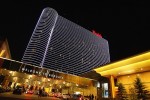 Lastly, unless Boyd execs have taken to leaving their brains in a jar on the bedside table, in no way is a management contract an improvement their current position in Atlantic City. Half of Borgata may not be what it was seven years ago but Boyd still co-owns by far the biggest cash register in town and one of the few casinos there to show an operating profit. Borgata’s EBITDA dwarfs that of any other BYD asset. For a company with no Las Vegas Strip or Gulf Coast presence to simply capitulate in Atlantic City beggars credulity. Perhaps Boyd should rethink the Jersey deal and try to devise some means of yanking the “Welcome” mat out from under Green’s feet. He’s starting to sound like very bad news.

I believe it was the NY Post that reported that Green was walking away from Borgata. I have not heard a thing since. They really had noting good to say about AC. It might have been just a good old bash AC article. In any event, the Boyd Family (Execs there in name and not) is much smarter than many give them credit for. Their not going anywhere. But for the fun of speculation….Since NJ’s regulatory body has just been torn up and is in the process of a re-build; why doesnt MGM make another run at licensing? My guess is that they do not want to leave their piece of the “cash register ” either! Would a new and improved DGE (with pieces of the CCC rolled in) look more favorably towards MGM? The residents of NJ could only hope so!
On the Palms, TPG would be wise in letting the property operate as it always has, under Maloof’s control. Their investment there in no way needs to commingle with their Caesars portfolio. While not every one’s favorite casino investor, Barrick never merged Station and Resorts International although he had a controlling interest in both.
But this is the gaming industry and some of what you have proposed seems much more reasonable than what I have speculated in the past. I still shocked that Steve Wynn sold/lost Mirage!
It looks like “the Manhattanization of Las Vegas” has another victim and it is Palms Place. Trump Tower, St. Regis, Veer, Vdara, etc. are other condominium developments that have had problems selling their condominiums, due in part to banks not loaning money to individual homeowners. In my opinion Steve Wynn is the most successful casino owner in Las Vegas and he never built any condominiums.
My cousin works in marketing and he travels once a month or so and he has been to Las Vegas numerous times over the last 15 years or so. Most of the time he is in Las Vegas midweek on business for a convention for 2-3 days and he has lots and lots of fun. I remember talking to him once when he was in Las Vegas for 9 days straight (I think he had back to back conventions). He said after 4 days he had enough of Las Vegas and wanted to leave but he had another convention to attend.
I feel bad for Mr. Maloof because I have been to The Palms three times while visiting Las Vegas on business and I really like his property. Oh well I guess that’s why they call it gambling, sometimes you win and sometimes you lose.
Sad state of affairs if the regulatory chairs continue to let Caesars ownership scoop up anything in sight without reinvesting in their current properties. I love the fact that they are trying to remake the Rio into another Palms. After all when they bought it, that’s exactly what it was and through years of neglect and mismanagement it’s turned into a shell of a property, a warehouse for off strip dwellers and poker players during the summer. Pathetic.
The question I have though is where is Boyd with all of these properties in distress? After all they’ve been sitting on a large sum of cash since shutting Echelon down and if I read reports right, they were well financed for Echelon, just that their partners were not and there was no point in trying to recoup dollars on a condo based project at that point.
As a visitor from out of town, I seldom get up to the Palms even though I know their VP selection is by far the best anywhere near the strip. I’m a Caesar’s (ne Harrah’s) Total Diamond player and have been since its inauguration. So, understanding intimately the poor VP selection at all of Caesar’s properties, I am loathe to see Caesar’s get their hands on the Palms. For all those who play at the Palms, I do hope for your sake that doesn’t happen. As for a “makeover” of the Rio, that won’t mean a hill of beans unless they finally loosen up the VP schedules.
By the way, the ONE major reason I do make my way over to the Palms on occasion isn’t just for the VP, but to use the LVA $50.00 coupon!!
You nailed it David. If Palms goes to Loveman us folks who look for “good” games will be out of luck at The Palms. I only like The Palms, I don’t love it. Too smokey, too hip, and too crowded during the evening for my taste. Sure, a good portion of that crowd are fine ladies dressed to kill, but it’s hard too see them through the haze…
My son says The Palms is full of Skeeves and Whoes! ( I guess I am too old to know what a Skeeve is.) But if my 23 year old son won’t go there….hmmm something IS wrong.
Maybe Celtic fan Gary Loveman (you can catch a glimpse of him in his season ticket holder seats under the visitor basket at Celtic home games) can change the Palms tune.
[…] This post was mentioned on Twitter by 89835, David McKee. David McKee said: New entry; The Palms: Maloof out, Loveman in? https://www.lasvegasadvisor.com/stiffs-and-georges/?p=5500 […]
Loveman a Celtic fan??? This Laker fan for life just got jolted. No wonder my wallet clamps shut when I walk into a Loveman joint. Here I was thinking it was the lousy games. Silly me. My wallet is smart!
Dave, I just saw this in the WSJ:
“Colony Capital LLC has purchased a minority stake in Sam Nazarian’s company, betting that the 35-year-old Los Angeles night-club and hotel impresario will be the boutique-hotel industry’s next big name.
Colony, with $30 billion in assets under management, paid $35 million for the stake in closely held SBE LLC, which manages nine restaurants and five hotels. Colony also gets two of the five seats on SBE’s board. The companies declined to disclose the percentage other than saying it is a minority stake.”
I suppose this means that Colony now gets a piece of the Sahara!