Florida grilled over blackjack games; Caesars’ lucky streak continues
Things are looking grim for Florida Gov. Rick Scott‘s case against the Seminole Tribe. An attorney for the state was described as getting “shellacked” by U.S. District Judge Robert Hinkle. The latter zeroed in on the state’s “designated player games” — banked  versions of blackjack. “You’re not going to win that argument; you’re just not,” Hinkle told attorney Anne-Leigh Gaylord Moe, after warning her that in the case of a finding by the court that designated-player games are really house games “then the tribe can keep offering banking games for 20 years.” Also hurting the state’s case was the revelation that a banked game had been approved for a card room in Daytona. Moe tried to pass the buck on the designated-player games, arguing that it was the parimutuel operators themselves who had pushed the envelope.
The state itself has had to rein in parimutuels for offering verboten forms of gambling, cracking down on
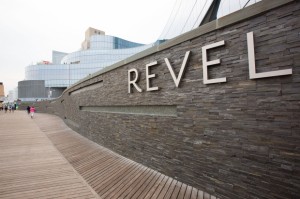 “TEN” but we don’t go for that all-caps tomfoolery at S&G). Ten was chosen as preferable to “Zen.” “Ten joined with our infinity logo represents our mission to provide the highest-rated amenities and our daily endeavor to offer an infinitely perfect escape for our guests, families and businesses,” said property CEO Robert A. Landino. There will be one holdover from the old Revel team in the form of CFO Alan Greenstein, who presumably knows where all the bodies are buried. Ten
  express their ‘yea’ or ‘nay’ before statewide voters weigh in during the November election. Revere Mayor Brian Arrigo is neither enamored of McCain, whom he dismisses as a “fly by night” casino developer nor of the cost to the city of holding a special plebiscite: $50,000. Stonehill College political science professor Peter Ubertaccio says McCain’s strategy is a canny one — if Revere voters approve the slots parlor McCain covets, outstate voters may think twice about overriding the local mandate. “The point they will make is that, if Revere wants a slots parlor, why should voters outside the city deny them. Voters can say, ‘Hey, it’s not in my town,’” Ubertaccio told the Boston Globe. A judge has ordered Arrigo to hold the vote before Oct. 26 but Hizzoner continues to resist.
 gaming revenues is another) if the tribe continues to defy the Internal Revenue Service, as seems likely. While the Indian Gaming Regulatory Act of 1988, casino revenues are taxable. In case you’re wondering, Florida‘s Seminole Tribe pays them. Heck, the Miccosukee Tribe doesn’t even have a compact with the Sunshine State. However, its annual slot revenues could be as high as $106 million. Writes Miami Herald columnist Nick Sortal, “Among the spending priorities in IGRA are funding tribal government programs and the general welfare of the tribe — taking care of everyone. If those needs are met, a tribe can then distribute annual payments to tribal members. But the tribe must have a Revenue Allocation Plan, which is approved by the Secretary of the Interior. Guess which tribe refuses to do that?” This cannot be what Sen. John McCain (R) had in mind when he fathered IGRA, all those years ago.
 beyond
  a pretty mingy allocation but is in line with Secretary for Economy & Finance Lionel Leong‘s goal of 3% table-game growth. Wynn said it was “satisfied” with the grant, as though it had any choice but to roll with the punches. The megaresort was designed with 400 tables in mind and Steve Wynn is camouflaging the shortfall by importing 250 tables from Wynn Macau. The Macanese government seems to be having a jolly good time making an example of Wynn (the CEO, not the company) after he blew his stack over governmental micromanagement of the casino industry, views that probably shouldn’t have been shared on an international conference call. We’ve come a full 180 degrees from the days when Wynn said his eponymous firm was “essentially a Chinese company” and threatened to move corporate headquarters to the People’s Republic of China. (Las Vegans practically lined up to help him move.)
 taken him to Aristocrat Technologies, where he was the company’s new broom on the American front, to Bally Technologies, to Shuffle Master and to Scientific. Most of those companies have subsequently been consolidated (including Bally and Shuffle Master into Scientific), some of them under the Scientific banner. “This management change, we think, increases execution risk in a set of complex, low growth businesses, that were relatively recently put together in a series of M&A transactions. Losing Gavin is a loss of gaming industry talent, and SGMS loses an executive who was well thought of by its customer base globally and well respected by his competitors,” wrote a somewhat shocked J.P. Morgan analyst Joseph Greff. In other words, the incoming CEO has big shoes to fill while learning a new industry.” He took comfort in the fact that Isaacs’ resignation didn’t take effect until the end of 2016 but couldn’t help noting that Sheehan had no background in the gaming sphere. (In other news, Scientific opened a new outpost in Australia, with Nevada Gov. Brian Sandoval [R] partaking of the festivities.)
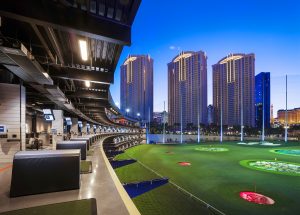
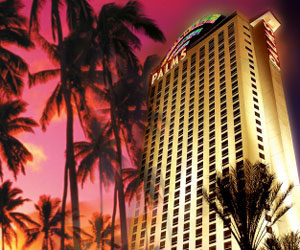 condo tower, 710 hotel rooms, 85 of
  trust Gaming & Leisure Properties, while Pinnacle would continue to exist as a casino-management company. This may constitute the acid test of the major qualm that surrounds casino REITs: that high rents may discourage reinvestment in the properties themselves, of which Pinnacle’s are some of the best-regarded in the business. (Unite-Here is predicating its opposition to the merger on precisely this fear.) The deal is valued at $4.1 billion. Although the result of the consolidation will be that GLPI will own multiple properties in the same market (including two of three in Baton Rouge), the REIT is in the catbird seat, collecting rent while competing managerial entities like Pinnacle and Penn National Gaming slug it out for market share. The merger has passed muster with Indiana gaming regulators but the Louisiana Gaming Control Board is still pondering it.
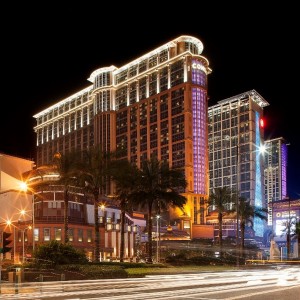 Sociedade de Jogos de Macau —
 project.” When National Harbor
  12 casinos (including 20 new restaurants this year) and 167 hotel rooms at Delta Downs. The company sees its balance of gaming/non-gaming revenue tipping from 80/20 to 75/25 but does not think this will be a problem, food and beverage having often been a loss leader in the past. The new “offensive” is to bring non-gaming amenities to the forefront and make them more appealing to younger customers. This capital campaign is expected to cost the company $100 million.