

This is an effective promotional tool. Why aren’t other companies doing it? (We’re looking at you, Caesars Entertainment.)
* Philippine strongman Rodrigo Duterte is punching out at Philippines offshore gaming operators (POGOs) over delinquent taxes. He asserted  that they had paid only $39,000 of a $424 million liability and gave them three days to get out of arrears. “I’m giving you at least three days,” he said over CNN Philippines. “That’s good enough, fair enough. Do you think it’s fair, three days? What do you think as a Filipino? Three days would be a kind of a good grace period for them.” He added, “I’m giving you three days to pay your debts. If not, you POGOs, I will shoot you with air guns. Because from where I come from, pugo [quail] is a small bird that does not fly and only runs about.”
That tough talk had results: $25 million was immediately deposited in government coffers. The beat-down comes as the Filipino government is freezing the issuance of new POGO licenses, a move characterized as a market corrective. “We want to rationalize so that everybody with a license has a good chance of being successful,” explained Pagcor Chairwoman Andrea Domingo, adding, “We will [by next year] have addressed 95% if not 97% of POGO, including the dark side—prostitution, kidnapping, financing.” In the terrestrial-gaming sphere, Galaxy Entertainment‘s project on Boracay island remains a definite maybe, given Duterte’s stated opposition. “We do not know if there will be some changes or some modifications to the ban,” explained Pagcor COO Alfredo Lim. “We do not know if the president will allow casinos to be opened.” Not terribly encouraging.
* California state Rep. Adam Gray (D, below), the Lege’s point man on gaming issues, is preparing to take on 18 Native American tribes and the state’s 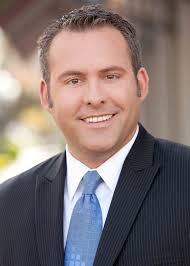 horse racing industry over sports-betting legislation. He’s working up a competing ballot initiative—which would need a supermajority to pass out of the Lege—to deal the Golden State’s card rooms and the online-gaming industry in on sports betting. Explained state Sen. Bill Dodd, Gray’s key ally, “When you look at all gaming interests in California—FanDuel, DraftKings, sports teams, card rooms … and all these things—so many people were left out of this initiative. We’ve got to consider them as well as the racetracks and tribes.” He takes a dim view of the prospects for sports betting that doesn’t—in the tribal proposal—have a mobile-betting component, eyeing that possible tax windfall for education. Besides, leaving out the widespread card-room industry would cut down on the revenue base substantially.
Outgoing CNIGA President Steve Stallings shot back, “We think any expansion ought to be methodical and well-tested … our initiative doesn’t include online. That doesn’t mean it can’t later be amended. California 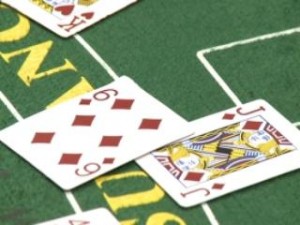 voters gave us a mandate to keep gaming on reservations. With this we do that, but help some racetracks that need some shoring up to stay competitive.” Why exclude card clubs? It’s explicit payback for their promulgation of blackjack, which Stallings says is a no-go. “Why would you expand gaming in facilities that are conducting illegal gaming?” He also thinks Dodd and Gray have dollar signs in their eyes, overestimating the windfall to be made from sports wagering. “Online is a major expansion of gaming and that’s more of an issue for tribes. Tribes feel this is a more practical way to incremental sports betting over time.”
Not surprisingly, the card rooms are in Gray’s corner. Said California Gaming Association President Kyle Kirkland, “If you are really going to do this, you need to look at all the stakeholders, and to have something for the state. The tribal initiative has nothing for the state. It’s a relatively small amount they would put back to the state. There are all sorts of stakeholders, the sports leagues, the teachers, the lotteries, cardrooms. You have to acknowledge that all of them exist.”
* What does the immediate future hold for Las Vegas? Dueling academics offered different views at the Las Vegas Global Economic Alliance‘s annual economic briefing. “I call it the un-recession. It’s been a year since all these pessimists and bears have been telling us the 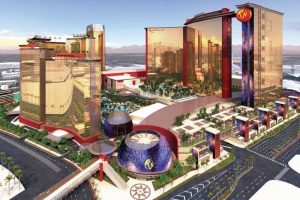 expansion is over. You don’t see anything in the statistics that suggests an economic slowdown occurring at all. Rumors of this expansion’s demise are highly overrated,” enthused UC Riverside School of Business Center for Economic Forecasting & Development Director Chris Thornberg. More circumspect was Dr. Stephen Miller, head of UNLV‘s Center for Business & Economic Research. He offered that “people should feel comfortable about the future of the Southern Nevada economy over the next two years. But as is always the case, you should keep some of your powder dry, because you never know when the next recession will come.” Miller, however, pinned many of his hopes on the opening of Resorts World Las Vegas, deep in 2021, a slim reed upon which to hang one’s projections.
 Jottings: The Hellenikon megaresort plan in Greece is in trouble, thanks to some mis-filed paperwork. (The devil remains in the details.) Understandably, both Hard Rock International and Mohegan Gaming & Entertainment are threatening to sue … Whoever thought slot players could become social-media celebrities? Just ask the filming-friendly Cosmopolitan of Las Vegas (Fascinating stuff.) … It’s a done deal. Eric Birnbaum is now officially the new owner of The Rio. Major changes are probably a couple of years distant … Former regulator Richard Schuetz has a scathing piece about sexual harassment in the gaming industry and the Nevada Gaming Commission’s limp response. It’s a must-read.
