


In a deal that Nevada regulators would block if they had an ounce of spine, MGM Growth Properties proposes to sell itself to Vici Properties, which would put nearly all the prime land on the Las Vegas Strip under one owner. Vici already owns most Caesars-branded properties on the Strip and is on the verge of adding The Venetian and Palazzo. It was, as Deutsche Bank analyst Carlo Santarelli put it with delicious understatement, “a deal with far-reaching implications.” The price tag is a whopping $17.2 billion, paid in a mix of cash and stock. Of that, $5.7 billion is debt already carried by MGP. Adds Santarelli, “the true driver of M&A in the [REIT] sector was cost of capital, and with VICI having traded at a healthy equity premium to the group for some time, with access to inexpensive debt financing, the transaction makes both intuitive and financial sense.” Still, $17.2 billion is a not-inconsiderable amount of debt, however low your interest payments may be (3.75% in this case).
“In 2016 we started on our journey to become asset light and this announcement, together with our recently announced Springfield and CityCenter transactions, reflects the culmination of those efforts and a major step forward in simplifying our corporate structure,” said CEO Bill Hornbuckle. “As a result of these actions, we are well positioned and remain focused on pursuing growth opportunities in our core business, with significant financial flexibility to continue to deploy capital to maximize shareholder value.” In a goodbye note to MGM, MGP Chairman Paul Salem wrote, “We are thankful to the MGP management team for all of their efforts to develop MGP into a premier gaming REIT.” “We have always admired the exceptional quality of MGP’s real estate portfolio,” added Vici CEO Ed Pitoniak, unable to conceal his glee.
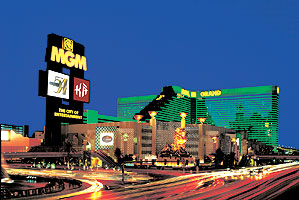
Barry Jonas of Truist Securities chimed in to say, “We see limited risks to the deal closing, with VICI noting they do not expect to see any required asset sales. While we also think the deal puts a bigger spotlight on the attractiveness of gaming real estate … we would be surprised to see additional interested parties emerge to alter the deal.” Vici will grow from 28 casino properties to 43, a market concentration that regulators should find concerning. “Tenant diversity and concentration also improves with the largest tenant of legacy VICI [Caesars] decreasing from 68% to 41% on a pro forma basis,” added Jonas.
MGM will be a tenant in the empire that Kirk Kerkorian built, holding 1% of Vici stock. Meanwhile, it will be paying Vici $860 million a year in rent. Set against that is the $4.4 billion it gets up front, presumably to be poured into the money pit that is Osaka. Santarelli opines “that MGM will remain aggressive seeking ROI initiatives/acquisitions,” although we find it difficult to visualize MGM as a buyer at a time when it is selling everything short of Hornbuckle’s soul. (Jonas concurs.) Gaming transactions rarely shock us but this one is a stunner.
In other MGM-related stories, Ka is on hold again. Employees of the Cirque du Soleil spectacular, which had been expected to return in October, have had their furloughs extended through Dec. 31, Vital Vegas reports. The show must (not) go on.
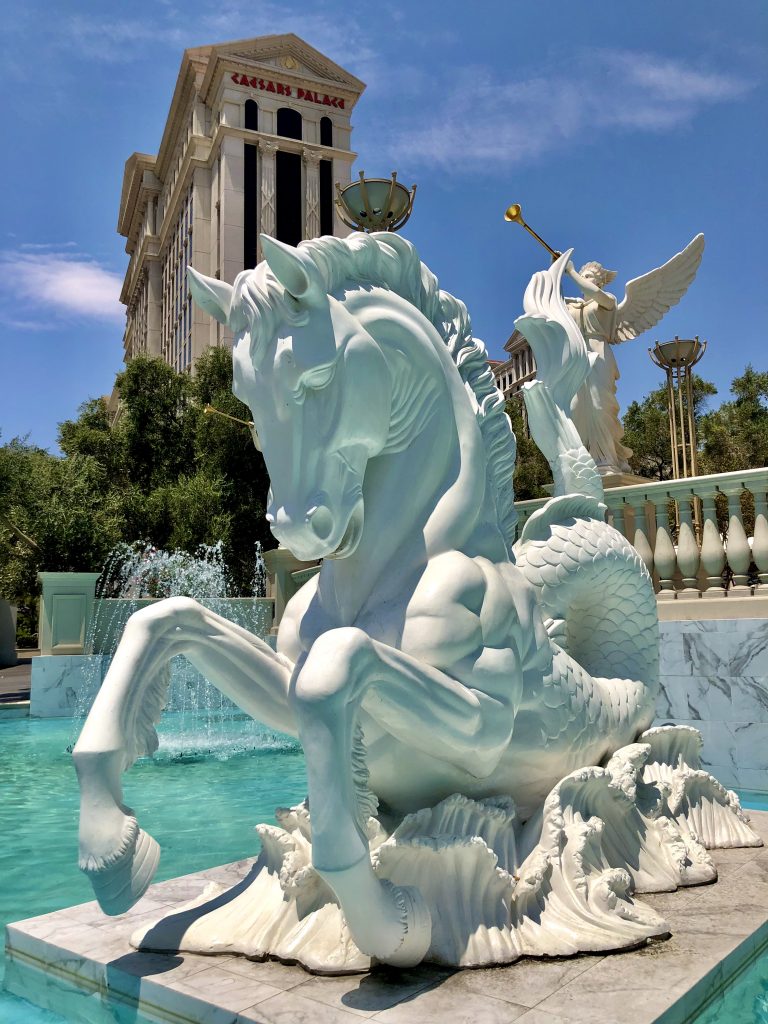
“Doing all the right things.” That’s JP Morgan analyst Joseph Greff‘s take on Caesars Entertainment‘s 2Q21 earnings report. Customers would doubtless take issue with that sentiment. (Many already do.) Greff was reacting to “stronger than expected” results, as manifested in “spectacular” numbers on the Strip despite “85% of 2Q19 levels, despite social distancing restrictions, mask mandates and not all hotel and F&B capacity available for ~2/3 of the 2Q.” Cash flow grew from month to month. Greff expected company-wide $748 million in cash flow and Caesars delivered $1.1 billion. (Which must be easy to do when you’re desperately cutting corners.) “While delta variant spikes warrant serious attention to assess the impact on fly-to (NV) and drive-to casino (regionals) patronage, July thus far has been encouraging and the new NV mask mandate has yet to disrupt, so far, the strong operating momentum,” Greff reported, predicting the stock will reach $129/share by the end of 2022.
He also forecast that “stronger group volumes, incremental entertainment revenues, banquet/F&B, and overall hotel room pricing will drive continued growth in Las Vegas and the regionals recovery will continue,” except in Atlantic City and New Orleans “which have lagged.” Extra-terrestrially, Greff predicted that Caesars could capture 10% of the U.S. sports-betting market and 15% of i-gaming now that it owns all of William Hill. Las Vegas Strip revenues were $855 million (Deutsche Bank expected $687 million) and “would be even stronger after adjusting for low table games hold and Rio rent payments.” Occupancy ran at 89%, with an impressive 85% on weekdays and near-sellouts on weekends. Group business is coming back incrementally, with group-derived revenues up 18% in 3Q-4Q21 and 20% next year. “As such, management expects 3Q21 occupancy to come in significantly ahead of the 2Q’s 89%.” Caesars Forum has 176 event bookings, representing 1.7 million room nights and $627 million in revenue, stretching from July through September.
Regional properties generated revenue of over $1.5 billion, with record-setting levels of cash flow. Isle Grand Palais in Lake Charles is still a long ways from reentering the fold, not due to reopen until July 2022 at the earliest. Internet gambling and OSB engendered $117 million, though cash flow was meagre. A billion-dollar investment into the digital sphere is planned over the next 30 months. It’s nice to see Eldorado, er, Caesars investing in something. After all, there’s a substantial debt overhang, expected to be $8.1 billion when 2024 rolls around. At least the company finally unloaded London Clubs (another bad Gary Loveman legacy), a money-losing proposition.
Jonas accentuated the positive, noting “a weekend/leisure-driven recovery arrived sooner than expected” in the U.S. He was particularly impressed by the Strip occupancy numbers “despite minimal group business.” He added that “Caesars Forum continues to exceed management’s expectations” and the boffo numbers were achieved within a quarter in which mask mandates were still in place for 2.5 of three months. “Given the Q2 strength, management does not think renewed mask requirements will have a meaningful impact.”
Santarelli had more optimism about the Boardwalk than Greff, predicting a late-summer pickup in business. He added, “As we’ve seen this earnings season to date, even the most eye popping beats have been sold. Nevertheless, we believe the 2Q21 from CZR was another in a long line of strong operating performances that support management optimism and credibility.” So optimistic were Caesars brass that they forecast a 50%-100% return on investment, near term, in the digital sphere, looking to gain market share as football season draws nigh. “Our sense is, a traveling man could make a healthy salary by merely driving state to state and taking advantage of the plethora of promotional offers and signup bonuses this fall from all of the operators,” Santarelli observed.
As for the future, Jonas reported that Caesars execs promised a “dramatically improved” Caesars Palace, along with the start of a new hotel tower in New Orleans. Elsewhere, Indiana Grand is being expanded (and why not, given its reliable performance) and investment in Nebraska is promised. The one place that Caesars definitely isn’t going is Chicago, in which management professed no interest. “Management also noted they remain committed to further debt reduction,” $325 million having recently been put toward that laudable goal. That doesn’t preclude reinvestment in slot machines, which Jonas predicts, but CEO Tom Reeg is still playing coy about Las Vegas Strip asset sales, with management only conceding that one will be put on the market next year. And finally, “Management noted CZR was cash income positive in the F&B segment for the first time in company history.” Forget about those buffets, folks.
Missouri solons are getting fed up with their state’s chronic inability to enact sports betting. State Sen. Denny Hoskins and state Rep. Dan Shaul are planning a pincer movement to force the issue. Vented Shaul, “The casinos want sports betting, the pro teams want sports betting. The VLTs want their piece. They’re getting frustrated, so what happens?” Well, nothing. “Denny and I will file similar bills and we’ll see where the frustration will take us. I’ve always been one to see where the market will take it, and let the state benefit from a safe, secure system.” It must be vexatious to see three neighboring states—Illinois, Iowa and Tennessee—raking it in from sports betting, some of it undoubtedly from migratory Missouri residents. Casino Queen in East St. Louis is looked upon with particular ire.
With redistricting maps being laid out and state lawmakers with national aspirations trying to move up politically, Shaul is cautiously pessimistic about 2022. After all, three sports-betting bills were introduced in December 2020 and none of them budged, in a year with fewer distractions. The solution? Include legitimization and regulation of black-market slots as part of the sports betting package. With 20,000 such machines in the state, potential taxation would be quite a drawing card. Hoskins has already penned a bill that would require sports books to use official league data when setting their lines, permit in-state collegiate wagering, also sports books to operate at major playing venues and (a bad idea) require in-person registration, which would hobble revenues right at the starting gate. It’s an imperfect vehicle but a quantum improvement on the status quo.

One company owning that much will cripple any kind of competition between these resorts, They could strong arm the supply chain, and starve out any entity they consider to be competitive. The Gaming Control Board would lose regulatory and license power, how could they act impartially when one company can hold an entire state economy hostage if they wanted to. The casino and hospitality workers living in Las Vegas would find themselves relegated to seeking employment from a monopoly, of course the resorts would claim autonomy, but it would not be credible. It was bad when Caesars and MGM owned everything, now they are attempting to collude and become one giant conglomerate. If this gets allowed it will enrich the few at the expense of the many in my opinion…