

Grand Victoria is such small potatoes in the MGM Resorts International portfolio that the Elgin riverboat’s management used to be farmed out to co-owner Hyatt Gaming (since succeeded by the Pritzker family’s RBG). The Elgin City Council is hoping that will change with a turnover of ownership. It’s counting on getting a bigger chunk of change if Grand  Victoria’s performance improves. “Grand Victoria would be a bigger part of the Eldorado‘s portfolio than it is for MGM, so maybe there would be more focus on the property,” said Councilman Terry Gavin. Also not-uninterested is Kane County, which gets 7.5% of Grand Victoria’s net operating income, which goes toward everything from food banks to environmental remediation. The riverboat is a legacy from MGM’s absorption of Mandalay Resort Group, a transaction that left MGM with a number of small-fry properties it has been selling off here and there. Divestiture of Grand Victoria is consonant with that strategy — and MGM doesn’t have to pay Illinois‘ inflated tax rate anymore if the deal goes through.
Elsewhere in the Land of Lincoln, Burr Ridge is wrestling with the question of whether or Continue reading
 venture with Meras Holding to
  “Since you can’t take it with you the IRS removes the temptation.” — quip on the marquee of a Methodist church in Augusta, Georgia.
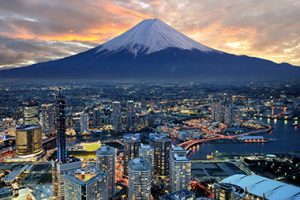 which Morgan Stanley thinks will support at least 14% return on investment, if not better. There would be an entry fee for Japanese nationals, comparable to $56. The bank also projects $10 billion in annual gaming revenue just from megaresorts in Tokyo and Osaka. (A third resort is expected.) Tokyo might actually be last to market, due to disruption from the 2020 Olympics, “While Osaka seems to have all its stars aligned, there is no certainty around other locations,” opined Big Stan, mooting four other “interested locations,” including Nagasaki, which most of us think of in distinctly non-gaming contexts. The report did make the caveat that hitting those rosy ROI numbers (as high as 20%) was predicated on
 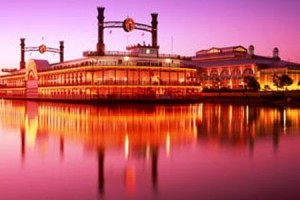 for $1.2 billion. Not content with that, it paid $327.5 million to Hyatt Gaming and MGM Resorts International to relieve them of Grand Victoria riverboat in Elgin. While Eldorado swung the Tropicana deal for a thrifty 6.6X cash flow, it paid top dollar from Grand Victoria, shelling out an above-average 9X cash flow. “The transaction will also be highly accretive, assuming ERI can achieve its projected operation-driven synergies,” reported JP Morgan number-cruncher Daniel Politzer. Having sold the Tropicana real estate to GLPI, Eldorado will pay $110 million rent to GLPI, which also comes out of this deal smelling like a rose. Wrote JP Morgan analyst Joseph Greff, “we think investors are getting an attractive dividend.” GLPI will absorb six of the seven casinos acquired by Eldorado, except for one in the Lake Tahoe market which already sits on leased terra firma.
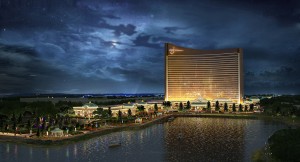 neck. Although this would mean giving almost the entire Massachusetts casino market to one company, Massachusetts Gaming Commission Chairman Stephen Crosby
 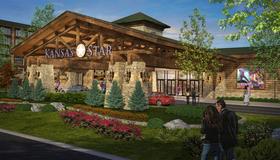 Gaming‘s Kansas Star Casino & Resort was dominant, grossing $18 million on an 8% gain. It was followed by Penn National Gaming‘s Hollywood-branded casino at the Kansas Speedway, which raked in $14 million, a 6.5% increase. Boot Hill Casino kicked it up 14%, ending at $4 million while Kansas Crossing brought up the rear with $3.5 million.
 dominating that sector with 34% market share. Resorts Digital continues to move past Tropicana (the new tail-end Charlie) up to 16.5% market share. Borgata‘s terrestrial gambling was flat, year/year. Tables brought in 3.5% less on 6% lower wagering. Slot win grew 2.5% on 4% more coin-in. A good month at Harrah’s Resort ($32 million, up 7%) couldn’t save Caesars Entertainment‘s bacon. Caesars Atlantic City got clobbered, its $22 million representing a 25% plunge. Bally’s grossed $16 million, for a 7% decline.
 consequences of further diluting the Nutmeg State’s gambling market Aresimowicz said, “we have to have a comprehensive view of gambling here in the state of Connecticut and what that looks like.” That’s clearly not a near-term goal. Bridgeport‘s Rep. Steven Stafstrom (D) added, “We could pass a bill this year that allows an RFP process to go forward and then next session come back and act on a more comprehensive gaming strategy for the state that may or may not include pieces that came out of that RFP process.”
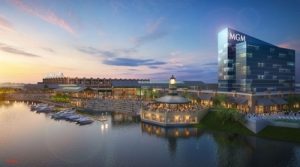 make up enough to match the revenue contribution from Foxwoods Resort Casino and Mohegan Sun. Despite MGM Resorts International CEO Jim Murren‘s claims, “Not a single commercial casino in the United States currently generates that level of gross gaming revenue,” Barrow states. At a steep 25% tax rate, the best MGM could do for the state would be $180 million, a far cry from the $271 million that Foxwoods and Mohegan Sun shared with the state last year. Also, Barrow notes, competition from Connecticut has sprung up on all sides — Massachusetts, Rhode Island, New York State — with more on the way.
 Wynn might say it’s not conceding anything but were there not a diversity problem, why would the company create a department to address it? The new Culture & Community Department, remotely overseen by Kim Sinatra, is — per the Wall Street Journal — tasked with “focusing on diversity and inclusion, gender equality, and support for employee charitable efforts.” This includes a Women’s Leadership Forum, where issues like pay equity will be addressed. The Wynn board has two vacancies at this point. Would it be asking two much for them to be filled with members of the fair sex?
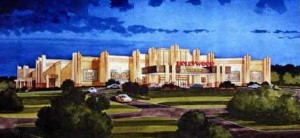 Dayton (+9%) and Hollywood Mahoning Valley (+13%) were phat, with slot win/day of $331 in Dayton and $355/slot/day in Austintown. Despite being closed two days due to flooding, Belterra Park managed to stay level with last year, grossing $7.5 million. Scioto Downs leapt 11% to $16 million and Miami Valley Gaming jumped 11.5% to $15.5 million. The Jack threesome were all on the positive side of the ledger for once. Dan Gilbert grossed $20 million in Cleveland (up 12%), $12 million at Thistledown (15% higher) and $19.5 million in Cincinnati (5% better). The strong showing by Belterra Park should
 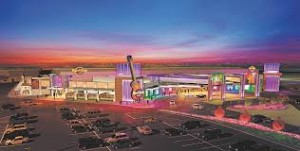 backstop buyer if no one else is willing to pay a fair price. While regional casinos aren’t among MGM’s strategic priorities, MGM does own around 73 percent of MGP and has a significant economic interest in the deal being successful. If MGM did step in as the OpCo buyer, we believe the deal would be accretive and strategically beneficial, giving MGM access to a new and attractive presence in Cleveland.” — Union Gaming Group analyst John DeCree on MGM Growth Properties‘
  annual wages of just under $45K, $628,961 in charitable donations last year and nine million satisfied customers. “Las Vegas Sands is pleased and proud of what we have been able to accomplish over the last nine years. We look forward to the future,” what little there is of it, Carr told the regulators, who grumbled a bit about Sands’ tardiness in paying local revenue-sharing fees during the period when they were declared illegal and subsequently re-legalized. (Trust me, you don’t want an explanation. That way lies madness.)
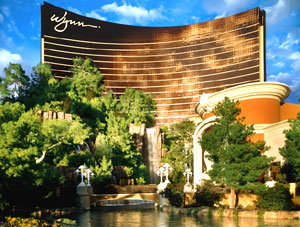 is not on the block, but one source close to the situation said the company’s new CEO would sell if he got the right price,” reports the New York Post. A source described as “close to a large gaming company” opined that there’s a 50/50 chance that Wynn CEO Matt Maddox gets the price he wants. Added a banking source, “Yeah, MGM is interested.” All this taking place amid disparaging remarks about Wynn’s “caretaker management team,” which appears not to have inspired great confidence on The Street.
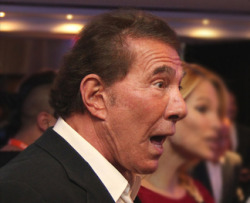 impaired eyesight has become a catch-all excuse. For one thing, we’ve seen him getting around Wynncore perfectly well, certainly not bumping into walls or anything of that ilk. In fact, if you didn’t know that Wynn’s eye troubles make him legally blind you’d be hard put to tell the difference. Wynn is responding to a suit from a ShowStoppers cast member who said that Wynn was something of a Peeping Tom.
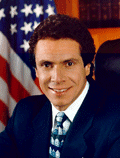 Never mind that the casinos agreed to those tax rates, nor that lawmakers — seeing less tax revenue than they’d been promised — are hardly going to assent to a still-lower amount. The casinos were supposed to be the golden goose for the Empire State’s school system. Their failure to lay eggs leaves yolk on the face of Gov. Andrew Cuomo (D) and gives challenger (and public-school activist) Cynthia Nixon a stick with which to beat him.
 Less pleasing for MGM execs: Slots continue to pull away from table games, $32 million to $28 million. Since tables are taxed at a far lower rate, this is not a development MGM wants to see. Overall, gaming revenue in the Free State was up 6%, with Maryland Live gaining a percentage point, MGM vaulting 18% and Horseshoe Baltimore down 8% ($25 million). MGM’s gain in market share came mainly at Maryland Live’s expense. Hollywood Perryville was up 2.5% to $7 million while Ocean Downs was supercharged by the addition of table games, leaping 26% to $6 million. Out west, Golden Entertainment‘s Rocky Gap Resort was flat at just under $5 million.