

Glenn Straub could theoretically never do a damned thing with Revel and still turn a tidy profit. A New York-based private equity firm is reported as willing to pay him $200 million for the shuttered megaresort, which Straub picked up for $82 million. Straub denies receiving any offers — but also 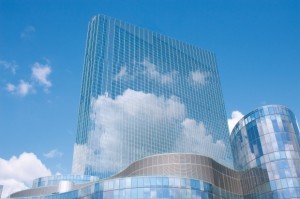 says he doesn’t know any private equity firms, which is a little hard to believe of someone as financially savvy as he. In the meantime, Revel remains stuck in the mud, its “Ten” rebranding perpetually on hold due to Straub’s proud insistence that he needn’t play by the same rules as other New Jersey casino owners. His choice of crony Robert Landino to oversee casino operations looks as dubious and arbitrary as ever. He’s even talked about opening Ten sans casino, which would seem like business suicide were his investment not so low.
If Straub has done nothing else, he’s chummed the waters for other bidders. In addition to the mystery private equity firm, Continue reading
 crapped out. After an initial flurry of lookie-lous, the first three casinos are struggling to regain their initial pace. For instance, Rivers Casino was making more than $3 million a week during February and March but it fell in April
 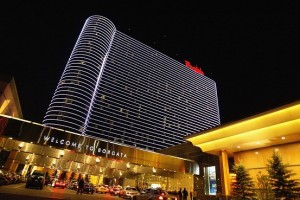 only by a 23.5% catapult in Internet gambling revenue, but not helped by an extra weekend day. Incremental variances aside, slot and table revenues were flat on the whole. One place they weren’t was Borgata,
  casino magnates aren’t completely out of the woods, as a series of public tenders must be held between 2025 and 2027. But near-term, five-year renewals look more and more like a given. Experts on the industry foresee either a one-time fee or a hike in the 39% tax rate as the quid-pro-quo for those five-year renewals. Also, Secretary for Economy & Finance Lionel Leong has called for casino operators to address unspecified “shortcomings.”
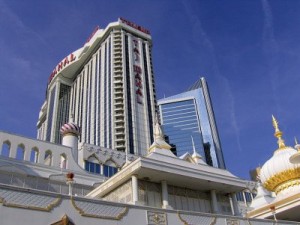 “liquidation” when he decided to take an impromptu shower in one of the vacant hotel rooms and video cameras
  agreement is “more or less” in place. The latest wrinkle in the debate is a proposal to metastasize the state’s casino industry by adding 10 mini-casinos (the industry’s view on this is unknown but unlikely to be favorable). Lawmakers have until next Monday to broker a deal, one that hopefully works off a cumulative budget deficit of $2 billion. The Associated Press reports that “the state government is facing the potential for another downgrade to a credit rating already damaged by its failure to deal with an entrenched post-recession deficit.”
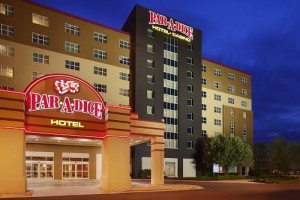 spread pretty evenly throughout the market, except at Jumer’s Casino Rock Island, which slipped 6%, to $6 million, and Boyd Gaming‘s Par-A-Dice, down 7% to $6 million. Gaming & Leisure Properties‘ Casino Queen dipped 2.5% to $8.5 million. All the Penn National Gaming-managed riverboats were shipshape: Argosy Belle was flat, at $4 million, Empress Joliet gained a percentage point to finish at $10 million and Hollywood Aurora leapt 3% to $9.5 million.
 judgment to headline a “French Tech Night” that was underwritten by ad giant Havas. Trouble was, Havas got the deal to foot the $238,000 bill for the fete on a no-bid basis. Macron, who is currently (and ironically) pushing an anti-corruption agenda back home, isn’t the primary focus of the investigation. No, that would appear to be Minister of Labor Muriel Penicaud. The latter is already a lightning rod for French labor unions for her efforts to curb their power. Expect more bolts to be flung in her direction as the Vegas scandale grows legs. Already Havas HQ have been raided and allegations have been made that Macron’s team exerted pressure on its behalf. As for Penicaud, she’s pushing her boss under the bus, launching her own internal inquiry and asserting that
 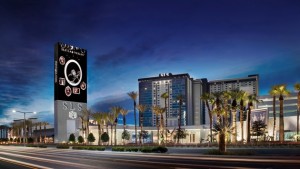 be returning to the venerable hotel-casino. The latest sign is the changeover of the loyalty program to Club 52 (from “The Code“). In case there could be any doubt, the property issued a statement reading, “Paying homage to its roots, Club 52 represents the year the Sahara Hotel and Casino opened its doors.” Hint, hint. Strangely — according to incipient owner Meruelo Group — the changeover
  Best Western to manage the two flagship properties (Arizona Charlie’s Decatur and Arizona Charlie’s Boulder were omitted from the arrangement. While Golden may have been consulted on the deal, you have to wonder how CEO Blake Sartini will feel about being reduced to a back-seat driver at his two newest casinos. Just to rub it in, ACEP CEO Frank Riolo said, “We were searching for the right soft brand to align with and it was immediately clear that Best Western Hotels & Resorts shares our commitment to delivering a unique and exceptional travel experience at a great value. Not only that, we will have access to Best Western’s second-to-none brand support, online platforms and loyalty program, while our properties maintain their iconic identities in both Las Vegas and Laughlin.”
 divided between table games and slots. Since the latter are taxed at a far higher rate, MGM won’t be crying into its beer. The casino has increased its share of the Free State market from 37% to 38.5%. Maryland Live ($42 million) continues to take it on the chin, down 22%, whereas Horseshoe Baltimore ($22 million) slackened only 10%. Believe it or not, Hollywood Perryville snapped out of its doldrums, up 6%. All of the outlying casinos had a warm June, with Rocky Gap Casino growing revenue 8.5% and Ocean Downs up 9.5%.
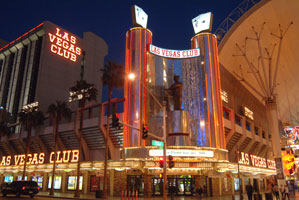 been inclined to spend your Fourth of July playing slot machines, you could have done it at the Las Vegas Club or Mermaids, each of which offered eight hours of gambling,
 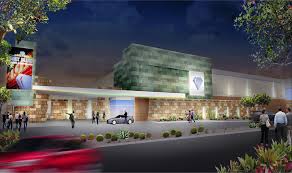 permanent, Class III casino, with an eye toward completion by spring of 2019. The tribe has been getting by with Class II games in a “big box” space eventually intended for back-of-house functions. It will offer 75,000 square feet of gaming space, up from the current 35,000. Although the tribe is now authorized to have table games, it won’t add any to Phase I, waiting until the proper Desert Diamond casino is finished. This has been such a long and bitter saga, it’s nice to report that it will have a happy ending.
 coin-in was up 4% but winnings were flat. Non-baccarat table games won 3% more even though wagering was 5%. The gross gaming revenue for the Strip was $547 million, while statewide it was just short of a billion-dollar month, coming in at $991.5 million. Locals lost 2% more, mainly driven by a 6% increase in casino winnings at the slots, while table games fell 6% on 1% less wagering. (The calendar was neutral with 2016, having the same number of weekend days.)
 signature
 notes, “[Chief Justice John Roberts] and the other conservative members of the Court would like to knock out every federal law that prevents states from making their own decisions.” American Gaming Association President Geoff Freeman risked counting his chickens before they hatch, saying, “Today’s decision, despite the eventual outcome in the court, is another nail in the coffin of the failed federal prohibition of sports betting … Whether the court rules it unconstitutional or not, Congress can no longer ignore the failings of this law over the past 25 years.”