

Next week Penn National Gaming turns on the Marquee Rewards spigot at the Tropicana Las Vegas. Given some of management’s recent disclosures, it won’t come a day too soon: 85% of Penn’s customer base comes to Sin City but stays elsewhere. Casino 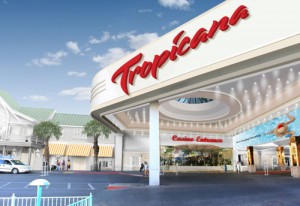 players only represent 10% of the Trop’s guest pool, with 45% of room nights filled through online travel agencies. Penn wants to even out that equation to the point where it’s filling 40-50% of rooms with Marquee Rewards customers. Given Penn players’ allergy to the Trop, it then comes as no surprising that it’s got the lowest-grossing gaming floor in the Penn portfolio.
Despite negative headlines in Massachusetts, Penn says it is seeing a 20% return on investment (impressive in gaming) from Plainridge Park. Ownership may not be paying sufficiently close attention to the Mashpee Wampanoag‘s activities in Taunton, as it continues to believe Continue reading
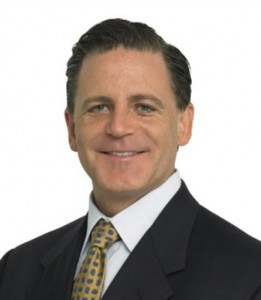 Entertainment/Dan Gilbert trifecta continued to underperform, with a flat month in Cleveland ($20 million), a 3% decline in Cincinnati ($17 million) and a 5% dip at ThistleDown Racino ($9 million). Were the latter not located inland, it should inherit the “Mistake by the Lake” moniker. Pinnacle Entertainment‘s decision to compete with its Indiana casino by developing Belterra Park also continues to look like an uncharacteristic blunder but at least the racino is steadily improving: Up 45% to $7 million.
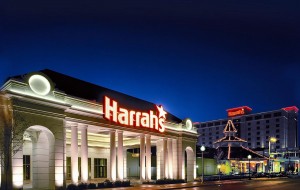 which fell 10%, to $8 million. Harrah’s Joliet ($17 million) and Harrah’s Metropolis ($7 million) were flat with last year. GLPI‘s Casino Queen ($10 million) also held steady. March was a mixed bag for Penn National Gaming, which was up 2% ($11 million) at Empress Joliet but 5% down at Hollywood Aurora ($10.5 million). Market-dominating Rivers Casino ($37 million) was off 2%. Independent Jumer’s Casino Rock Island ($6.5 million) slipped 4%. Foot traffic statewide fell 4%, as customers spent less to boot.
 course to build a lagoon (one mile in circumference and
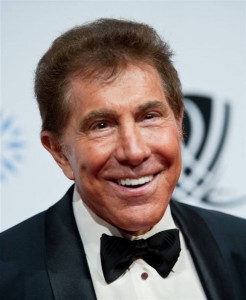
  references depositions from several Wynn Resorts board members, including former Nevada Gov. Bob Miller. It also levels some serious claims against CEO Steve Wynn and General Counsel Kim Sinatra, accusing them of concealing information to the board, depriving the latter of its ability to govern the company appropriately.
  contract with the tribe. Genting holds a seven-year pact, by way of its Genting Massachusetts unit, subject to National Indian Gaming Commission approval.“We will operate the casino while helping to build up the capacity of the tribe to operate it themselves. Our role is to work ourselves out of a job on behalf of the tribe,” Genting Massachusetts President Kevin C. Jones told Bay State regulators.“Genting is putting up millions and millions and millions, and has never stopped believing in our goal,” added tribal chairman Cedric Cromwell, in case you wondered where the construction money was coming from. The tribe
  Wolf’s proposal had been in effect last year, the state would have netted slightly less than $50 million in tax monies on $622 million in free play. That would make a small dent in the state’s $2 billion budget deficit. “The idea of taxing free play makes little or no sense. It is counterproductive. It will cost the Commonwealth of Pennsylvania in terms of tax revenue and will steal dollars away from reinvesting in properties,” Freeman told the Pittsburgh Post-Gazette.
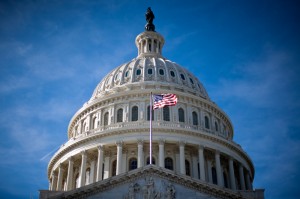 would have slots, blackjack and other table games but, strangely enough, no slots or electronic table games. The carrot is a “usage fee” that would fund public schools and the Housing Production Trust Fund, which creates affordable housing. “Our goal is to target the visiting population of the District,” said project Chairman Barry E. Jerrels. The financial backing for the initiative is rather dicey, attributable to a Delaware LLC called Anacostia Development. “There’s a consortium that’s ebbed and flowed,” said Jerrels evasively.
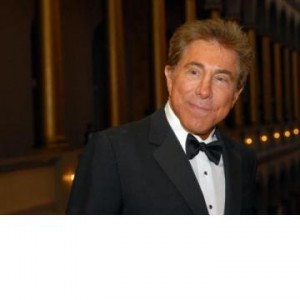 and had to pay her off. Among the more newly revealed allegations is the charge that “Mr. Wynn was forced to terminate employees who he never should have hired because of their associations with alleged illegal activity and, in at least one case, hid the reasons for the executive’s departure,” which sounds like something the Nevada Gaming Control Board should be examining, if Mrs. Wynn can actually substantiate it. She also accuses the Wynn Resorts board of directors of being a rubber stamp for her ex-husband’s wishes, although a ‘pet rock’ corporate board would hardly be a first in this industry. (The Harrah’s Entertainment board in the years leading up to the disastrous LBO comes instantly to mind.)
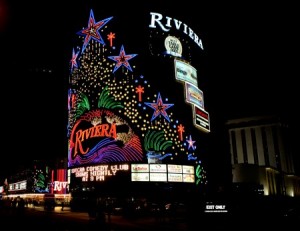 complications. Now that a demolition firm has been chosen, the task of remediating the Riv’s hazardous materials
  and 8% greater table play. Slot revenue on the Strip was 7% higher, helped by 1.5% more coin-in, which helped make up for a flat month of baccarat play. Four percent less was wagered but the house played lucky. The house dominated at other tables, with 5% heavier wagering leading to 13% greater win. Table revenue exclusive of poker was $302 million. Locals lost 10% more at the slots and 23% more at table games.
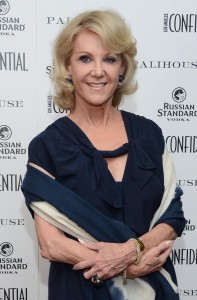 Kazuo Okada has been ousted from the company, she’s no longer bound by restrictions on how she, Steve Wynn and Okada could dispose of their shares. She backs up her legal threats with insinuations that stop just this side of blackmail: “Ms. Wynn learned that Mr. Wynn, using the services of a private criminal defense attorney and a private gaming attorney, has previously made a multimillion dollar payment after apparently being threatened with allegations of serious misconduct occurring on company property against a Wynn Resorts employee,” her lawsuit reads.
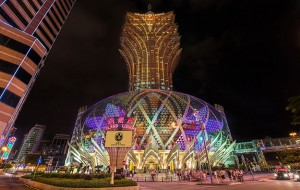 intention to “optimize and adjust” the Individual Visit Scheme that brings tourists to Macao. Chui said he was neither seeking an increase in the number of visitors to Macao nor in the number of cities (49 at present) to which the IVS applies. “We will ensure that the quality of life of local residents will not be hugely influenced,” he said by way of explanation, adding that he was concerned about the negative impact that a precipitate increase in tourism might have. The argument doesn’t quite wash. Last year, Macao welcomed 30.7 million gamblers and other tourists, three million down from the optimum number reached in 2014. That’s 92,325 a day. If Macao has been — as implied — maxed out, casino operators are going to have to adjust their expectations of the market.
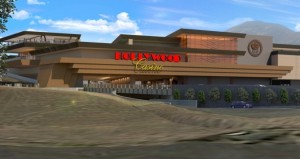 machines and getting out of any leased-game arrangements. It doesn’t expect any significant bottom-line contribution from the Trop until 2017. As for the relationship between the Trop and M Resort, Penn told JP Morgan analyst Joseph Greff that it is still trying to find synergies between the two. In the meantime, Penn sure wishes it could find financial extraction from its casino at Jamul Indian Village (left), near San Diego. Penn has been carrying the entire project cost, which it says it can do for another year or year-and-a-half but would like to find someone else to take over the loan. If that happens, it will probably be announced in the next month or so.
 from last year, as the state’s industry is now fully built out. “Since September 2015, the state has seen monthly gaming revenues continue to increase by an average of 6.1 percent compared to 2014,” reported a study by the RubinBrown firm. At $1.6 billion, the Buckeye State’s casino industry is smaller only than Indiana’s and Missouri‘s ($1.7 billion). Given its rate of growth, it should be in second place very soon. Overtaking Indiana ($2.1 billion) will be more difficult. The legalization of casino gambling in Ohio and Kansas is credited with making the Midwest the fastest-growing region for gaming revenue in the U.S.
 latter has said that if the issue can’t be resolved in the Lege,
 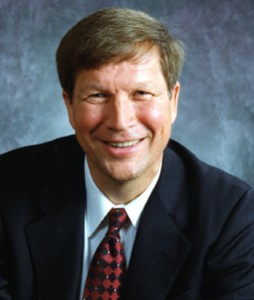 the state. Anti-gambling group Ohio Roundtable contended in vain that Kasich acted unconstitutionally by expanding gambling without putting the issue to a statewide vote. The Ohio Supreme Court ruled that the activist group lacked standing to sue. It opined that claims of gambling addiction and other social ills didn’t amount to a right to sue the state. “The negative effects of gambling that appellants allege do not constitute concrete injuries to appellants that are different in manner or degree from those caused to the general public, were not caused by the state’s conduct, and cannot be redressed by the requested relief,” opined the court Attacking the casino issue from a different angle, opponent Frederick Kinsey was deemed to have standing to sue. His beef isn’t with Kasich but with the original ballot initiative that created the Caesars/Penn duopoly. Kinsey, who may have casino aspirations of his own, “claims that the constitutional right of equal protection was violated because applying for an Ohio casino license was not available to everyone,” according to CardPlayer.com. The case has been remanded to Franklin County, where — among other things — Kinsey will have to
  for a $1.3 billion, taxpayer-funded, NFL-ready stadium. The 65,000-seat facility would be built on the southwestern corner of the newly expanded UNLV campus. “We’re dead serious about this. We may fail. We’re not saying this is simple. It’s complicated stuff, but it’s damn worth the effort,” Goldstein
  lead thumb — it’s the opposite of a golden touch,” says blogger par excellence Victor Rocha. One instance of this is the former Spotlight 29, a California bingo parlor run by a 12-member tribe, the Twenty-Nine Palms Band of Mission Indians.