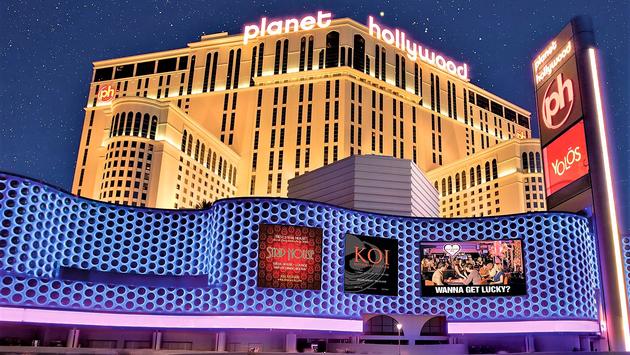
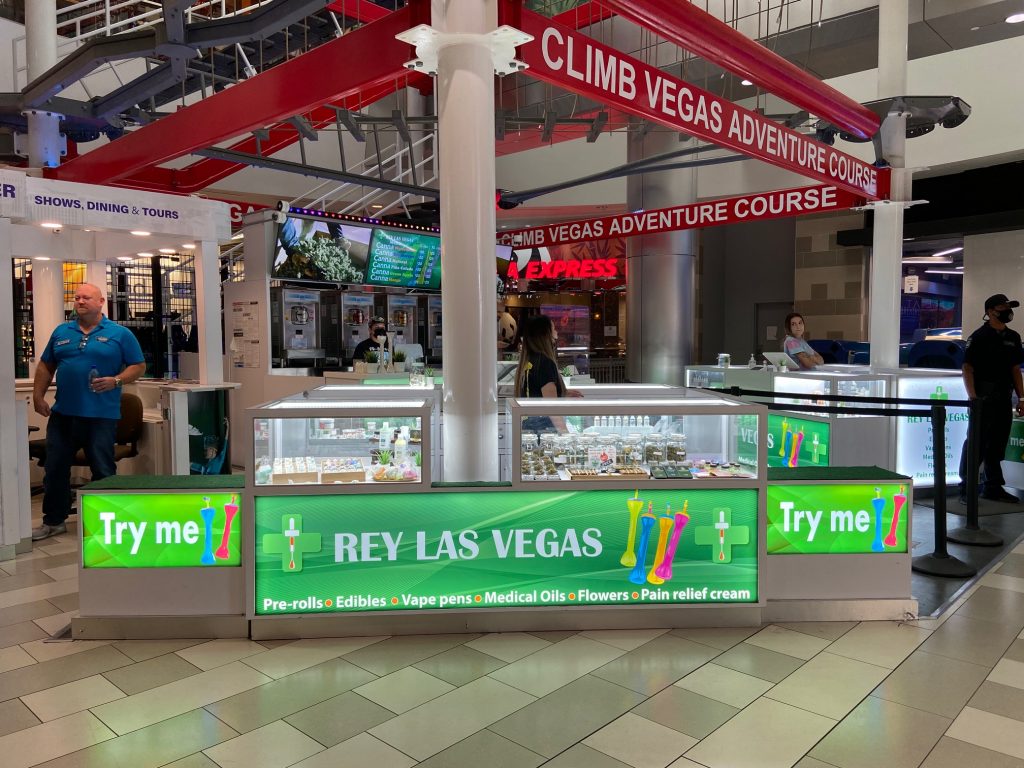
Hard by Planet Hollywood there’s a strip mall where you can get some egg rolls at Panda Express, satisfy a Big Mac Attack at McDonalds … and buy pre-rolled joints at the little boutique above. Legalized marijuana hasn’t infiltrated casinos yet, but it’s getting closer. (Addendum: Actually, it’s untruth-in-advertising. A source says Rey Las Vegas is just selling CBD product and the “Pre-rolls” is purely for show. Still, a sign of the changing times.)
“Foreign agent.” That’s who Steve Wynn is, according to the Justice Department, which is prepared to sue the disgraced casino mogul if he doesn’t register as an aegis of Red China‘s government. Seems that Steve was carrying water for the ChiComms during Donald Trump‘s administration. Specifically, he was leaning on the White House to extradite a certain Guo Wengui, who sought asylum in our great country back in 2014. The Chinese say Guo is wanted for bribery and sexual assault. And of course we can always take the Beijing government at its word. (*Cough*Wuhan*Cough*) Ultimately, in another chapter of the Trump/Wynn love-hate relationship, The Donald didn’t cede to Wynn’s pressure … perhaps because Guo is card-carrying member of the Mar-a-Lago country club. He’s also inSteve Bannon‘s Rolodex, which obviously didn’t hurt his cause.
According to Bloomberg, “Under the Foreign Agent Registration Act, passed in 1938, any person representing the interest of foreign entities in the U.S.—including governments—must disclose their relationship to the Justice Department. They also need to make public all of the activities they’ve done on their behalf and, if applicable, how much they were paid.” Hmmm … Steve Wynn do something untoward? Nah.
Last month Nevada raced ahead of 2019 gambling-revenue benchmarks, up 11% to just over $1 billion. Locals-derived winnings ($245 million) jumped 18%, despite operating at 80% capacity. (Locals casinos saw 15% higher slot win 18% greater handle and 35.5% more table win on 9% higher wagering—talk about luck being with the house.) Similarly confined were Las Vegas Strip casinos, which finally matched 2019 numbers with a $483.5 million performance. Strip slot revenue ($327 million) was up 19% on 16% more coin-in, while non-baccarat table win was down 10% on 3% less wagering. Baccarat remains a black hole, with winnings down 58% on 42% less wagering and low hold percentages. In other words, slots saved the day.
Colorado closed out its first full year of sports betting with an April decline, presaging a summer slump that is likely to prevail until football season. Handle was $244.5 million, which left $10.5 million in revenue after promotional credits ($6.5 million) were deducted. “In U.S. sports betting, there isn’t any real substitute for the popularity of the NFL or the NCAA Tournament,” understated Play USA analyst Ian St. Clair. “But even with a monthly decline in wagering, Colorado continues to fare well compared with similarly sized states.” The only real loser in Colorado’s first year of sports wagering is the state tax collector, who only brought in $6.5 million (on $2.3 billion handle and $147 million gross receipts), which some warned may bring a second look from the guvmint. NBA wagering ($84 million) led the Rocky Mountain State in April, distantly followed by baseball ($48 million) “a total likely dampened by the struggles of the Colorado Rockies.” The Colorado Avalanche scared up $10.5 million in hockey wagers and table tennis was almost as popular—$9 million in handle. Just imagine what that latter number will be when the summer Olympics finally roll around.
Let’s start with some good news. JP Morgan analyst Joseph Greff laid out a series of benchmarks for a Las Vegas comeback across the second half of 2021 (one year earlier than anticipated). “We think these data points are indicative of the strong and relatively quick inflection of demand on the LV Strip, with particular importance for group/convention business into the fall,” he wrote. While this rising tide should lift all boats, Greff picked MGM Resorts International and Caesars Entertainment to be particular beneficiaries, with Station Casinos and Boyd Gaming getting a lift off the back end.
For starters, airlines are coming back in a big way. Airlift capacity into Las Vegas is expected to be at 93% of 2019 levels by June and 97% by July, compared to a national average of 85% and 89% for those same months. And in September, when convention season starts in earnest, airlift is expected to be above 2019 levels. As for room rates, 3Q21 prices still lag 2018 by 8% but 6% higher on weekends. Caesars’ occupancy has already risen to 84% in March from on 72% in February and can be expected to keep moving the needle, with weekends sold out “for the foreseeable future.” As payrolls grow in other industries, discretionary income increases and unemployment continues to drop, the benefits trickle down to Boyd and Station.
If Sin City wasn’t chastened by the Coronavirus pandemic, it has certainly been cheapened by it. And not in a good way. Returning customers can expect to pay more for a diminished experience. Case in point, Caesars Entertainment. Not content to evict roughly a dozen four-wall shows (including sacred icon Wayne Newton), Caesars applied a kick to the posterior in the form of thousands of dollars in load-out charges. As Vital Vegas author Scott Roeben put it, “Insult, meet injury.” The impost was levied on Wednesday and (after it went over like a lead balloon), Caesars COO Anthony Caranolifted it on Friday. But the PR damage had been done. Caesars looked like a bunch of money-grubbing cutpurses. “ElDiablo” indeed!
All Sheldon Adelson‘s horses and all Sheldon Adelson’s men couldn’t put Texas megaresorts together. Or, as they said in Brooklyn (in a non-gaming context), wait ’til next year. Two separate bills to authorize everything from full-service casinos to poker rooms died in committee without even getting so much as a vote. The late Adelson put all his eggs in the Texas GOP basket and the party failed to show much gratitude, as the dismal performance of gaming legislation evinces. At least the lower house’s version of the bill got a hearing. No such luck in the state Senate. Even had the Lege gotten its act together, the casino push was an uphill slog, facing an increasingly likely veto from Gov. Greg Abbott (R), never mind the need to obtain a two-thirds supermajority at the 2022 ballot box, had Abbott reversed field. Polling showed majority approval but fell well short of 66%.
Despite the Lege’s truly dismal performance, Las Vegas Sands‘ man in Austin, Andy Abboud, remained optimistic, blowing sunshine up solons’ asses. “We have said from the beginning that we’re committed to Texas for the long haul. We have made great strides this session and have enjoyed meeting with lawmakers about our vision for destination resorts and answering all the questions they have.” Given the short shrift he got from lawmakers, we’re not so sure about Abboud making any “great strides,” and the deployment of literally scores of lobbyists, led by Karen Rove, yielded so little progress that it has to be chalked up as a giant flop. Losers other than Sands included Golden Nugget owner Tilman Fertitta and several Native American tribes who would have qualified for Class III casinos. It’s difficult to scavenge much upside from this result and Abboud might want to think about making some friends on the Democratic side of the aisle. The Texas GOP is so casino-averse that Abboud was ultimately spitting into the wind.
Casino revenues in Louisiana enjoyed a big bounce last month, up 18% to $236 million, a substantial increase over 2019 levels. Mind you, that number was achieved without two casinos that were operational in 2019, Diamond Jacks and Isle Grand Palais. The former succumbed to Coronavirus shutdown, the latter to Hurricane Laura. All markets showed strength, especially Shreveport/Bossier City, so we will start there. Except for a 14% boost at Horseshoe Bossier City (pictured, $16 million), the increases were eye-popping. Margaritaville rocketed 56% to $20 million and Eldorado Shreveport vaulted 46% to $13 million. (Watch out, Horseshoe: You’re closer to third place than first.) Boomtown Bossier jumped 27% to $5.5 million and Harrah’s Horseshoe Downs hopped 52% to $5 million. Only Sam’s Town, flat at $6 million, got left out of the party.
New Orleans finally caught a break, with everybody revenue-positive except Treasure Chest (flat-chested at $9 million). Harrah’s New Orleans may have ‘only’ nudged up 7% but it led the market with $25 million, distantly followed by Boomtown New Orleans‘ $13 million (up 37.5%). Fair Grounds racino—one of the few tracks from which Bob Baffert has not been banned—leapt 31% to $4.5 million and Amelia Belle gained 12% to $4 million. In Baton Rouge it was pretty much the usual narrative. Belle of Baton Rouge sank 25.5% to $2 million, Hollywood Baton Rouge‘s $6.5 million was good for +9.5% and L’Auberge Baton Rouge ruled the roost with $18 million and a 35.5% gain. Outlying Evangeline Downs policed up $8.5 million, a climb of 27%.
Massachusetts almost reached 2019 levels, coming up 4% shy with an April gross of $84.5 million. The commonwealth’s three casinos did this despite having to operate at 40% of capacity (all capacity limits will be lifted May 29). Plainridge Park brought up the rear, down 11% with a gross of $12.5 million. MGM Springfield was flat, which is good news considering how it has struggled, posting $22 million win despite an unlucky month at the tables (-32.5%). Encore Boston Harbor (which wasn’t operational in early 2019) rang up $50 million, $29 million from slots and $21 million at the tables. Except for Wynn, JP Morgan analyst Joseph Greff still has gloomy forecasts for Plainridge and MGM Springfield this quarter, down 14% and 12% respectively. Encore is predicted to be boffo, +35%.
Slot addict and social influencerBrian Christopher has announced that he’s going to start boycotting casinos that permit smoking … 18 months from now. Or as Americans for Nonsmokers Rights put it “he will prioritize smokefree casinos.” (Does that make it a non-smokers’ non-story?) Christopher visits an average of 40 casinos a year, so he’s going to have to be pretty selective and more or less boycott Las Vegas. He’ll be in a particular quandary when it comes to the Plaza Hotel, which features a Christopher-branded slot lounge filled with his favorite games. Plaza CEO Jonathan Jossel told us, “We have nothing to add. It’s not something we are considering right now; however in his area it will go smoke-free on June 1.” So Christopher has already wielded some influence in Glitter Gulch after all.
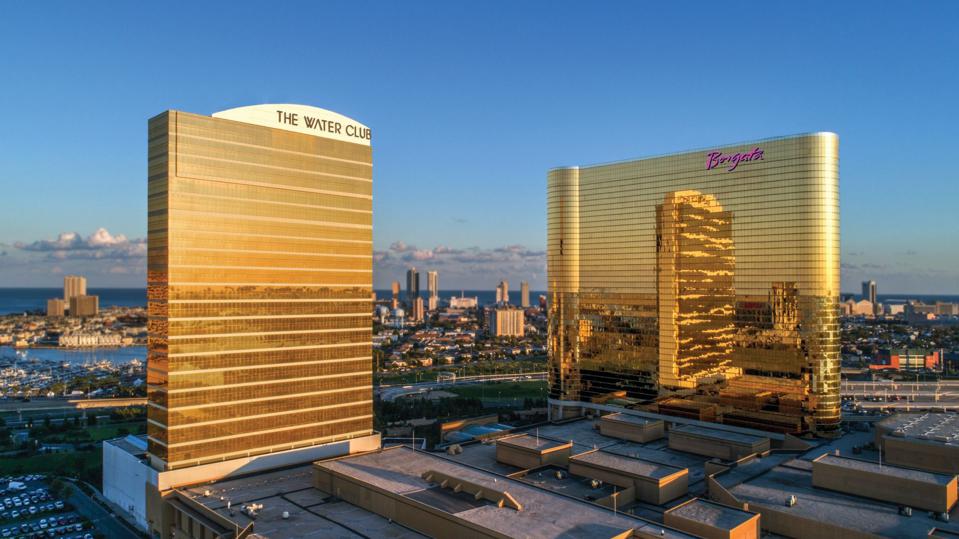
Casinos in Atlantic City grossed $189.5 million last month, 9% behind their 2019 pace. Slots were off 5% and tables 17%. Regular top-grosser Borgata had a terrible month, falling 28%, spurring by lackluster table-game winnings (-34%), with slots tumbling 25%. The Caesars Entertainment threesome fared almost as poorly, sliding 20% as table win plunged 40% and slots were down 11%. Borgata’s $38.5 million gross put it within striking distance of hard-charging Hard Rock Atlantic City, which won 35% for a 51% leap in revenue. Also soaring was Ocean Casino, vaulting 45% to $22 million and elbowing aside Harrah’s Resort ($21 million, -24%) for third place. Caesars’ much-vaunted $400 million capex may not be enough to prevent a permanent change in the pecking order.
Caesars Atlantic City, despite its reputation for volatility, was a relatively stable -14.5%, grossing $19 million, while Tropicana Atlantic City closed out the portfolio, slipping 20% to $19 million. There was a surprise among the grind joints, with Resorts Atlantic City up a percentage point to $13 million. Little Golden Nugget won $11 million but that was a 29% plummet, while Bally’s Atlantic City also grossed $11 million, down 22.5%.
Said JP Morgan analyst Joseph Greff “not to worry, money losing buffets are not coming back” to Station Casinos. We can take this as gospel, since he got it from CEO Frank Fertitta III, Vice Chairman Lorenzo Fertitta and CFO Stephen Cootey. He added, “Lower promotional activity is here to stay, per management, and is going back to the basics.” So it’s kind of a bum deal for locals. During the Covid-19 closedown, management tinkered with marketing strategies and will eliminate those thought to have little or no traction with customers. “It feels this pivot away from promos is permanent and is focusing more on social/digital marketing and more player development touches for higher end /spend customers and far less on print, ads, billboards, and free play.”
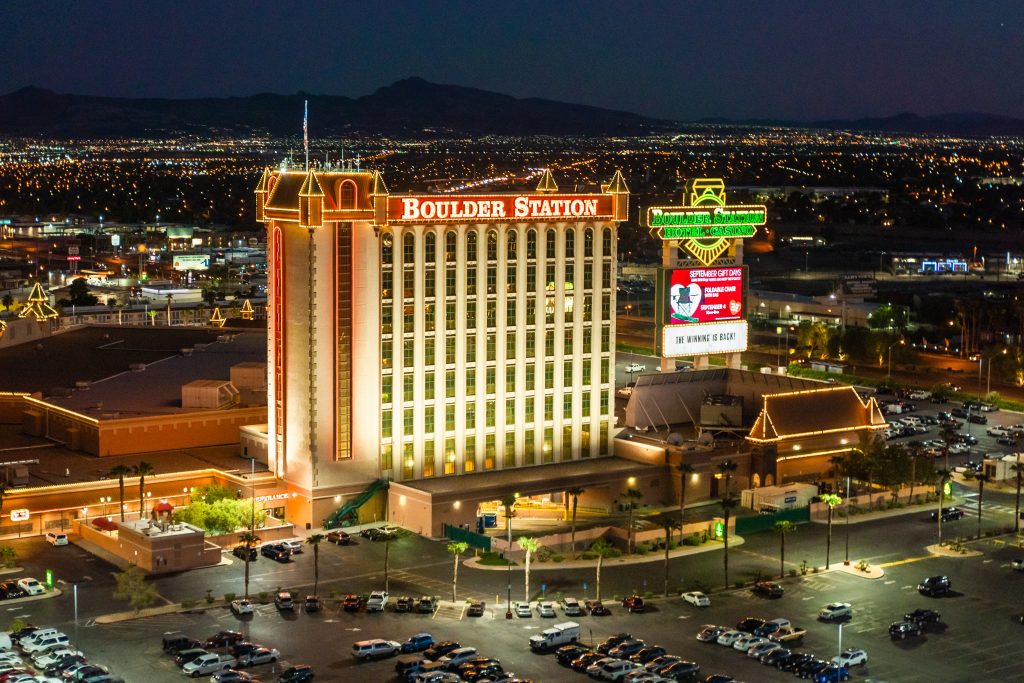
The other headline item was concrete news on Durango Station. Responding to what Greff described as “investor skepticism” about the project (well-earned, we might add), management busted out details of the $400 million-$500 million casino, which should break ground in early 2022 and be finished by late 2023. The project will be funded entirely from cash flow—i.e., no new debt—including the proceeds of the Palms sale. Reasons to like Durango Station’s prospects include a high Asian-American demographic in the area and the absence of significant competition within a five-mile radius. Furthermore, Greff said that the player base within a three-mile radius will be higher than that for billion-dollar-plus Red Rock Resort, giving him confidence of a 15%-20% return on investment. Way more bang for the buck! Station owns 73 acres at the site but intends to sell 23 of them off to a residential developer. (One of the mistakes that dogged Aliante Station was building it where the population wasn’t.)
MGM Resorts International isn’t quitting Springfield but it’s taking a bath on its eponymous casino in order to reduce its exposure to the (disappointing) market. MGM spent $960 million on the resort, which has never performed up to expectations, and is selling it to affiliated REIT MGM Growth Properties for $400 million, a serious writedown of what was once a trophy asset. MGM will pay $30 million a year to lease the property from MGP and will continue operating it. All involved were at pains to save face. MGM CEO Bill Hornbuckle said the “has exhibited strong financial performance as it emerges from the pandemic, and the property delivered record EBITDA in the first quarter of 2021.” Which leaves hanging the question of why ditch the place now and at such a bargain price? Were we MGM shareholders we’d be hopping mad and the stock did indeed dip 2%. Looking for a silver lining, JP Morgan analyst Joseph Greff wrote, “for MGM, it improves its already strong liquidity position, enhancing its ability to invest in its land-based casinos or BetMGM and return capital to shareholders.” $400 million in sale revenue may be a quick way to manufacture a dividend but this is an ignominious retreat, no two ways about it. (In one bit of unambiguously good news for MGM, its Strip resorts got green-lit by the Nevada Gaming Control Board this morning to go to 100% capacity.)
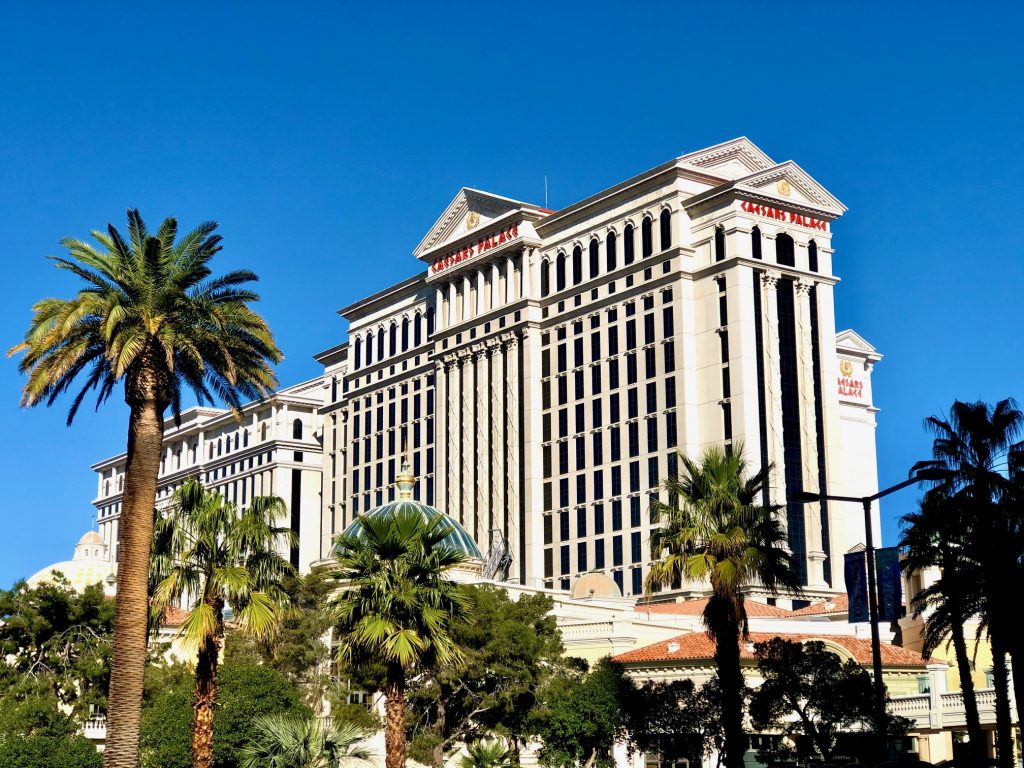
Perhaps MGM can make up some of that forfeited $560 million on the Las Vegas Strip, where paid self-parking and paid event parking are making an unwelcome return. Locals are exempted—provided that they vamoose within three hours. Four hours costs you $15, then it escalates to $18/day at CityCenter and Bellagio. Other MGM properties are $3 cheaper. Not so coincidentally, the re-introduction of paid parking takes place on May 19, the same day that the Las Vegas Golden Knights begin NHL playoffs at T-Mobile Arena. Customers of Caesars Entertainment casinos continue to enjoy a paid-parking holiday … until October. Enjoy it while it lasts.
First-quarter results for Wynn Resorts were worse than expected in Macao but better than anticipated in both Las Vegas and Boston, while the company posted a revenue chasm around Wynn Interactive. To shore up the latter, Wynn is merging it with Austerlitz Acquisition Corp., which taps a new source of funding for the venture, among other virtues. They will form a publicly traded company under the Wynn Interactive banner, ticker symbol WBET. Currently in 15 states, WynnBet is confident of reaching 77% of the American public in the near term. Wynn Resorts will have 58% ownership and 72% voting rights in the new entity. In an ironic twist, Greff lowered his 2021 cash flow projections for the parent company due to relative weakness in Macao (when was the last time you heard that?), despite newly elevated ones for Las Vegas and Boston. Yes, American operations are carrying Chinese ones for the time being.
By 2022, Greff expects Las Vegas Strip cash flow (i.e., return on investment) to be 27% higher than banner-year 2019 while Macao limps along at 77% of 2019 levels. Blame it on casino-shy VIP players. The silver lining for Wynn is that Wynn Palace is finally pulling something close to its weight, drawing 1Q21 cash flow of $27.5 million to Wynncore Macau‘s $16.5 million. In order to get pre-Covid revenues without pre-Covid-sized visitation, Wynn is recalibrating its marketing toward premium-mass customers. Mass-market wagering remained 55% below 1Q19 and VIPs played 80% less.
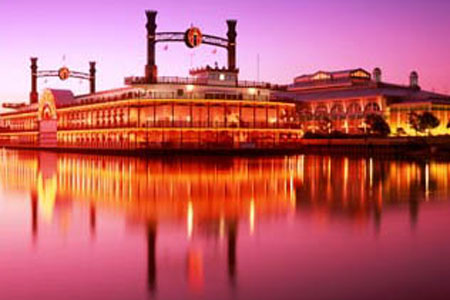
Gambling revenue of $108 million out of Illinois last month looks pallid at first glance. But consider this: It was only 6% off April 2019’s pace, when casinos were at full capacity and last month they did it at 50% capacity. So the demand is the definitely manifesting. One of the stars of the market was Grand Victoria (pictured), up 1% to $13.5 million. Of course the marquee performer was Rivers Casino Des Plaines, grossing $41 million for a 7.5% lift. Nearby rivals Empress Joliet and Harrah’s Joliet were down 16% and 17% respectively, grossing $7.5 million and $12.5 million. Hollywood Aurora slipped 9.5% to $8.5 million. Mid-state, the tailspin continues for Casino Rock Island, spiraling -37.5% to a meager $3.5 million. Par-A-Dice, meanwhile, dipped 6% to $6 million. In the St. Louis area, Argosy Belle slipped 20% to $3 million while DraftKings Casino Queen was down 23% to $6.5 million. Harrah’s Metropolis was steady as she goes at $6 million.
Sports betting continues to lag casino reporting by a full month, so we are only now getting the March numbers. Handle was $633.5 million, from which $50 million in revenue was derived, including a tax haul of $6.5 million. Noteworthily, Illinois was just a few whiskers behind Nevada ($641 million handle). Silver State, look to thy laurels! The prohibition of bets on University of Illinois and Loyola College may have put a damper on March Madness action ($177 million), with professional basketball engendering $366 million in wagers. “March Madness helped deliver a huge month for Illinois, but March is essentially a ‘last hurrah’ for the state’s rapid growth,” warned PlayUSA analyst Joe Boozell. “Illinois will still be one of the largest U.S. markets because of the population of the state, but it will be difficult to maintain its current status as the U.S. No. 3, much less catch Nevada. No matter how appealing a market, there isn’t any easy way to overcome the inconvenience of in-person registration.”
DraftKings exceeded analysts’ expectations with its 1Q21 revenues, leading Credit Suisse‘s Ben Chaiken to boost his 2021 revenue projection by $100 million, to $1.1 billion, in part “reflecting strength in new states such as Michigan.” Wall Street anticipated $239 million in first-quarter revenue and DKNG delivered $312 million but posted a return-on-investment loss of $139 million. Recent launches in Virginia and Michigan (and maturing markets elsewhere, no doubt) drove revenues up 175% year/year. JP Morgan analyst Joseph Greff exercised caution when looking ahead, projecting $226 million in second-quarter revenue and a cash-flow loss of $116 million. As ever, DraftKings’ pot of gold remains somewhere at the end of the rainbow. A pullback in the share price to $49.50 from the $70s seems to echo that view, with Greff writing that “we think the risk-reward is getting more interesting. However given its valuation versus peers, we’d wait for lower levels and/or more confidence in its path to profitability before becoming more positive on the name.”
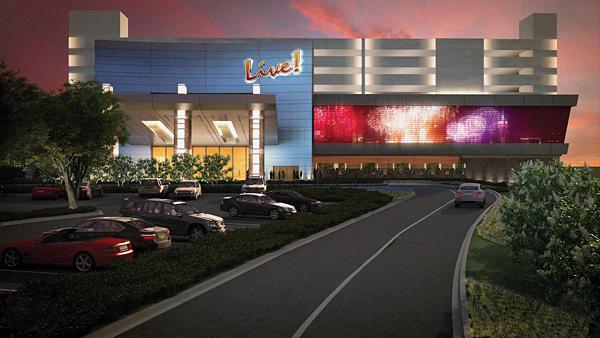
Maryland didn’t just do well in April, it posted its third-best month ever. Gaming win grew 11.5% from 2019, to $162 million. That’s with 50% capacity constraints at MGM National Harbor and Horseshoe Baltimore (all other casinos are operating at 100%). MGM still took 38.5% of market share with a $62.5 million gross, up 2.5%. Maryland Live was second with 36% market share, hauling in 22% more than in 2019 and grossing $58 million. Horseshoe was flat with 2019, cantering in a distant third (12% market share) with $20 million. Speaking of cantering, Ocean Downs crossed the finish line with $8 million, a 30% boost. Hollywood Perryville leapt 36.5% to $8.5 million and Rocky Gap Casino gained 19% to $6 million. Even West Virginia is looking a little better. Over a three-week period ending April 24, it was down only 14%, with slots (-14%) propping up tables (-18%). Hollywood Charles Town underperformed the state, as slots declined -21%, tables were off 24%, averaging a 22% decline overall.
While on the subject of Penn National Gaming, it reported 1Q21 results yesterday. JP Morgan analyst Joseph Greff described it has having a “very strong regional casino top line,” similar to its peers. Although the quarter saw partial casino closures in New Mexico, Illinois and Pennsylvania, revenues were down only 6% from 2019, while cash flow grew 7% (no doubt due to operational economies). Furthermore, the company “indicated that strength has continued into April and May, with strong spend per visit continuing but now experiencing improved visitation relative to earlier in the pandemic, with a return of the important 55 year-old plus demographic.” Whereas Wall Street consensus had Penn achieving $1.1 billion in revenue and $394 million in cash flow, the company delivered $1.3 billion and $447 million respectively. Revenues from Penn Interactive helped shore up the year/year comparison, while numbers were boosted especially in the South, where dining and casino capacity restrictions have been lifted the most. As for revenue comparisons with last year, they were—as might be expected—all positive, except the West region (Las Vegas and New Mexico), down 24%.
“Solid … very encouraging … impressive momentum.” Those were some of the things JP Morgan analyst Joseph Greff had to say about Caesars Entertainment‘s 1Q21 numbers. Cash flow of $548 million well exceed Greff’s expected $429 million, to say nothing of the Wall Street consensus of $408 million. The report continued, “we think stronger group volumes, incremental entertainment revenues, banquet/F&B, and overall hotel room pricing will drive continued growth in Las Vegas and the regionals recovery will continue, with, for CZR, a more acute recovery in Atlantic City and New Orleans, which have lagged.” Despite the struggles of Caesars in the latter two markets, Greff believes that the Roman Empire will record $3 billion in cash flow this year, up from his projected $2.4 billion. It looks like CEO Tom Reeg‘s euphoria about the second half of 2021—and Las Vegas in particular—was well-founded. Due to the exceptional strength of January and February 2020, Caesars’ year/year numbers were actually down. Deutsche Bank analyst Carlo Santarelli reports that Las Vegas was 39.5% lower ($497 million in revenue), regionals were off 17.5% ($1.1 billion) and managed/international properties were 30% lower ($94 million). So it wasn’t all sunshine and roses.
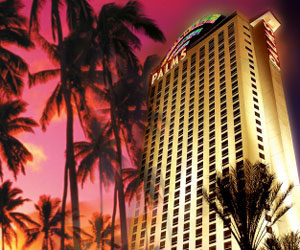
Earlier today, Station Casinosfinally confirmed the worst-kept secret in town. It has sold the Palms Casino Resort to a subsidiary of the San Manuel Band of Mission Indians in an all-cash, $650 million transaction. Thus closes a fairly disastrous chapter in the Station history book—and probably renders moot the question of whether the Palms will reopen under current management, depending on how quickly the deal closes. (San Manuel will be subject to Nevada regulatory approval.) San Manuel is already a familiar name in Las Vegas, having been one of the first ‘official gaming partners’ for the Las Vegas Raiders, as football fans will discover when they finally set foot in Allegiant Stadium this fall. Although the Raiders have cross-pollinated a relationship with M Resort, we fully expect San Manuel to monetize its connection to the Silver & Black when it takes over the Palms.
It’s a deep-pocketed tribe (as the cash-on-the-barrelhead deal indicates), one that’s currently wrapping up a $550 million expansion of its home casino in SoCal. High rollers should still be welcome at the new-look Palms (San Manuel knows high-limit play) but there will be plenty for the bread and butter player on offer. Also, starting next year San Manuel will be operating a California event center to complement The Pearl, which should set up some nice operational synergies. Retail expansion will probably be in the cards, along with a spinoff of the Serrano Vista Café, a viable candidate to replace the defunct Hooters. San Manuel is accustomed to operating on a big scale, so it should be ready for the Vegas spotlight.
In another sign of a faster-than-expected Las Vegas comeback, room rates on the Strip for the May 23-29 period are reported to be flat with 2019. Midweek numbers are mildly down (-17%) but counterbalanced by higher weekend rates (+18%) than two years ago. This is a big achievement and a rapid one. Only Wynncore is missing out on the bounty, -2% weekdays but -45% on the weekend. MGM Resorts International is just 2% off the midweek pace and +22% on weekends. Caesars Entertainment is down 36% weekdays but 28% higher on the weekend, while Venelazzo is not feeling the midweek love (-27%) but rebounding +63% on weekends. The midweek numbers at MGM and Wynn may have been goosed by the fact that there’s finally a convention in town but it looks like the window may have closed in Sin City for travelers seeking a room-rate bargain.
Vital Vegas is doubling down on its insistence that the Palms Casino Resort has been sold to the San Manuel Tribe, despite an absence of confirmation from either Station Casinos or the analyst boys on Wall Street. A sale would be a plus for Station investors, as it would remove a dead weight from Station’s balance sheet, provide a one-time cash infusion and accelerate the company’s refocus on what it does best: build quality locals casinos. (Will Durango Stationever be constructed?) Scott Roeben reports that the San Manuel got the Palms for $660 million, which wouldn’t even cover the $690 million Station put into renovating the place, although it would recoup the $312.5 million purchase price. So, capex aside, the Palms is now worth considerably more than when Station got it for a fire-sale markdown. That’s the glass half-full perspective.
That’s what Credit Suisse analyst Ben Chaiken had to say about MGM Resorts International, citing strength in regional casinos, Las Vegas and sports betting (in that order). First-quarter cash flow exceeded 2019 levels, aided in part by “strong demand reaching ’19 levels … Las Vegas is accelerating, with growth supported by easing government restrictions, an improving event calendar, and pent-up demand. March was one of the best gross booking months in the company’s history.” Non-gaming amenities have lagged gambling and room revenues as recovery metrics, which could be crucial, as they account of 75% of revenues and are at the mercy of capacity restrictions. Elsewhere sports betting and Internet gambling “look very promising.” Nationally, BetMGM has 25% i-gaming market share and 17% of OSB. “Benefits appear to be flowing both ways, with 10% of BetMGM’s new customers coming from MGM, while 44% of new MLife signups coming from BetMGM.” Management was even upbeat on Macao, seeing positive customer trends—as did Melco Resorts & Entertainment—ahead of critical Golden Week.
Chaiken’s opposite number at JP Morgan, analyst Joseph Greff, bumped his stock-price target from $37/share to $45 (it currently trades at $42). He called the 1Q21 numbers “solid, with impressive momentum in Las Vegas. Momentum here commenced in mid-February and has continued thus far into April.” Occupancy on the Las Vegas Strip is running at 73%, which is pretty darned impressive in light of zero convention activity. Weekends are seeing 90%-plus occupancy “indicating strength in the leisure segment and MGM’s efforts to tap into its casino database to fill rooms at present gaming capacity.” Further helping the comeback is an anticipated return to 93% of pre-pandemic airlifts into Sin City in June, escalating to 99% in July. “This airlift support bodes well for the return of group business, which, with what’s on MGM’s books for 2022 and 2023, is at pre-pandemic levels,” Greff wrote. Cash flow on the Strip is expected to achieve 90% of 2019 metrics by next year.





 Despite the Lege’s truly dismal performance, Las Vegas Sands‘ man in Austin, Andy Abboud, remained optimistic, blowing sunshine up solons’ asses. “We have said from the beginning that we’re committed to Texas for the long haul. We have made great strides this session and have enjoyed meeting with lawmakers about our vision for destination resorts and answering all the questions they have.” Given the short shrift he got from lawmakers, we’re not so sure about Abboud making any “great strides,” and the deployment of literally scores of lobbyists, led by Karen Rove, yielded so little progress that it has to be chalked up as a giant flop. Losers other than Sands included Golden Nugget owner Tilman Fertitta and several Native American tribes who would have qualified for Class III casinos. It’s difficult to scavenge much upside from this result and Abboud might want to think about making some friends on the Democratic side of the aisle. The Texas GOP is so casino-averse that Abboud was ultimately spitting into the wind.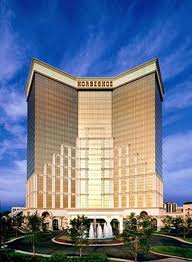

 Slot addict and