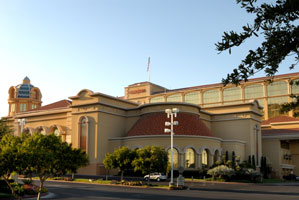
In Las Vegas over Christmas with nothing to do? Try playing the Megabucks slot machines at Suncoast. That’s what “Kevin” (no last name given) did on Christmas Eve and soon found himself $15,491,103 richer—at least until the IRS gets into the act. As Kevin only put $40 into the International Game Technology machine, he got a fantastic return on investment. Since Megabucks is a revenue-sharing machine, Boyd Gaming isn’t on the hook for the entire jackpot … and to think that casinos actually petitioned the Nevada Lege in 1999 to outlaw revenue-sharing slots (an unfair restraint of trade, it was determined). Kevin, a snowbird from Alaska, told Boyd that he intends to “pay it forward” with his newfound wealth and support his business. He sounds like a good man. Nevada has not seen such a large jackpot since 2012, although it’s not a patch on the $34.9 million won at the Desert Inn in 2000 or the $39.7 million achieved at low-roller joint Excalibur in 2003.
“I think as Americans, we really, really love to make individual entrepreneurs heroes. We rarely get to see that often their dreams are dependent on the poverty of workers. And if you ask me, if my ultimate dream really relies on the subjugation or poverty of employees, then it’s not a dream worth having.”—Mireya Loza, visiting assistant professor at Georgetown University, on the disparity between tipped and salaried workers.
“The wagering restriction on colleges and universities within the state follows a path of interesting logic vis a vis the logic to legalize sports betting in general. The typical argument forwarded by the advocates of sports wagering suggests that making wagering legal moves it away from unsavory operators and places it within a well-regulated and protected environment. Therefore, one would argue, for a state to allow betting on colleges that are out of state implies a desire to create a safe and protected environment for the out-of-state schools—while leaving the campuses within the state subjected to potential nefarious unregulated betting entities … a funny argument, indeed.”—former California gaming regulator Richard Schuetzon the sports-betting initiative scheduled for the 2022 ballot.
In spite of high hold percentages and no brick-and-mortar venues, Tennessee sports books came out of the blocks at a blinding pace. November handle was $131.5 million, the most for any first month in any state, ever. (Indiana debuted at $35 million, the previous record, and it took New Jersey four months to top $130 million.) Revenue was $13 million, of which $2.5 million flows into state coffers. In explaining the phenomenon, PlayUSA analyst Dustin Gouker said that “The best-ever launch for online sports betting is perhaps a surprise to some, but Tennessee also debuted with enormously favorable circumstances, many of which came by design. First, it debuted in the heart of the NFL and college football seasons in a region that is particularly football crazy.”
DraftKings, FanDuel, BetMGM and local Action 24/7 were the immediate beneficiaries of the betting surge. The New Year brings the entry of William Hill, WynnBet and BetAmerica but they’ll have a lot of catching up to do and none except William Hill rivals the brand equity of three of the four first movers. (It seems Barstool Sports is missing an opportunity here.) Concluded Gouker, “The next question is when and if Tennessee will challenge Colorado and Indiana in terms of overall market size. It appears sooner than anyone expected.”
“It is now clear that for [Donald] Trump, no matter what the crime—whether it is corruption, lying to law enforcement or even war crimes—justice does not apply to those who have been loyal to him. We have one justice system for his predominantly rich, white and male friends and allies, and another for the rest of America.”—Noah Bookbinder, executive director of Citizens for Responsibility & Ethics in Washington on Trump’s latest round of quid pro quo.
Like many, American Gaming Association President Bill Miller is in favor of the stimulus package overwhelmingly passed by Congress … with reservations. It lacks three key items on Miller’s Christmas wish list: expansion of the CARES Act Employee Retention Tax Credit; tribal inclusion in the extension of the Coronavirus Relief Fund through Dec. 21 of next year; the “three-martini lunch” tax deduction for business meals in 2021 and 2022. We agree with Miller on the first two points. (The White House meanwhile showed what it thought of Native Americans by pardoning Phil Lyman, who desecrated Indian historical sites.) Miller all but called for a third round of stimulus, writing, “Clearly, much work remains to be done in Congress to urgently address the many economic challenges facing our nation and our industry.”
He added, “We are engaged with the incoming Biden administration and leadership for the 117th Congress to quickly advance new measures that will provide” tax cuts “to save gaming jobs and alleviate costs,” unspecified “liability protections,” probably much like the blanket waiver that Gov. Steve Sisolak (D) pushed through at the behest of the Nevada Resort Association, “incentives [unspecified] for reviving travel and tourism” and additional tribal-targeted relief. We applaud Miller for taking up the cudgels on behalf of our Native American compatriots but think he is putting the cart before the horse on travel incentives, at least until vaccine distribution reaches widespread levels. Even Miller obliquely acknowledged as much, penning, “These measures will set up our industry—and the broader economy—for what will be a resurgent spring and summer in the coming year as COVID-19 vaccines become broadly available.” (emphasis added) While almost nobody—from Miller to Donald Trump to Bernie Sanders—seems to think that Stimulus II does enough, it’s at least half a loaf and for that we are duly thankful.
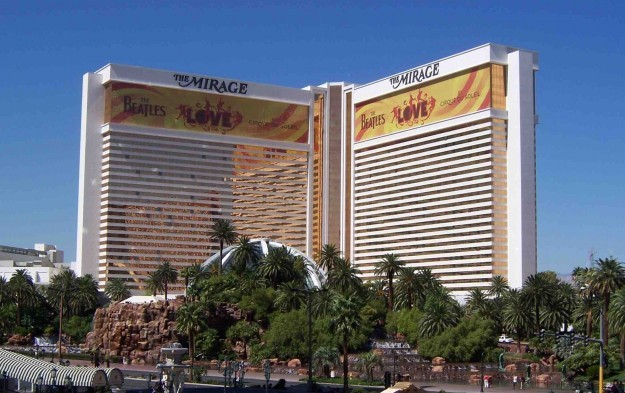
How bad is it in Las Vegas? Well, the latest edict from MGM Resorts International is that The Mirage will be closed from Monday at noon to Thursday at noon, INCLUDING the casino. (We felt that news needed a bit of extra emphasis.) Even the volcano is shutting down. That’s dire. It’s also further confirmation of what we’ve been hearing for months, that Las Vegas’ recovery is wont to be sluggish. While 2022 seems a long time to wait for a comeback, it could be worse. Tourism to New York City is not expected to return to pre-pandemic levels until 2025. What tourists want now, asserts the Reno Gazette-Journal‘s Ed Komenda is “a place that’s clean and secluded and far from the perils of the pandemic.” That’s not Vegas, where Covid-19 levels are skyrocketing and Gov. Steve Sisolak (D) dithers over whether to re-close the casinos. (Will the Nevada Resort Association or Culinary Union allow it?)
Veteran reporter Howard Stutz points to a near-total absence of international travel. “That’s why Palazzo closed. They didn’t have international business. It’s a ghost town there.” He thinks midweek closures will be the order of the day. After all, Sin City is trying to maintain 2020 A.D. room inventory on 1993 levels of business. Stutz says recovery projections are “all over the place. If the vaccine works, if this pandemic starts going away and other parts of the economy start rebounding, then we’re going to start seeing more visitation maybe by summer.” Until then, he predicts a “terrible” November (think how bad it is elsewhere in the country and then magnify that) and worse December.
“This moment is profound when we consider the fact that a former secretary of the interior [Alexander H. H. Stuart] once proclaimed his goal to, quote, ‘civilize or exterminate’ us. I’m a living testament to the failure of that horrific ideology. I also stand on the shoulders of my ancestors and all the people who have sacrificed so that I can be here.”—Rep. Deb Haaland (D) on being nominated to head the Interior Department.
Posted inhistory, Tribal|Comments Off on Quote of the Day
“I think he’s just done with covid … I think he put it on a timetable and he’s done with covid … It just exceeded the amount of time he gave it.”—a Donald Trump advisor, on the president’s recent actions (or lack of same).
Is the Culinary Union cutting off its nose to spite its face? The local had a contractual agreement that all Wynncore members would be keep on full health benefits, even if reduced to part-time status. But when Encore semi-closed, the union charges, 1,000 Culinary members not only lost their jobs but their benefits. Not only is this an alleged breach of contract, it’s prompting the Culinary to escalate by demanding that all Wynn Resorts-employed members be reinstated full-time with full benefits. This brinksmanship may backfire. Wynn is threatening a new round of layoffs in January. With a Las Vegas Strip recovery nowhere in sight there’s no reason not to believe that Wynncore is in earnest. The company claims that the Culinary’s demands are untenable and we’re inclined to agree. “Last week, the Union decided to take action against the Company and require that we return to strict union rules that force us to schedule full-time employees for 40 hours. We told the Union that would result in fewer people working, forcing many employees into layoff status,” wrote company execs. Unfortunately for the Culinary it cannot look to the state for relief. Nevada has exhausted its unemployment trust fund, forcing to borrow money from the federal government.
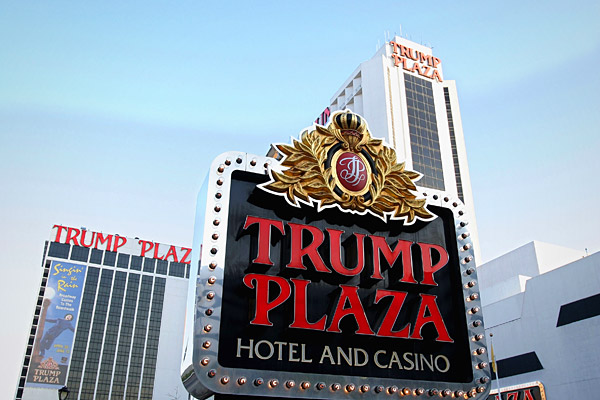
Atlantic City Mayor Marty Small (D) has found a nifty way to raise money for the Boys & Girls Club of Atlantic City: Auction off the right to push the button that implodes Trump Plaza on Jan. 29. Small hopes it will bring in big bucks, a million dollars or more. Hey, if we had it, we’d pay it. The top bidder gets the right to demolish the Boardwalk’s worst eyesore and end the Trump Era in Atlantic City once and for all. “Some of Atlantic City’s iconic moments happened there,” Small allowed, “but on his way out, Donald Trump openly mocked Atlantic City, saying he made a lot of money and then got out.” The dilapidated edifice has been periodically crumbling onto the thoroughfares below and implosion is in the nature of a mercy killing, Trump Dump having been closed for six years now. And when it was still open its revenues would barely fill a Dixie cup. A new use for its site has yet to be determined but Small is going to pitch owner Carl Icahn on some kind of family attraction.
The release of Covid-19 vaccines is boosting gaming stocks, according to JP Morgan analyst Joseph Greff, who says the gaming group is trading as much as 26% higher. “How 2020 started, evolved, and finished was manic and startling, with fundamentals and valuations settling on a more optimistic note at year-end, where our coverage universe is ending 2020 with broadly strong share price performance,” he writes, noting that Big Gaming is exponentially outperforming the S&P index. In Macao he sees a “gradual” recovery, redounding most to the benefit of Melco Resorts & Entertainment, Wynn Resorts and Sands China. For its “under appreciated” sports betting and regional gaming strength, Greff likes Boyd Gaming best, better even than Penn National Gaming.
Today is the 250th birthday of Ludwig van Beethoven (1770-1827), perhaps the single most influential composer in musical history. He’s certainly got staying power. Thanks to health concerns, you probably can’t go to a celebratory concert, so we’re bringing you a bit of LvB courtesy of Leonard Bernstein, who was Beethoven for my generation. Enjoy.
Massachusetts gamblers are night owls. When Gov. Charlie Baker (R) ordered casinos to close at 9:30 p.m. it took a big bite out of November revenues, particularly Encore Boston Harbor, which makes half its revenue after dark. At least you can gamble in Massachusetts still (albeit at reduced capacity). Rhode Island Gov. Gina Raimondo (D) has shut down both of Bally‘s two Twin River-branded casinos. As for the Bay State, MGM Springfield took it pretty hard, falling 40% to $10.5 million, with table game revenue more than halved. Percentage-wise, Plainridge Park suffered least, off 25% for a $7.5 million gross. Encore tumbled 35%, grossing $47 million, with only $15.5 million of that derived from the slots. As for what to expect in Massachusetts casino, the Boston Globe reports that they “have spent large sums of money preparing their facilities to operate during a pandemic. Visible measures include plexiglass dividers, aggressive cleaning of gambling equipment, and stringent enforcement of mask-wearing requirements. Massachusetts casinos also have state inspectors on scene monitoring compliance with health regulations.”
Americans need further economic stimulus. So, by extension, do casinos. The rebound occasioned by the CARES Act has petered out and gambling win is drooping everywhere. Also, with Covid-19 on the rampage (300,000 U.S. deaths and climbing), players seem to be staying home in droves. Atlantic City casinos took a shellacking last month, plummeting 35% after what had seemed to be a promising recovery. The nine casinos grossed $146.5 million, a result which two fewer weekend days than last year didn’t help. As an indicator of stay-at-home players, Internet gambling win catapulted 87% to $92 million, while sports betting (87% online) shot up 53%, resulting in $50 million in revenue. As it may just be a matter of time before New Jersey re-closes casinos, make hay on the Web while the sun shines, Big Gaming.
Slot win on the Boardwalk was down 35% and table revenue fell 33%. Borgata was deserted by slot players, with win plunging 47%. Table win was down 35% for a cumulative slippage of 38%. The Caesars Entertainment trio was very unlucky at the tables, tailspinning 60% and slots weren’t much better, -45%. JP Morgan analyst Joseph Greff had projected CZR to be off 27% in the fourth quarter but it’s tracking closer to 50%. The only revenue-positive casino in town was Hard Rock International, up 19% to $28 million (Joe Lupo‘s onto something), while Ocean Casino Resort was ever so slightly off its feed, down 1% to $19 million. Borgata grossed $36.5 million, while Twin River Holdings (now Bally) had an inauspicious first month at Bally’s Atlantic City, falling 53% to $6 million. Caesars Atlantic City was an ignominious -56% at $12.5 million and Harrah’s Resort little better at -51% ($12.5 million), while Tropicana Atlantic City reported $14 million (-42%). The promised, $400 million reinvestment can’t come a moment too soon, it would appear. Resorts Atlantic City managed $9 million (-36%) and the Golden Nugget was close behind, if down 49%.
“Anybody that gets in politics has to be willing to accept winning and losing with some level of grace or maturity. I’ve done both. Losing is brutal, it’s personal, it hurts, but if you’re not willing to accept that, you should not be in political leadership. This country needs it desperately and, unfortunately, we haven’t seen it demonstrated as much as we should.”—outgoing Rep. Paul Mitchell (I).
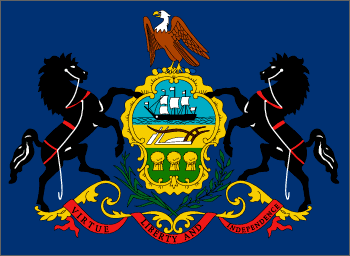
Pennsylvania closed all its casinos Sunday, starting with Rivers Casino Pittsburgh at 12 a.m. The shutdown is to last until Jan 4. The Keystone State joins Michigan (until Dec. 20, probably longer) and Illinois (indefinite). In Nevada, although Covid-19 is setting records—and not in a good way—Gov. Steve Sisolak (D) continues to stay his hand. Massachusetts Gov. Charlie Baker (R) has so far exempted casinos from reimposed restrictions but a potential Jan. 1 statewide shutdown is looming.
Boyd Gaming continues to draw down its presence in the Vegas Valley. It has sold the Eldorado in downtown Henderson for an undisclosed amount. The new boss will be DeSimone Gaming. The latter already owns Railroad Pass and should be more likely than Boyd to reopen the property. The parting of the ways between Boyd and the Eldorado is a doleful one: It was the first casino in which the Boyd family invested, way back in 1962. It had opened the previous year as The Wheel. Owned wholly by the Boyds since 1966, the Eldorado’s sale marks the end of an era. With surplus inventory Downtown (Main Street Station) and on the Boulder Strip (Eastside Cannery), one wonders if further BYD divestitures will follow.
“Men and women who would act to tear the United States government apart cannot serve as Members of Congress.”—Rep. Bill Pascrell Jr. (D), opposing the seating of 126 treasonous representatives who supported an attempted coup d’etat, citing the 14th Amendment.
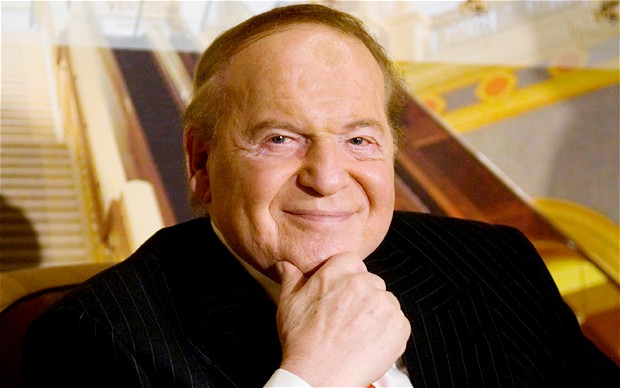
Fresh from trying to afflict the country with another four years of Donald Trump, mega-mogul Sheldon Adelson is turning his eyes upon Texas. He’s readying a crack team of lobbyists, including Karen Rove, to descend upon the Lege when it convenes next month. Andy Abboud will head up a strike force trying to convince the deeply “red,” profoundly anti-casino state to legalize commercial gambling. Abboud will be striving where many have failed. Even Tilman Fertitta seems to have given up. There have been sputterings of attempted legalization over the years but they usually run into intransigent resistance from both the horse racing industry and the Religious Right. Not even offering racinos to horse tracks has done the trick. So the odds are clearly stacked against Adelson. But he is undeterred, convinced that there is a gold mine at the end of the Lone Star rainbow.
“We view Texas as a worldwide destination and one of the top potential markets in the entire world. Texas is considered the biggest plum still waiting to be out there in the history of hospitality and gaming.” So said Abboud to the Texas Taxpayers & Research Association. An even bigger plum than Japan was supposed to be? (And Adelson has not ruled out a second run at Nippon.) To keep its options open, Adelson is also dibbing New York City and Brazil. And whatever he presents to Texas solons we fully expect to be larded with pro-Sands goodies, as when he magnanimously offered Florida legislators a bill to give LVS a monopoly on Sunshine State megaresorts (lawmakers declined).
“If we can’t get together another stimulus package, the economy is going to hit an air pocket at the end of this year and early next year.”—Kennedy School of Government economist Megan Greene.
Missouri was indeed the State of Misery last month, as casino win plummeted 18.5% to $118 million. Penn National Gaming casinos bore the brunt, plunging 27%. Overall, slot revenues of $102 million were down 17.5% while table win of $16 million toppled 23.5%. Two fewer weekend days didn’t help but are far from a complete excuse. In Kansas City, it was a virtual tie between Harrah’s North Kansas City and Ameristar Kansas City, each with an unimpressive $12.5 million, down 14% in Harrah’s case and a 24% tumble in that of Ameristar. Argosy Riverside slid 19% but grossed $11 million while ex-Isle of Capri Kansas City/soon-to-be-Bally’s mopped up the remaining $6 million, for a 6% gain, the only revenue-positive performance to be seen.
The St. Louis market was where Penn really got slammed. Hollywood St. Louis plunged 33% to $13.5 million, while River City was almost as bad, off 27% to $14.5 million. Lumiere Place, which Caesars Entertainment lucked into, having forfeited the St. Louis area during the Gary Loveman reign of error, was down 13.5% to $10.5 million. That left the field to Ameristar St. Charles, off 8% but grossing $19 million. The rural casinos had varying degrees of woe but their revenue levels are so penny-ante that we shan’t chronicle them here.


 Like many, American Gaming Association President Bill Miller is in favor of the stimulus package overwhelmingly passed by Congress … with reservations. It lacks three key items on Miller’s Christmas wish list: expansion of the CARES Act Employee Retention Tax Credit; tribal inclusion in the extension of the Coronavirus Relief Fund through Dec. 21 of next year; the “three-martini lunch” tax deduction for business meals in 2021 and 2022. We agree with Miller on the first two points. (The White House meanwhile showed what it thought of Native Americans by pardoning Phil Lyman,