

Resuming business in mid-pandemic, the casino industry finds itself at a nodal point unlike few in its history. The question: To smoke or not to  smoke? Leaving aside our (negative) feelings about tobacco and its side effects, if the casino industry has the willpower to extirpate smoking in casinos, this is the moment when it can make that happen. Normally, this would be commercial suicide but gamblers want to play again. Where are they going to do that if not in the casinos? Online? Only in a few states and even there Big Gaming owns the action. Besides, how many people want a potential airborne pathogen blown in their faces, cosseted amidst a cloud of cigarette smoke?
Also, gambling = smoking turns out to be something of a myth. Global Gaming Business reports Continue reading
 economy, a development that bodes well for the gaming industry. According to the Boston Globe, unemployment “
 reopening.” (Take that, Derek Stevens!) Yes, Virginia, the little Wildfire casinos have now reopened, along with most of the big properties. The Palms remains on ice since Station “will need to monitor the LV Strip, airlift, etc. as it’s a hybrid property.” The company’s not hurting from keeping its two Fiestas, Texas Station and the Palms closed, as they accounted for only 20% of last year’s revenue and 10% of cash flow (thanks to losses at the Palms).
 infallible VitalVegas, The Drew
 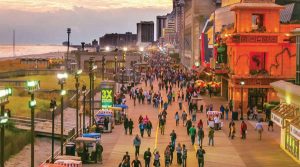 there’s a lot of work going into that right now. But we are trying like heck to get toward, I hope, before the Fourth of July or at least by the Fourth of July … that we’re in a position where we can say, you know what, subject to a lot of different parameters the casinos can be open again.” Which is the best news the Boardwalk has had in months,
 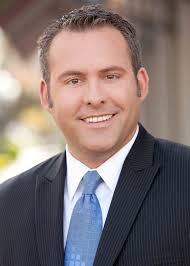 pretty good news for a state whose budget is reeling from Coronavirus. Trouble is, sports betting isn’t legal in the Golden State just yet and the Lege will have to act fairly swiftly if it’s to make its way onto the November ballot. PlayCA.com is pinning its hopes on a pair of Assembly and state Senate bills shepherded by state Sen. Bill Dodd (D, below) and state Rep. Adam Gray (D, pictured), a longtime warrior for gaming. Revenue would be taxed at 10%, tribal casinos and horse tracks would be entitled to both retail and online sports wagering, and taxes would be levied directly upon the platform operators, circumventing a state/tribal clash of authority.
 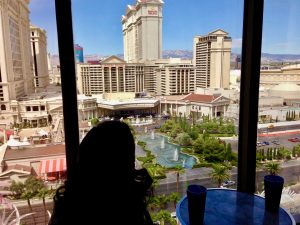 revenue, although we won’t dwell on that, but will not that winnings toppled 99.5%. Overall, the Silver State collected roughly $3.5 million. Las Vegas Strip casinos accounted for almost all of that, with a $436K contribution from Downtown and isolated pockets of (modest) revenue in Wendover and Carson Valley. Speaking of the Strip, it was the perfect place to get away from it all, only 152,716 passengers passed through McCarran International Airport, a 96.5% plunge from the same period in 2019. That drags the year-to-date total down 37%. International traffic was a
 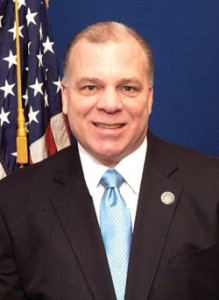 stepping into the void, in the form of state Senate President Stephen Sweeney (D, right). Gov. Phil Murphy (D) has admitted to being flummoxed by the reopening problem, saying, “Casinos are a tough nut. It’s indoors. There’s no ventilation. It’s close proximity, and [players are] largely sedentary.” To address this conundrum, Sweeney
 which slot-jackpot winners have to pay taxes, imposed in 1977. Even more specifically, the AGA wants the cap indexed to inflation, which would raise it to $4,700—although the AGA is pushing for a $5,000 cap. (The Obama administration tried lowering it to $600 but that idea was thankfully beaten back.) AGA prexy Bill Miller isn’t the first to have this notion. Reps. Dina Titus (D, below) and Darin LaHood (R) were pushing it last year. The AGA move comes in response to a Trump administration executive order for