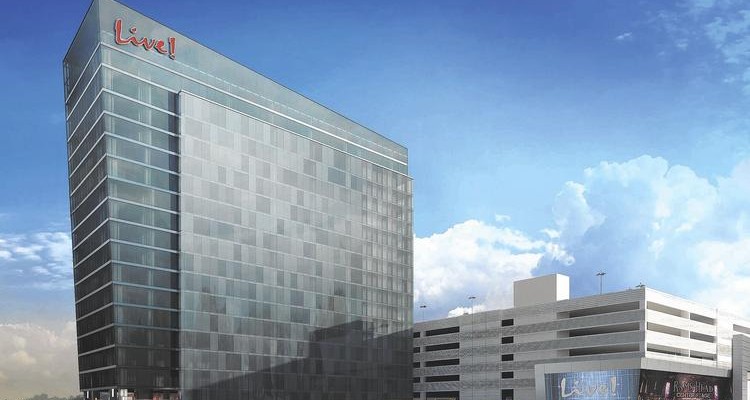
Heaven be praised for the coming of 2023, not because 2022 was bad (quite the contrary) but because Wall Street is addicted to measuring this year against 2019, not 2021 … which can be quite crazy-making. By that yardstick, Pennsylvania casinos would appear to be staggering, -15%. But when measured against last year, they’re languishing only mildly, down 3% last month. Newcomers tended to grow (more of that later) and incumbents lost market share. Even after a 6% slippage, Parx Casino impressed with $46 million and Wind Creek Bethlehem notched $40.5 million, -2.5%. The cutthroat Philadelphia market is owned by Parx while the best of the rest was Philadelphia Live with $19 million, up a resurgent 19% and a few hundred thousand clams in front of Rivers Philadelphia, which is 7% off last year’s pace. Harrah’s Philadelphia plunged 16% to $12 million and little Valley Forge Resort tumbled 16.5% to $9.5 million.
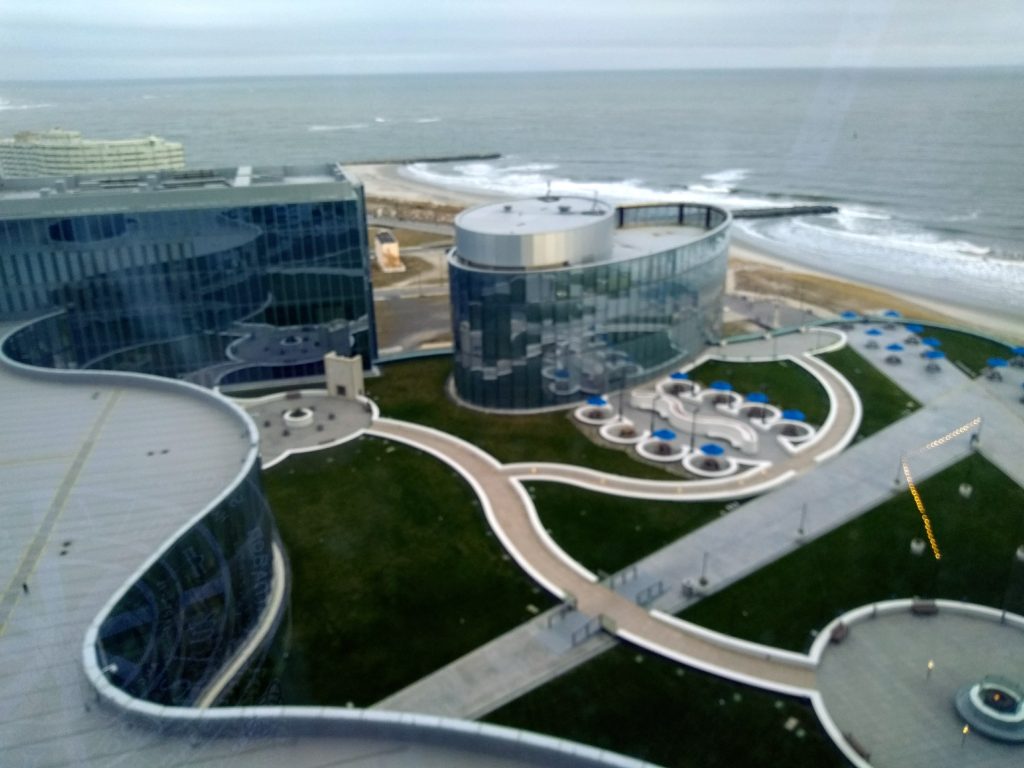
November was a metaphorically warm month for Atlantic City, whose casino revenues grew 4% from last year, reaching $214.5 million. Spoiler alert, Borgata was way out front with $55 million, leaping 14%. Hard Rock Atlantic City dimmed 5% to a still-impressive $35.5 million and Ocean Casino Resort (pictured) jumped 9% to get uncomfortably close to second place at $31 million. Harrah’s Resort faded 6% but still led the Caesars Entertainment threesome with $21 million. Caesars Atlantic City banked $19 million, a 16.5% surge, while Tropicana Atlantic City climbed 2% to a hair over $19 million. Among the have-nots, Resorts Atlantic City fared best, climbing 3% to $12.5 million. Golden Nugget ceded 5% to hit $11 million and Bally’s Atlantic City sank 10% to land in last place with a symmetrical $10 million. Yup, those Chicago revenue projections sure look on the money. (Not.)
Both Caesars Entertainment and Penn Entertainment lost traction yesterday on Wall Street after Bank of America analyst Shaun Kelley downgraded the casino giants. His primary concern was a potential downturn in gaming, due to larger macroeconomic issues, that has yet to manifest itself. Kelly reset his price target for CZR to $55 and PENN to $40. Presently, Caesars is trading at $48.30/share and Penn is languishing at $32.94. Noting that casinos were the largest “over-earners” compared to the pre-Covid economy, Kelley fretted that “unlike other areas in consumer discretionary [spending], estimates have not yet come down, leaving potential risk should the consumer soften.” Given the extensive regional exposure of both companies, should non-Las Vegas casinos weaken first (as history suggests they will), Penn and Caesars would have their butts hanging out in the breeze.
November was good for casinos in Massachusetts, up 6% from last year to a gross of $93 million. Encore Boston Harbor led the way with $59.5 million, an 8% gain. MGM Springfield chipped in $22 million, up 2% despite an 18% plunge in table winnings. A 9% jump in slot win saved the day. Plainridge Park was nice and steady, up 4% from both last year and 2019 for $11.5 million in the kitty. Wynn Resorts got another piece of good news when WynnBet became the first mobile sports-betting provider to be licensed in the Bay State. Wynn has clearly learned how to do business in Massachusetts, where regulation is taken seriously (unlike Nevada, where regulators bend over and grab their ankles). The Steve Wynn imbroglio was definitely a teaching moment and Wynn Resorts benefited from it. By contrast, MGM’s sports-betting push got pushed back by a vaporous business plan and Plainridge Park’s has a serious problem that can summarized in two simple words: Dave Portnoy. Until and unless Penn Entertainment CEO Jay Snowden overcomes his codependent-abusive relationship with Portnoy, expect regulatory grief to continue.
Casinos in Indiana kept pace with 2021 last month, grossing $196 million. No prizes for guessing who was tops—Hard Rock Northern Indiana with $35.5 million, a 14% leap from the previous November. Horseshoe Hammond fell 16% but hung in there impressively with $26 million, while Ameristar East Chicago slid 14% to $15 million. Michigan-facing Blue Chip dipped 7% to $10 million. Horseshoe Indianapolis performed by far the better of the state’s two racinos, banking $28 million on a 17% surge, far outpacing Harrah’s Hoosier Park‘s $18.5 million, a 7% fade. In the southern tier, tribal Caesars Southern Indiana was up 8% to $19.5 million, not having missed a step since changing hands. Bally’s Evansville climbed 11% to $14 million and French Lick Resort was up 5% to $6 million. Less fortunate were Hollywood Lawrenceburg, down 10% to $13 million, and Belterra Resort, off 3% to $7 million.
November was good for casinos in Ohio and Illinois, both of which posted strong numbers, modestly ahead of last year but—in Ohio’s case—still high heavens above 2019. Fresh off its October dethroning of MGM Northfield Park, rival Hollywood Columbus slipped back into second place with $21 million (+3.5%). MGM’s $23 million, an 8% surge, was again good enough for top honors. Third was Jack Cleveland (pictured), flat and incrementally below $21 million. Other strong achievers were Miami Valley Gaming, up 9% to $18.5 million and Scioto Downs, up 5.5% to $18 million. Hard Rock Cincinnati ceded 2.5%, although it grossed $19.5 million just the same. Hollywood Toledo gained 3% to finish at $17.5 million. The weakest performer was Belterra Park, falling 11% to $7 million. Jack Thistledown was flat at $14 million, Hollywood Dayton gained a point to $11 million and Hollywood Mahoning Valley leapt 8.5% to $12.5 million. All in all, a sweet month for Penn Entertainment.
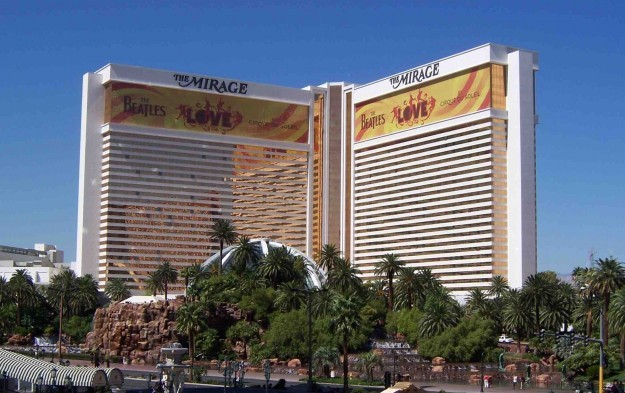
Yesterday’s Hard Rock International road show before the ostensibly investigative Nevada Gaming Control Board played out pretty much as expected. Hard Rock CEO Jim Alleneffectively ran out the clock by dwelling on how Hard Rock would make over The Mirage when its purchase closes, which is now a fait accompli. Not one question was asked about Hard Rock’s 10-day defiance of Judge Dabney Friedrich‘s order to shut down its sports betting servers in Florida—and what this means about Hard Rock’s attitude toward regulations going forward. Nor did anyone raise the messy topic of a Seminole Tribe lottery that was mounted the incentivize Covid-19 vaccinations. (The Seminoles own Hard Rock, ICYMI.) The lottery was supposedly won by Chairman Marcellus Osceola‘s bastard son, sparking a petition drive to recall Osceola, who negotiated the compact with Florida Gov. Ron DeSantis (R) that granted Hard Rock sports betting in the Sunshine State. (Say what you like about DeSantis, he treated the Seminoles as equal partners, a hint other state governors should take.)
Casino revenues in Maryland continue to trend just a bit favorably, with a 2% increase in November—mostly on the back of one casino—reaching $163.5 million overall. Cordish Cos.’ Maryland Live ceded 2% for a $57 million tally. MGM National Harbor hopped 5.5% to achieve $71.5 million and even Horseshoe Baltimore had a good month, gaining 4% to hit $16 million. Ocean Downs was flat at $6.5 million, Rocky Gap Resort was down 1% to $5 million and Hollywood Perryville slipped 3.5% to $7 million. When consumer dollars are constricting, brand names prevail, obviously.
It looked as though sports-betting license approvals were going to go swimmingly in Massachusetts … until Barstool Sports came through the door. Its marketing push toward Generation Z was a particular subject of contention. “You’re gonna have a Barstool’s-branded sports bar on the premises, according to the proposition that you guys are putting forward,” bristled Massachusetts Gaming Commission member Eileen O’Brien. ” I’m concerned about some of the historical marketing associated with Barstool.” Chairwoman Cathy Judd-Stein said that Penn Entertainment‘s non-Barstool approach to the problem-gambling issue was “excellent.” She turned to the elephant in the room, cretinous Dave Portnoy, by saying, “So now we have an obligation to reconcile what is very available publicly as to Barstool and really the significant personality attached to Barstool and what we’re gonna do about it as we think about this application.”
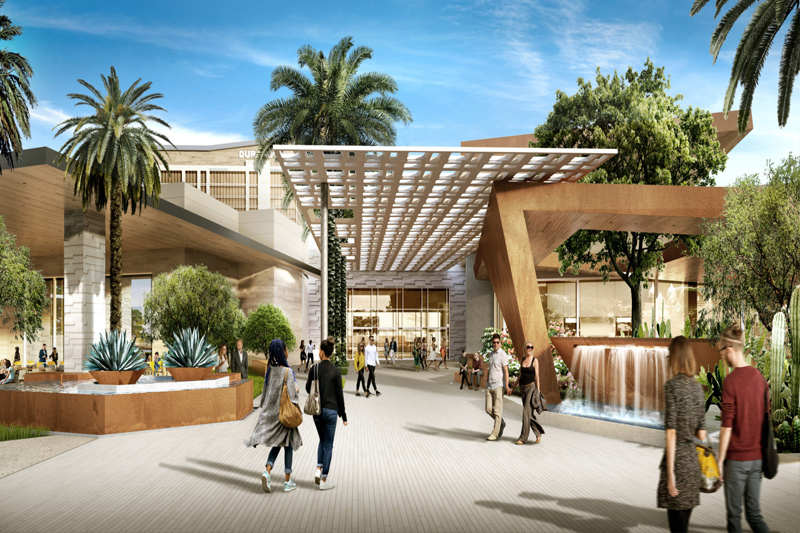
Making good on a promise and a plan, Station Casinosoffloaded 21 acres next to Durango Station (ab0ve) last week for $24 million. Not a bad score. The buyer is Ovation Development Corp., which will help seed Durango’s customer base by building residential properties on the adjoinging site, just as Station hoped. Ovation, an offshoot of the Molasky family of companies, is also building senior-friendly housing right behind Sunset Station. In the now-distant past, Station would try to shop vast tracts of land at one great gulp but didn’t find takers. Its new, more-selective, bite-size strategy is working, as seen at Wildfire Fremont, Durango and Sunset. Next up, Cactus Lane, where Station has much more land than it needs, having doubled down on its real estate position there recently. We still think it’s quixotic to go up against South Point but it will be very interesting to watch.
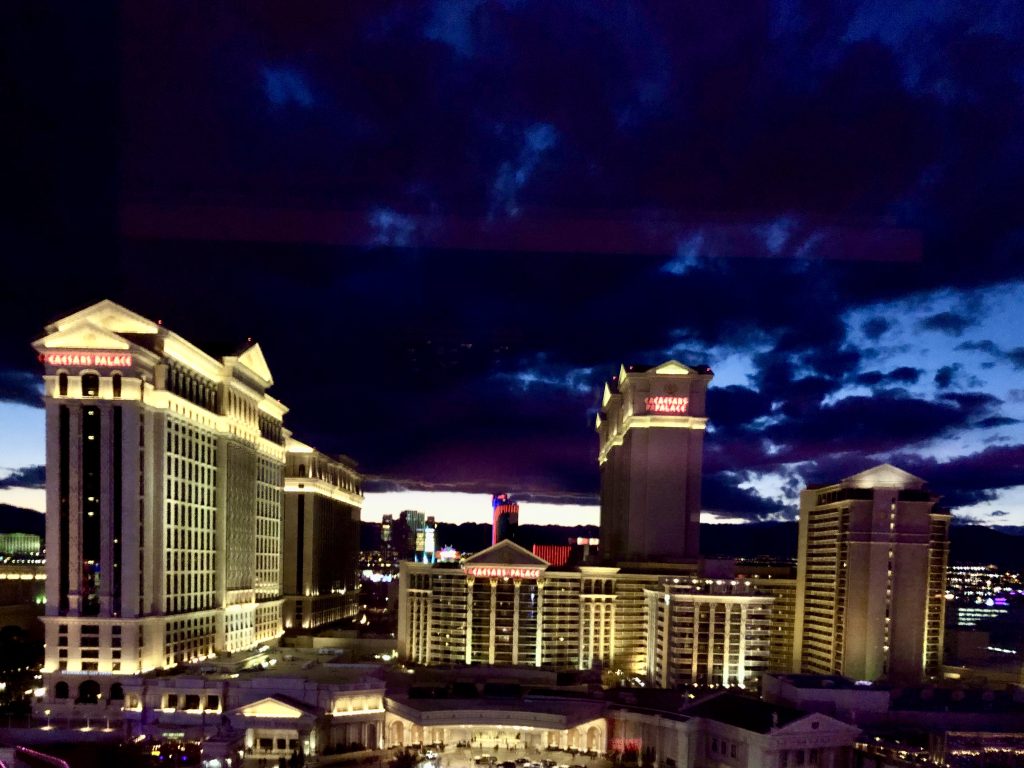
Having sacked and pillaged Caesars Entertainmentinfamously, Apollo Management told Nevada regulators it had learned its lesson and would be a better steward of Venelazzo. Has the Apollo leopard really changed its spots? Seems not. We haven’t heard anything untoward coming out of Sheldon Adelson‘s old place (yet) but Apollo’s attempt to merge the Kroger and Albertsons supermarket chains is turning out to be classic private equity rapine. You think grocery prices are bad now? Wait til this deal goes through. It hasn’t even closed yet and Apollo is strip-mining both companies. Albertsons announced a $4 billion “special dividend” on Nov. 7—a sum 57 times larger than the regular quarterly dividend, depleting the chain’s $2.5 billion cash on hand and saddling it with $1.5 billion in additional debt. Moody’s Investor Service accordingly downgraded Albertsons credit rating. There goes one-third of Albertsons’ market cap—along with the ability to “meaningfully compete” with Kroger and others.
It’s Blackstone Group out, Vici Properties in at MGM Grand and Mandalay Bay, as Vici exercised its option over the half (OK, 49.9%) that it didn’t already own. Blackstone is $2.8 billion richer as a result, including $700 million in profit. MGM Resorts International will pay $309 million a year in rent. Despite leverage concerns, Deutsche Bank analyst Carlo Santarelli wrote that “the elimination of a messy joint venture structure in an otherwise easy to understand/forecast business model” was a leading positive. He added, “while the transaction has several fundamentally positive merits, we question whether this transaction would have been feasible/executed if not for the fact that ~55% of the total purchase price was locked in at an inexpensive cost of debt.” It also increases Vici’s stranglehold on the Las Vegas Strip … but we defer to the experts.
That great Las Vegas recovery on the Strip suddenly flattened in October but new signs of vitality were evident in the local-gambler sphere. Las Vegas Strip casinos grossed $706 million, almost dead-even with the year before. Locals-derived win, meanwhile, surged 11%. Downtown‘s $90.5 million was a 19% vault, while an 18% leap happened on the Boulder Strip ($80 million). Similarly robust numbers were reported by miscellaneous Clark County ($143.5 million, +9%), Laughlin ($45 million, +10%) and Mesquite ($16 million, +7.5%). North Las Vegas lagged somewhat, up 3% to $23.5 million. Further afield, Reno was up 3% to $64.5 million, while new Legends Casino in Sparks continues to fuel play, hopping 14% in town to $16.5 million. Lake Tahoe got in on the fun, climbing 13% to $18 million and Wendover was up 6% to $23 million.
That sowing sound you hear is casino executives from Las Vegas to Hong Kong heaving a gargantuan sigh of relief that all the incumbent gaming concessions in Macao were renewed last weekend, leaving Genting Group still on the outside looking in. Some Wall Street analysts made fools of themselves by rushing out on a limb and predicting Genting would make the cut. Considering that it had no presence on the ground in Macao, Genting’s bid was pretty rash and we’re not at all surprised that Chinese authorities ultimately backhanded it. But it was useful for putting a scare into the senior concessionaires and getting them to pony up billions upon billions of dollars for non-gambling attractions that are probably not going to be very remunerative, barring a drastic transformation in the makeup of the Macao-bound traveler. (Maybe that Hello Kitty theme park mooted by SJM Holdings will be making a comeback.) As The Associated Press put it, “the requirement to spend on theme parks, music and sports adds to financial pressure at a time when revenue has plunged under anti-virus restrictions.”
While New York Mets owner Steve Cohen and Las Vegas Sands continue to dither about how they might, maybe, possibly have something brewing in Flushing, other players—much lower-profile ones—have been making a move. A consortium of the Chickasaw Indians, Saratoga Casino Holdings, Thor Equities and Legends are pitching a “comprehensive casino, hotel, and entertainment proposal” for Coney Island. Which we think would be a logical spot for gaming and would drive more entertainment dollars to the Rockaway area, especially in cold-weather months. Now, this foursome doesn’t have the name-brand cachet of Caesars Entertainment or Wynn Resorts, both of whom have dibbed Manhattan, but the former is at war with the Theatre District and the latter is evincing cold feet about the whole thing.
If you have a bridge in Brooklyn or perhaps some swamp land in Florida, then Oak Street Real Estate Capital would like to hear from you. It just paid $200 million for the site of Bally’s Chicago and $300 million for a share of an imaginary casino yet to break ground. Oak Street, understandably “declined to comment” on the deal when the Chicago Tribune came calling. You have to hand it to Bally’s Corp. It literally got something for nothing, even though it’s still at least $1.2 billion shy of the finishing line. And selling off its empire to pay for tomorrow has its limits, as Bally’s is fast running out of things it can peddle. At least Gaming & Leisure Properties got tangible value when it paid Bally’s $1 billion (insert Dr. Evil inflection here) for Bally’s Rhode Island assets. Oak Street just got played.
Dateline: O’Hare International Airport, land of crappy wi-fi.
We’re not back at the office yet but there’s so much news it just can’t wait. Let’s start in Atlantic City, where casino revenues slumped 7% to $220.5 million last month. Everybody was revenue-negative with two happy exceptions, Borgata (+1%) and Hard Rock Atlantic City (+4%). The latter’s Joe Lupo definitely has some secret sauce for attracting players. Borgata raked in $62.5 million to Hard Rock’s $39 million. Ocean Casino Resort had an abnormally poor month, down 6% to $28 million. Even so, Ocean still outperformed all of the Caesars Entertainment properties, with Caesars Atlantic City tumbling 17% to $17.5 million and Harrah’s Resort also falling 17% to $20 million. Tropicana Atlantic City slid 18% to $17.5 million. Golden Nugget ($12 million, -16%) and Resorts Atlantic City ($13 million, -11.5%) duked it out for last place but were aced by Bally’s Atlantic City ($11 million, -13.5%), which means we look forward to hearing the Bally’s Corp. braintrust spin that on their next earnings call.
We’ll shortly see if newly reelected Texas Gov. Greg Abbott (R) was sincere about being willing to “take a look” at casino gambling in the Lone Star State or if he was stringing Dr. Miriam Adelson along for her money. (We kinda think it was the latter.) Legislation freshly filed by state Sen. Carol Alvarado would authorize a constitutional amendment to permit sports betting and casinos. Sounds good to us … except that it would permit greyhound racing, a pestilence that has been eradicated in most of the United States.
Casinos in Massachusetts mostly did well last month, especially by pre-pandemic standards (+24%). Unfortunately, none of that lift came from Encore Boston Harbor, which had a disappointing October, down 1% and grossing $62 million. By contrast, MGM Springfield (above) impressed with a 7% increase to $23 million. Also not doing badly, not least by its own standards, was Plainridge Park, which hopped 5% to $12.5 million. As a consequence of the Wynn Resorts underperformance, gross gaming revenues ($97 million) were up just 1.5% from last year.
Gaming revenue in Indiana cooled somewhat last month, as casinos banked $207.5 million, a 3% drop from last year, albeit still 16% higher than 2019. (No elaborate 2019 comparisons will be drawn because that year saw two Majestic Star boats in operations and no Hard Rock, so it’s apples and oranges.) No fiscal worries for Hard Rock Northern Indiana, way out in front with $36 million, a 12% leap. Closest competitor Horseshoe Hammond ceded 8% to finish with a still-robust $29 million, while Ameristar East Chicago tumbled 23.5% to $16 million. Blue Chip rounded out the northern tier with $11 million, a 12% drop. Horseshoe Indianapolis had an excellent month, up 2.5% to $28 million, while Harrah’s Hoosier Downs slipped 7% to $20 million.