

Blackstone Group‘s tenure at The Cosmopolitan of Las Vegas will be remarkably brief (although nothing in the gaming industry will ever 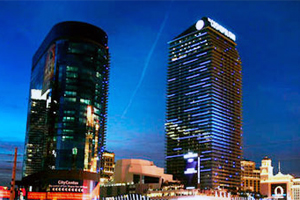 match the extreme brevity of the abortive Wynn Resorts/Crown Resorts merger). Bloomberg reports that Blackstone is exploring “strategic options” for the megaresort that include—what else?—selling the property, often the most strategic option of all. Deutsche Bank has been hired to trawl for potential investors, with a $4 billion sales tag slapped on the casino-resort. That’s quite a markup when you consider that Blackstone bought it for $1.7 billion five years ago and put $500 million of capex into the place. True, it is now a profitable enterprise but that is in part a function of Blackstone’s thrifty deal.
Would it still be a bargain at $4 billion? We think Continue reading
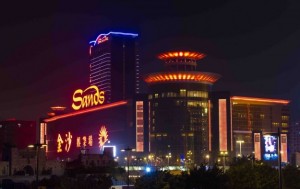 baccarat revenue was down 16% while mass-market win was up 16%. VIPs left $4.6 billion behind on the felt, while mass-market players put $5.3 billion into the slots and onto the tables. This makes mass-market gambling over 51% of the Macanese total,
  with a new completion date of 2022. (We never bought into the previously announced 2020 completion date, so we applaud Witkoff for being reasonable.) No word on whether the ‘optional’ midair pool deck of the original design (which costs over a billion dollars alone) will be included in the new concept. “We believe Drew Las Vegas is set to usher in the next generation of Las Vegas resorts. It will be unlike anything on the Strip today—a truly integrated resort that brings together a unique take on Las Vegas and curated set of experiences from around the world,” said Witkoff, setting a high bar for himself.
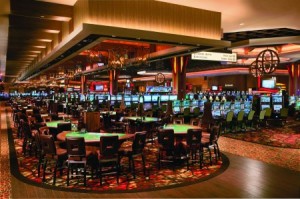 anyone) were ailing. The same might be said for companies with Penn National Gaming down 6% and Caesars Entertainment up by the same amount. Saving the worst for first, Eldorado Resorts‘ Belle of Baton Rouge led the race to the bottom, spiraling 39% downward to $3 million. Casino Rouge grossed almost $6 million (-7%) and L’Auberge Baton Rouge took in $15 million (-8%). Outlying Evangeline Downs gained 5% for Boyd Gaming, good for an $8.5 million finish.
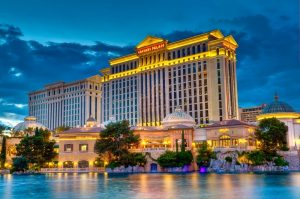 just ratcheted his price target down to $12, citing “worse than expected weather/GGR results at CZR’s regional properties and higher than previously modeled corporate expenses.” His cash-flow estimate for the regional casinos was lowered from $245 million to $232 million, although Las Vegas Strip projections remain level. Factored into the changes was $15 million worth of “unfavorable weather impact.” The newly feverish competition in Atlantic City is a “$20m headwind,” an impact doubled by weather issues and competition in other markets.
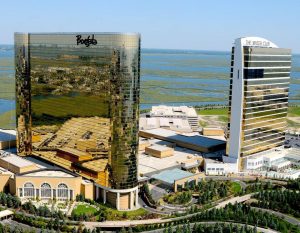 (albeit down 13% on a same-store basis). One of the victims of the latter was Borgata, down 8% at the tables and 1.5% worse overall. A 1.5% bump in slot win helped. The Caesars Entertainment trio also got clobbered at the tables, down 14% on 10% less wagering. Slot win was also 5% on 3% less coin-in. After Borgata ($59.5 million) came Tropicana Atlantic City ($27 million), holding onto second place despite a 6% slippage, Harrah’s Resort clocked $26.5 million (-16.5%) and Hard Rock Atlantic City checked in with $24.5 million, good for the #4 spot.
 revenue. “Nebraskans’ money is funding other states’ priorities,” Morgan said. Mind you, a similar effort three years ago failed due to public indifference: Not enough signatures could be gathered. Morgan has a point—all but one of the states surrounding Nebraska offers casino gambling. Still, it’s very much an open question of whether voters will harken to a “Keep the Money in Nebraska” pitch, having failed to do so before.
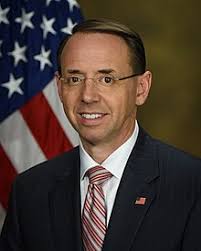 wasn’t covered under the new interpretation of the Federal Wire Act (more sweeping than the original interpretation), the Department of Justice was at least given the option of filing further briefs in the case. The DOJ is taking a momentary ‘hands-off’ stance towards state lotteries “until the Department concludes its review.” If Rosenstein concludes that online lotteries are at liability, they will have three months to come into compliance, possibly losing much lucrative, interstate business along the way.
 across the transom, fresh from Affinity Gaming. Or so the Wall Street Journal says and the WSJ is rarely wrong. According to JP Morgan analyst Joseph Greff, Caesars “will formally begin to evaluate takeover interest with the hiring of a named investment bank.” Icahn still gets a fourth seat on the Caesars board because Rodio takes that occupied by outgoing CEO Mark Frissora. Greff says the seat was difficult to fill given that it might be merely a caretaker job, discouraging one other “oft-discussed” candidate (Anthony Sanfilippo?). Rodio was Icahn’s go-to guy at Tropicana Entertainment, so it’s understandable that Uncle Carl would have an ‘affinity’ for Rodio at new-look Caesars.
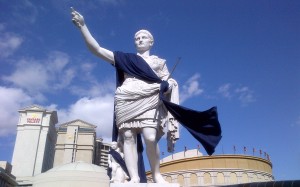 place, as the bidding for Caesars—expected to begin in earnest next week—heats up. According to the New York Post, it is only a matter of days before the Caesars board announces that a sale is on. Tilman better break open his piggy bank: Caesars still carries a groaning $23.6 billion in debt (which makes one guardedly pessimistic about the wisdom of a sale), a morbid legacy from Gary Loveman, so the Roman Empire isn’t going to come cheap.
 driven by high-tax slots (up 11%), not low-tax table games (down 4%). National Harbor was dominant in market share, with 38.5%, compared to Maryland Live‘s 34% and Horseshoe Baltimore‘s 16%. Maryland Live gambling win vaulted 19%, to $56 million, while the ‘Shoe did $25.5 million (+3%). Ocean Downs jumped 12.5% to $6.5 million, while Hollywood Perryville was flat at $7 million. Out in the boonies, Rocky Gap Resort gained 9% to $5 million. Next door, West Virginia had
  “expansion” of gambling in Indiana. Doubtless he would come down on the “does” side of a state House proposal to—rather than move an existing license—
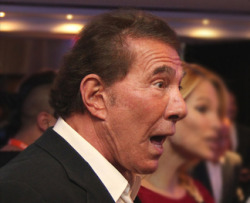 In an obvious attempt to placate the Massachusetts Gaming Commission, after a bruising set of hearings, Wynn Resorts