

Bankruptcy’s been good to Caesars Entertainment. For CEO Gary Loveman‘s final earnings call prior to yielding his title to Mark Frissora, the company  gift-wrapped him a $7.6 billion profit on net revenue of $1 billion. If that sounds surrealistic, it’s due to a one-time, $8 billion gain achieved by shuffling off Caesars Entertainment Operating Co. (aka “Bad Caesars”). Even the red-headed stepchildren of the latter posted a 33% increase in cash flow … it’s amazing what you can do when you stop paying interest on your debt. In other words, don’t expect $52-a-share yields in every quarter going forward.
You’d almost think that 1Q15’s results were choreographed so that Loveman could go out in a blaze of glory, riding the best quarter since 2008. Only the Las Vegas Review-Journal’s Rick Velotta cut to the chase, merging “good” and “bad” Caesars numbers to discover a profit of $8 million on $2.2 billion in revenue. That’s less dramatic, although still a salutary change from 1Q14’s $306 million loss.
With “bad Caesars” in the mix, revenues were up 9%, but rose 21% when the bankrupt casino unit was subtracted from the formula. The dramatically improved numbers in “good Caesars” were attributed to The Cromwell, The Linq, Horseshoe Baltimore and growth in Caesars Interactive. Given the movement of assets within Caesars, numbers like a 33.5% revenue leap at Caesars Growth Partners have to be taken with a dose of perspective. Caesars sent a mixed message on Atlantic City, talking up the performance of Harrah’s Resort and the pre-bookings for its new convention center but calling the Boardwalk “still broadly weak.”
As for Vegas, “As far as the macroeconomics are concerned, I don’t see anything in the macroeconomic enviro that I find discouraging,” said Loveman, taking issue with Steve Wynn. “I’m feeling pretty good for the second quarter and beyond for Las Vegas. I do not share Mr. Wynn’s pessimism.” Too bad he never shared Wynn’s fiscal prudence either.
* In other Caesars news, the company struck a blow for transparency by agreeing to allow creditors access to financial records via a court-appointed investigator. However, Judge Benjamin Goldgar is waiting until next week to decide whether he’ll give the deal the go-ahead.
* Bracing itself for a new smoking ban (and the near-inevitability of revenue shortfalls), Harrah’s New Orleans wants to shave its payroll by 400 employees. Unfortunately for Harrah’s, it tried to sneak this past New Orleans city officials, who are now making a stink in the Lege. The casino’s license is contingent upon maintaining a specific staffing 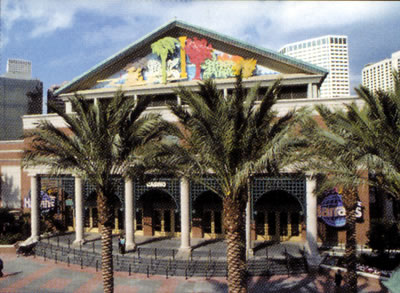 level, terms that Caesars was trying to renegotiate with state lawmakers. Since the casino loses about 600 workers a year, it argues, 400 positions can be simply left unfilled. That’s the argument made by Southern Regional President Dan Real, who says, “We’re trying to run our business in a manner that is efficient.” This Real-ism is playing to a mixed response. Lawmakers want specifics of where and upon whom the cuts will fall. The city, meanwhile, is flat-out opposed, issuing a statement that, “Mayor Landrieu opposes this legislation, which basically allows Harrah’s Casino to unfairly renege on its promise to the people of New Orleans with no valid reason to do so.” The reasoning is valid but it may be politically unpalatable.
* Sheldon Adelson, that bastion of democracy, bought a push-poll in Pennsylvania to show that the Keystone State doesn’t want online gambling (currently before the Lege), after 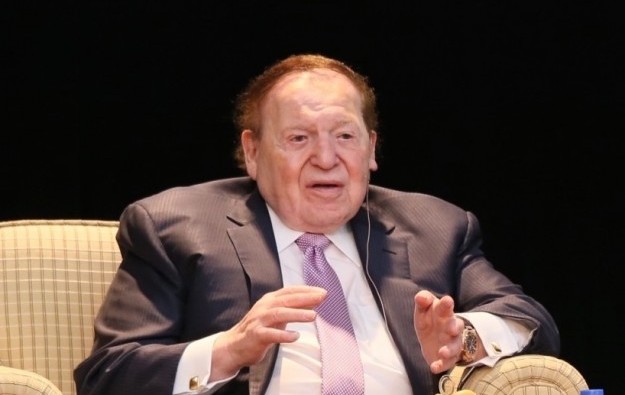 finding Las Vegas Sands outnumbered and surrounded at a state Senate hearing. Sample question: “Legalizing online gambling in Pennsylvania will make it easy for children to be exposed to and participate in gambling, since it is nearly impossible to prevent minors from gambling online.” With rhetoric like that it’s only a surprise that the numbers weren’t more adverse. Does Adelson propose to run the casino industry by polling? Is he going to eliminate keno (35% support) and go into the lottery (84%) business instead?
(In West Virginia, the tandem of Penn National Gaming and Scientific Games seem to be probing the market, using social gaming as their vehicle.)
Without explicitly doing so, Steve Wynn distanced his position from Adelson’s by framing it 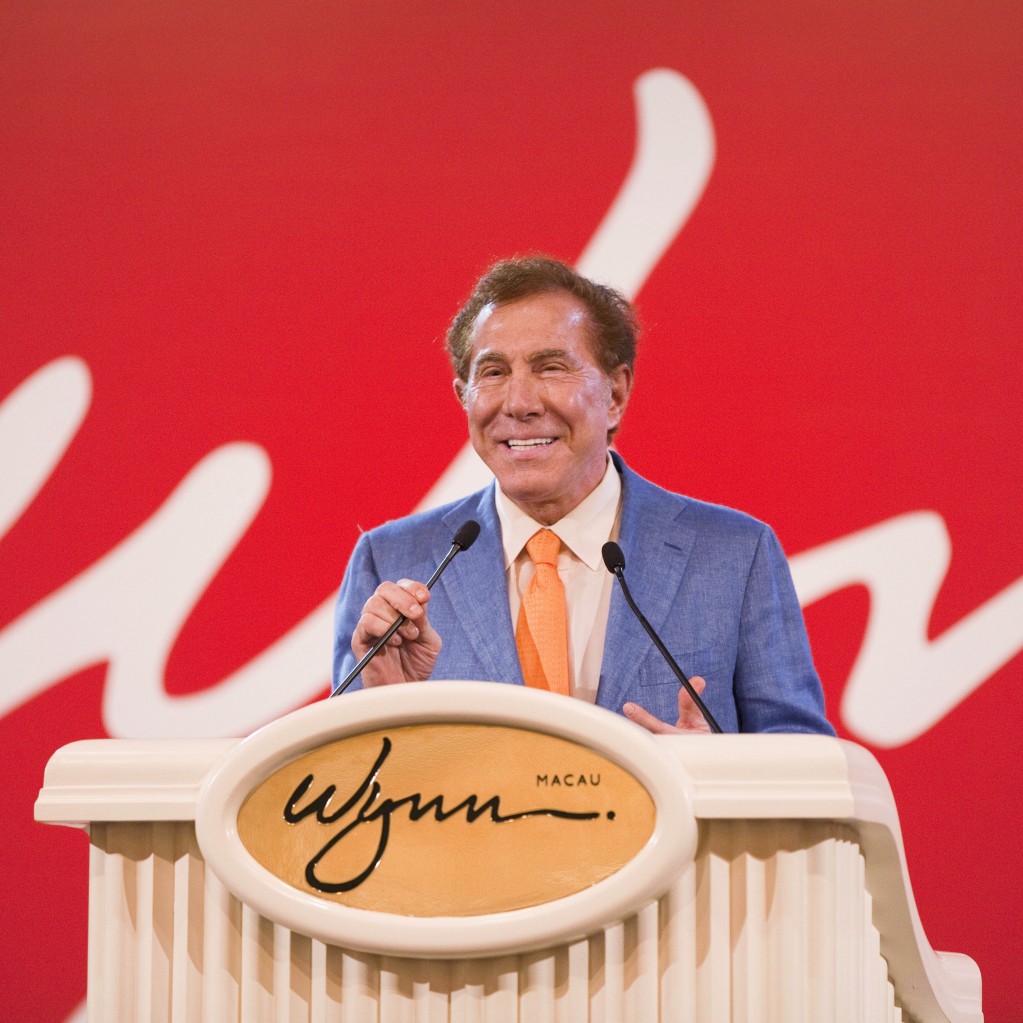 as a business issue, saying ” Internet gaming is not going to happen in any way that is meaningful for Las Vegas.” (A fair statement, to date.) He added, “We’ll get blamed if anything goes wrong.” Meanwhile, the Pennsylvania state Senate is poring over a study which recommended a casino-friendly spate of changes that included online gambling, lower taxes, 24-hour liquor service, fewer state troopers on property and a more liberal choice of casino vendors. We’ll see how that shakes out.
* Federal authorities seem to have found the means of cutting off gray-market Internet-sweepstakes cafes at their roots — by going after their software providers. Six companies have agreed that, in return for not being prosecuted, they will sever their ties to the sweepstakes industry (as ubiquitous as kudzu and just as difficult to eradicate). This will leave a staggering 265 North Carolina Internet cafes scrambling for new providers. We’re all in favor of safe, legal and regulated Internet gambling but there are myriad bad actors who have to be weeded out in the process.
