Kasich eats pizza with a fork.

Income tax is a small part of total taxes. In most states, the money from property tax and sales tax dwarves the amount taken in from income tax. Having the rich and poor pay the same percentage on income tax is regressive enough, so by your own statement, you show that poor people pay a higher percentage of income in taxes than a rich person.
Do you honestly not see that?
Example 1- Player A make $100,000. A pay 3.3 percent income tax, leaving me $96,700. I pay $5000 in property tax, and another 3,000 in sales tax. Total tax=11,300
He paid 11.3 % of his income instate sand local taxes
My neighbor makes 50,000. He pays 3.3 percent, leaving him $48,350. He pays $5,000 in property tax and $3,000 in sales tax for a total state and local tax of $9650. Except the percent of his income that he paid isn't 11.3% like his richer neighbor, it is 19.3 percent. Player A paid $1800 more in taxes, but the percent of income he paid was much lower than his less wealthy neighbor.
Quote

Originally posted by: Roulette Man
Unless people buy merchandise in the same percentage of their income as someone who is poor, they will never pay a larger percentage. A house for a nonwealthy person is their most expensive asset they own, while for someone who is rich, it generally is just a small percentage of their overall estate. Forkie gave us his chart showing that the rich still pay the most income tax.


The discussion isn't simply about income tax rate, its about overall tax rate. As far as income tax goes, wealthy people have a million ways to lessen their tax burden, Capital Gains and Deferred Compensation being the two most abusive.

Quote

Originally posted by: billryan
Quote

Originally posted by: Roulette Man
Unless people buy merchandise in the same percentage of their income as someone who is poor, they will never pay a larger percentage. A house for a nonwealthy person is their most expensive asset they own, while for someone who is rich, it generally is just a small percentage of their overall estate. Forkie gave us his chart showing that the rich still pay the most income tax.


The discussion isn't simply about income tax rate, its about overall tax rate. As far as income tax goes, wealthy people have a million ways to lessen their tax burden, Capital Gains and Deferred Compensation being the two most abusive.


It's apples and oranges and unfair to match. Property taxes and sales taxes as a percentage of income are always going to take up a bigger percentage of lower income people, even though the wealthy are paying more of both.


Quote

Originally posted by: billryan
Income tax is a small part of total taxes. In most states, the money from property tax and sales tax dwarves the amount taken in from income tax....


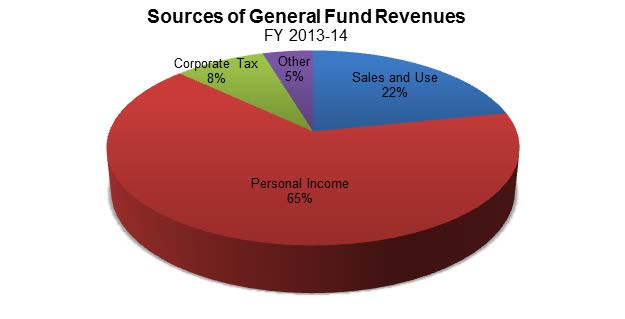
Not in the state of California.


You are misreading the meaning of that chart. Do you see the slice for Property taxes anywhere? That chart is for the General Fund, not all California taxes. Property taxes go to the local areas for schools, police, fire and local government.
Okay, you win. The guy in Indiana who earns $1,000,000 pays 19 times more taxes than the guy who earns $20,000, yet he doesn't pay his fair share. Oh, in Indiana, the guy with an expensive care..........which he already paid taxes on, pays 20 times more taxes than the guy with a clunker.

Billy, is there ever a "fair amount'?


Quote

Originally posted by: billryan
Quote

Originally posted by: Roulette Man
Unless people buy merchandise in the same percentage of their income as someone who is poor, they will never pay a larger percentage. A house for a nonwealthy person is their most expensive asset they own, while for someone who is rich, it generally is just a small percentage of their overall estate. Forkie gave us his chart showing that the rich still pay the most income tax.


The discussion isn't simply about income tax rate, its about overall tax rate. As far as income tax goes, wealthy people have a million ways to lessen their tax burden, Capital Gains and Deferred Compensation being the two most abusive.


Quote

Originally posted by: billryan
You are misreading the meaning of that chart. Do you see the slice for Property taxes anywhere? That chart is for the General Fund, not all California taxes. Property taxes go to the local areas for schools, police, fire and local government.


I'm not misreading that at all. By the way. I have a good friend who used to be the mayor of Eureka. When this state is short they come after property tax revenue charged in various counties. I certainly know that my state income taxes far exceed my property taxes.
Where do you live?
The Property Tax Is One of the Largest Taxes Californians Pay. In some years, Californians pay more in property taxes and charges than they do in state personal income taxes, the largest state General Fund revenue source. Local governments collected about $43 billion in 2010–11 from the 1 percent rate. The other taxes and charges on the property tax bill generated an additional $12 billion.


Understanding California’s Property Taxes

Executive Summary

The various taxes and charges on a California property tax bill are complex and often not well understood. This report provides an overview of this major source of local government revenue and highlights key policy issues related to property taxes and charges.

A Property Tax Bill Includes a Variety of Different Taxes and Charges. A typical California property tax bill consists of many taxes and charges including the 1 percent rate, voter–approved debt rates, parcel taxes, Mello–Roos taxes, and assessments. This report focuses primarily on the 1 percent rate, which is the largest tax on the property tax bill and the only rate that applies uniformly across every locality. The taxes due from the 1 percent rate and voter–approved debt rates are based on a property’s assessed value. The California Constitution sets the process for determining a property’s taxable value. Although there are some exceptions, a property’s assessed value typically is equal to its purchase price adjusted upward each year by 2 percent. Under the Constitution, other taxes and charges may not be based on the property’s value.

The Property Tax Is One of the Largest Taxes Californians Pay. In some years, Californians pay more in property taxes and charges than they do in state personal income taxes, the largest state General Fund revenue source. Local governments collected about $43 billion in 2010–11 from the 1 percent rate. The other taxes and charges on the property tax bill generated an additional $12 billion.

The Property Tax Base Is Diverse. Property taxes and charges are imposed on many types of property. For the 1 percent rate, owner–occupied residential properties represent about 39 percent of the state’s assessed value, followed by investment and vacation residential properties (34 percent) and commercial properties (28 percent). Certain properties—including property owned by governments, hospitals, religious institutions, and charitable organizations—are exempt from the 1 percent property tax rate.

All Revenue From Property Taxes Is Allocated to Local Governments. Property tax revenue remains within the county in which it is collected and is used exclusively by local governments. State laws control the allocation of property tax revenue from the 1 percent rate to more than 4,000 local governments, with K–14 districts and counties receiving the largest amounts. The distribution of property tax revenue, however, varies significantly by locality.

The Property Tax Has a Significant Effect on the State Budget. Although the property tax is a local revenue source, it affects the state budget due to the state’s education finance system—additional property tax revenue from the 1 percent rate for K–14 districts generally decreases the state’s spending obligation for education. Over the years, the state has changed the laws regarding property tax allocation many times in order to reduce its costs for education programs or address other policy interests.

The State’s Current Property Tax Revenue Allocation System Has Many Limitations. The state’s laws regarding the allocation of property tax revenue from the 1 percent rate have evolved over time through legislation and voter initiatives. This complex allocation system is not well understood, transparent, or responsive to modern local needs and preferences. Any changes to the existing system, however, would be very difficult.

California’s Property Tax System Has Strengths and Limitations. Economists evaluate taxes using five common tax policy criteria—growth, stability, simplicity, neutrality, and equity. The state’s property tax system exhibits strengths and limitations when measured against these five criteria. Since 1979, revenue from the 1 percent rate has exceeded growth in the state’s economy. Property tax revenue also tends to be less volatile than other tax revenues in California due to the acquisition value assessment system. (Falling real estate values during the recent recession, however, caused some areas of the state to experience declines in assessed value and more volatility than in the past.) Although California’s property tax system provides governments with a stable and growing revenue source, its laws regarding property assessment can result in different treatment of similar taxpayers. For example, newer property owners often pay a higher effective tax rate than people who have owned their homes or businesses for a long time. In addition, the property tax system may distort business and homeowner decisions regarding relocation or expansion.


Property taxes are usually a county tax while income tax is a state tax. To compare the two as a portion of someone's income is ludicrous. Besides most low income people live in low priced housing or they rent. If the poor don't want a huge percentage of their income going to income, property, and sales taxes then they should rent. I haven't seen a very good argument yet on this and it is comparing apples and oranges and acting like it is a legitimate comparison. By the way, I live in L.A. County and my state income taxes are more than my property taxes.
Already a LVA subscriber?
To continue reading, choose an option below:
Diamond Membership
$3 per month
Unlimited access to LVA website
Exclusive subscriber-only content
Limited Member Rewards Online
Join Now
or
Platinum Membership
$50 per year
Unlimited access to LVA website
Exclusive subscriber-only content
Exclusive Member Rewards Book
Join Now