In 1863, Charles Champoiseau, an amateur French archaeologist, was exploring the Greek island of Samothrace when he stumbled on some assorted bits of marble. Like all good imperialists of the time, he boxed them up and sent them home to Paris, where they were reassembled into their former glory: an eight-foot-high figure of Nike, the goddess of victory, dating from the second or third century BC. Though sadly missing her head, both arms, and a foot, she’s nonetheless considered one of the finest examples of sculpture from the Hellenistic era and is better known today as the "Winged Victory of Samothrace," housed in the Louvre Museum.
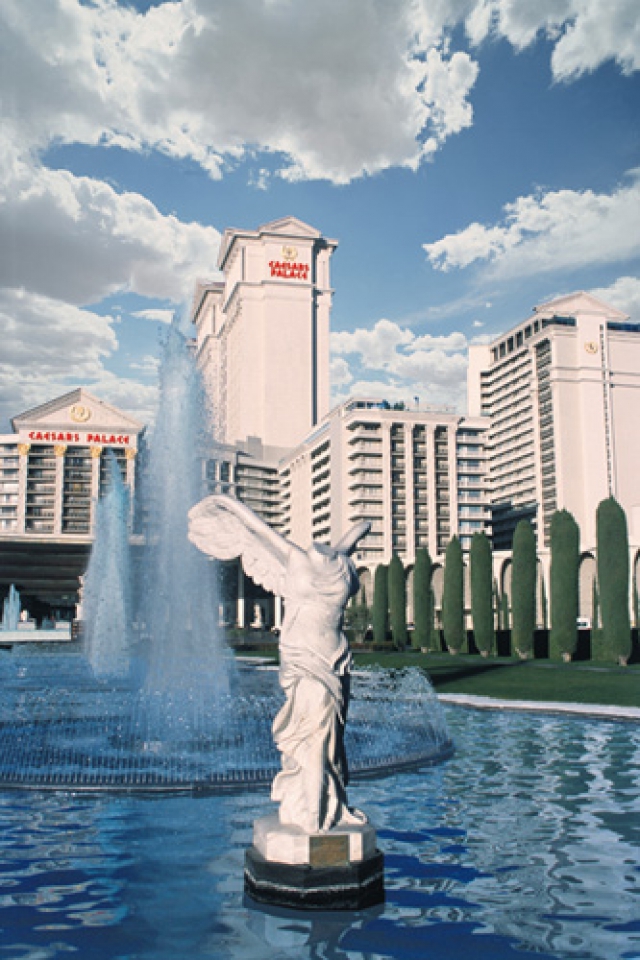
Although this particular representation of Nike is thought to commemorate a naval battle, she was also goddess of athletic victory (ergo the feponymous footwear) and of other contests -- hence her likeness as a sentinel at the Strip-facing fountains of Caesars Palace. This version of the statue was hewn from Carrara marble by Italian sculptors and shipped to the United States for the opening of Caesars in August 1966.
There’s a Greek campaign to have the Parisian statue repatriated, but for the foreseeable future you can view the original by logging on to the official Web site of the Louvre at www.louvre.fr.louvrea.htm and clicking on the virtual tour of the "Greek, Etruscan and Roman Antiquities Galleries." Alternatively, you can buy a replica of your own: We searched around on the 'Net and found everything from a 7½ inch faux-marble desktop version for $65 to a five-foot five-inch, hand-carved copy in Cremo Delicato Tedeschi marble, priced at $7,500.
 |
O2bnVegas
Apr-06-2020
|