This answer was kindly supplied by guest contributor Pat Lamb, a collector since 1991 and author of the Slot Card Price Guide, about to enter its sixth edition.
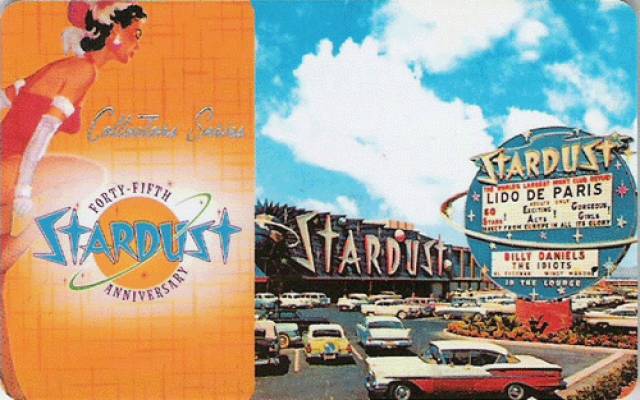
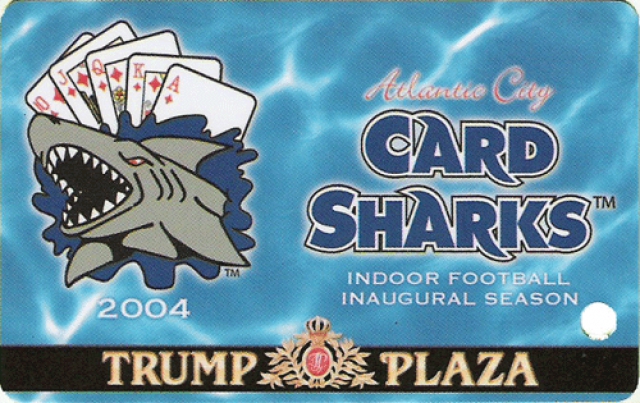
In 1982, the first slot card was produced by the Sands Casino in Atlantic City, in order to track guests' play while in the casino. Anyone savvy who plays the slots or tables has one, if not many, slot cards (now more commonly known as players cards), which they use in each casino. These are like little pieces of plastic "art" and are very collectible, much like baseball cards. We currently list more than 7,500 cards, with prices and rarity, in issue order, in our Slot Card Price Guide, starting with Las Vegas and ending with foreign cards.
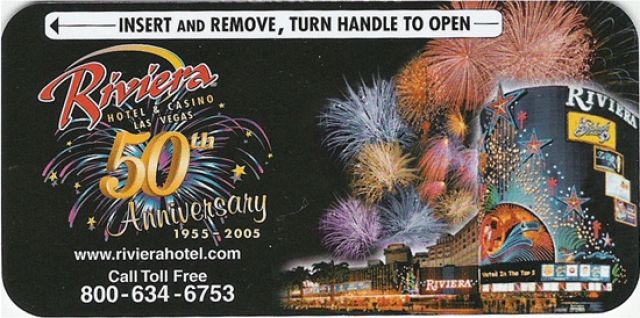
Casino room keys are currently not as popular as slot cards, but are a great hobby in themselves. Due to security reasons, they tend to be a bit harder to obtain, but their values don't generally reach the astronomical levels that slot cards are capable of achieving.
As a hobby, slot card collecting has snowballed in the last 5-7 years, with several clubs springing up in many states. My husband and I started a club called PACK (People After Cards & Keys) about 7 years ago, which had over 200 members and each month kept collectors informed about new cards (75+ entries a month). Due to health problems, PACK lasted only 5 years, but there are several clubs which now take its place, including MSOCK (Mystic Society of Cards and Keys) in Mississippi, which produces regular bulletins, and the Slot Cards and Room Keys Club, which has a meeting of 75-100 people annually in Las Vegas, plus there's a collector in California who produces a monthly on-line report of new cards.
As a rule, the older the card, the more valuable it becomes: Common cards from the large casinos in Vegas are worth a dime, if that. Also, the less cards that were printed, the more the value increases. An example is the players card from the Dunes in Vegas (the former site of the current Bellagio resort), which is now worth $500, since not many cards were issued before the casino closed. Of course, if found on eBay these values can close to double, since such cards are highly sought after by many collectors: The highest-value card I sold myself was a green "Red Garter" from Wendover, which was a one-of-a-kind and brought $800 on eBay.
With slot cards reaching such high prices, collectors must be wary of the inevitable scam artists. For example, the slot card from the Glory Hole in Cripple Creek, Colorado, was a very rare card valued at $250, since the casino was open only for a short time. But a box of blank (i.e., non-issued) cards was found by someone who decided to profit from them, and the value dropped to only $3. Those cards from the Glory Hole that were actually issued to someone, which means they have a bar code on the reverse, are worth considerably more than the blank cards being handed out like candy.
Common Indian casino cards bring anywhere from $3 up to $30 for the high-roller cards, which are harder to obtain. Race track cards can also fetch a price of $3-$7 for a common card.
Montana casino cards are the hardest to collect, since they’re not used in the machine, but rather are scanned as you enter or leave the casino. Montana issues only one card per person and usually they’re available to locals only. Some casinos even keep your card for you inside the casino — they’re not allowed to leave the premises. You need to get pretty crafty if you plan to collect some slot cards!
Probably the best place to buy slot cards is on eBay. But a lot of buying/trading goes on at www.slotcardbbs.com (a site under the umbrella of www.chipguide.com), at conventions, via friendly emails to other collectors, and even yard sales. I've seen great cards go for practically nothing at coin shows, where no one knows or even