For this episode, we tune in to none other than Mike Weatherford, the long-time and ultra-hip entertainment writer for the Las Vegas Review-Journal and author of our book Cult Vegas—The Weirdest! The Wildest! The Swingin'est Town on Earth! Mike's been covering the Las Vegas stage for 20 years, so we figured if anyone had an interesting perspective on the Stardust shows, it would be him. Here're some of his memories.
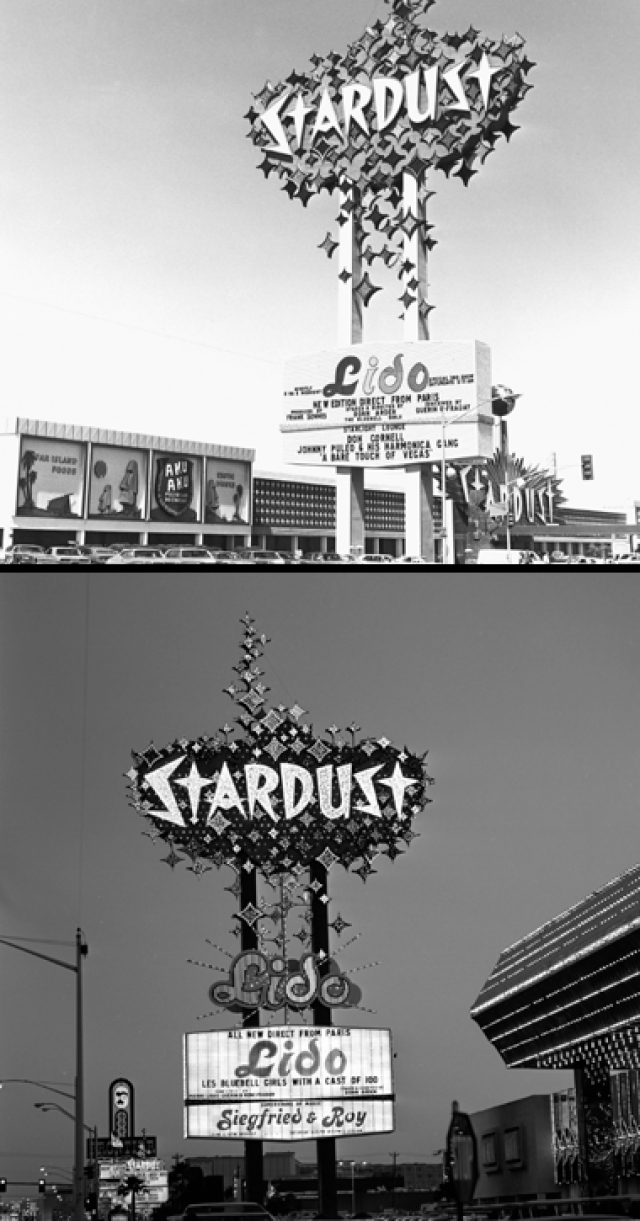
On the Strip, the usual hyperbole leans toward "more" and "most." The Stardust is noteworthy for a near-record in the opposite direction: Between 1958 and 1999, its main showroom hosted only two productions.
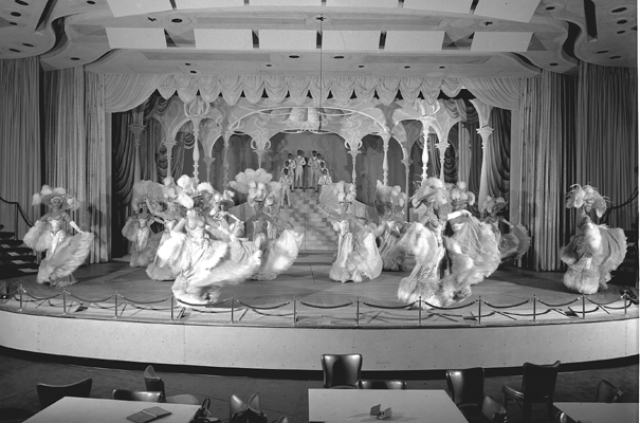
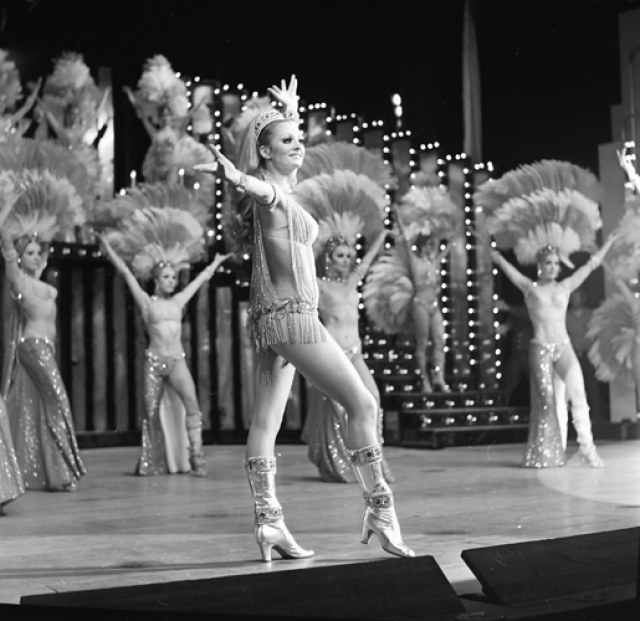
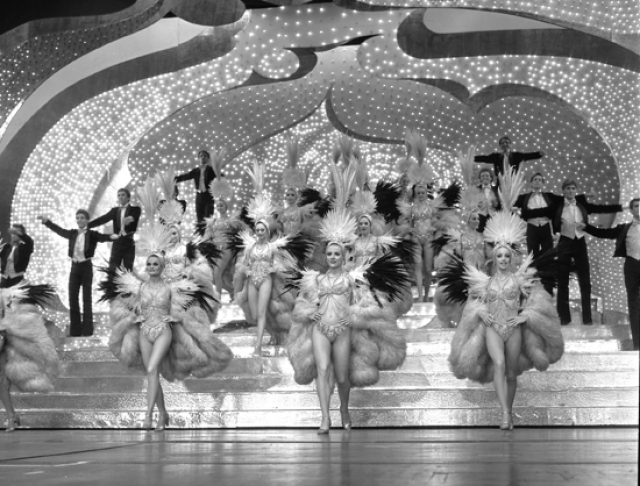
For most of that time, the casino was synonymous with Lido de Paris. That revue delivered unto Las Vegas its iconic image of the showgirl, one still on permanent loan from France.
When Lido finally ran out of juice in February 1991, the Stardust tried to reinvent the floorshow with Enter the Night. It was a respectable effort, good for its run through the '90s, and it might have lasted even longer if the first Cirque du Soleil hadn't arrived in Las Vegas just two years after it opened.
Because of this remarkable lack of turnover, my Stardust memories are a bit skewed. I didn't arrive in Las Vegas until late 1987 and didn't get around to seeing Lido until I worked on a story about the 1989 musician's strike, which eventually broke the back of the Las Vegas Musician's Union. The Stardust was the rare hotel to make an early deal with the union, and as I remember it, the Lido band let me watch the show from their elevated balcony in order to prove how much live music added to the production. Though impressed by the audio advantage, I believe my view of the stage was worse than the audience's. No loss, though: I clearly remember how hokey and dated the thing seemed by then.
Covering the closing of Lido two years later, I learned it was due, in part, to a long standoff between Boyd Gaming and the French organization in charge of the show. For 15 years, it turned out, Lido was frozen in the '70s while the two sides failed to agree on budget and creative control.
What I missed on the Lido front, I made up for by getting to cover Enter the Night from the ground up. Boyd financed the production and kept it under casino control, but wanted a fresh approach and deliberately hired a producer with no previous experience on the Strip. That put Ted Lorenz and me on somewhat equal footing, and I was on board with his idea of infusing the old production-show format with a Broadway aesthetic. Performers would sing live instead of lip-syncing to dated chorus vocals. There would be drama and context for the choreography, not just synchronized T & A.
The result was only about half successful. When the vision really gelled, the show sizzled. I still remember the sexy, red-plumaged showgirl number "Some Like It Hot" with giant flames shooting from the stage. But the revue seemed to run out of money toward the end, and could never really figure out how to work in Lido holdover Bobby Berosini and his trained orangutans. I still remember Lorenz trying to be careful and diplomatic, but he was visibly uncomfortable when trying to answer questions about how this slapstick vaudeville throwback (the part that was forced on him by Boyd management) would integrate with his contemporary Broadway vision.
When the showroom was remodeled for Enter, Stardust officials were so proud of the technical upgrades that they showed me every detail. Alas, by the time the revue closed at the end of 1999, Cirque’s O at Bellagio had rendered it retro. The Stardust tried to position that as a positive by booking Wayne Newton as its resident headliner in early 2000. The former Midnight Idol — now Early-Evening Icon? — opened to strong business and seemed to be ahead of the chronic vocal problems that had plagued him in the 1990s. But his singing quickly deteriorated and management seemed not to mind when the Wayner opted to spend much of his post-9/11 days entertaining U.S. troops overseas.
The showroom’s final chapter was written by headliners and a Cuban revue, Havana Nightclub. I saw everyone from Bill Engvall to Don Rickles, and even Kevin Spacey doing a rare live show to promote his Bobby Darin movie, and got quite used to turning in from Industrial Road, parking in one of the last flat-surface lots left on the Strip, and heading in through the sports-book doors to the showroom. John Messana and his staff always made me feel like a high roller.
My last great showroom memory was not so much the final show in October with Steve & Eydie, but the opening of the Cuban show a couple of years before. Siegfried Fishbacher of Siegfried & Roy was an investor, and opening night brought him back to the Stardust showroom for the first time since he and Roy had headlined Lido in the early ’80s. He got a little choked up as he stood on the stage and let the memories flood back; he even showed me where the trap door was — if magicians ever needed to use trap doors, that is.
Weather and time permitting, a Stardust visit always included a trip outside to stroll around the lawn and pool of the old Royal Nevada. The Royal Nevada next door was the rare casino failure of the 1950s; the Stardust annexed it, but never got around to tearing it down. Toward the end, Wynn Las Vegas towered in the background behind the old room wings. It made you realize the green lawn you were standing on had become too valuable to be a green lawn anymore. I knew it couldn’t continue, but was glad to see it last as long as it did.